Adults seeking a high school diploma through Troy Continuing Education reportedly pay a $40 yearly registration fee. They can complete online coursework on their own schedule with teacher support, but should confirm the fee and enrollment terms before applying.
Students register online and take a required placement test before starting coursework through Troy Continuing Education. The reported annual registration fee is $40. The test measures current skills and helps determine which classes are needed for a diploma issued through Troy School District.
The fee is described as covering the online learning platform and teacher support. The available reporting does not include independent primary-source confirmation that the current fee is still $40. Applicants should verify the amount and enrollment terms with the program before registering.
That is the first check.
The program operates within Michigan's adult-learning system. It is not structured like a conventional college tuition plan. The Michigan Department of Lifelong Education, Advancement, and Potential describes adult education as a network of programs with eligibility, funding and participation rules that can vary by program and grant. Its adult learning resources outline statewide diploma, equivalency and workforce-training pathways.
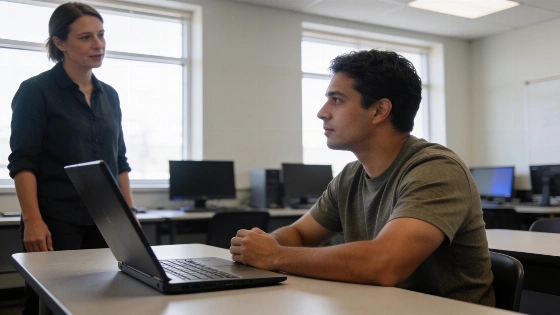
The low fee does not cover every possible expense. Students need internet access. Some may need to buy a laptop or travel to a computer lab to speak with teachers. The program recommends a laptop, although some coursework may work on a tablet or phone.
Flexible scheduling may help adults who are balancing school with employment, caregiving or other responsibilities. Students still have to keep up with assignments outside a traditional classroom. They also have to maintain access to a suitable device and a reliable internet connection.
How the program starts
After registration and payment of the annual fee, students take the placement test. Their results help set the course path. The program does not place every student on the same schedule.
Completion depends on the number of credits still needed and the time available for study each week. Students are encouraged to spend at least six hours weekly on their classes.
Six hours is the suggested minimum.
According to the available description, Troy Continuing Education operates the program with federal and state government grant support. That funding helps explain why the online classes can avoid conventional tuition charges. Grant rules and program terms can change, though, so the arrangement is not directly comparable with standard fee-based college enrollment.
Troy School District is the local district linked to the diploma pathway described here. Nearby districts and public agencies may offer different adult-learning, workforce or credential programs. Farmington Public Schools and Oakland County administration are among those entities. Applicants should not assume that fees or eligibility rules match those in Troy.
Time depends on study hours
Students who study 10 to 30 hours per week may finish classes within a couple of months. Someone studying closer to six hours each week could need about six months to complete one class.
Those estimates are not fixed program deadlines. They show how weekly study time and the number of required credits can shape the overall schedule.
Coursework is available around the clock. Students can choose when to study instead of attending a set daily class. Teachers provide support by phone, text and email as students work through assignments.
The online format can remove a scheduling barrier for adults with jobs, family responsibilities or other obligations. It does not remove the need for steady study. A suitable device and internet access are still required.
Costs and equipment
The stated annual charge is $40. It covers the online platform and teacher support, according to the available program description. The information does not identify an additional tuition charge for the coursework. No separate independent record was found confirming that the amount remains unchanged.
Additional costs may include a laptop and travel to use the lab. The lab gives students access to a computer and a place to speak with teachers. Students can also complete coursework remotely when they have the needed equipment and internet connection.
An earlier school spending report looks at public-school spending in Michigan. It does not measure adult diploma registration. The figures should not be treated as a direct comparison.
Residents comparing education options should separate the Troy program from statewide initiatives. Michigan's adult-learning system includes routes toward diplomas and high-school equivalencies. Michigan Reconnect is different. It is a benefit for eligible adults seeking a tuition-free associate degree or skill certificate at participating community colleges.
Age, residency and enrollment requirements for Michigan Reconnect should be checked separately from the rules at Troy Continuing Education.
Read the rules closely.
What applicants should expect
Applicants must complete the placement test after registration. They then follow the course sequence assigned according to their skill level and remaining credit needs. Troy School District issues the diploma after the required coursework is completed.
The basic calculation is simple. The annual registration fee is modest, but the total time depends on existing credits and weekly study hours. A laptop may be needed for a smoother experience, even though some assignments can be reached through mobile devices.
The City of Farmington and other municipal offices may provide community information. They do not set Troy School District enrollment rules. Questions about the diploma, placement test, credits, technology access and the current registration amount should go to Troy Continuing Education or the district responsible for the program.
This is sponsored information from Troy Continuing Education. It describes the program's stated fee and format. It does not promise that every student will finish on the same schedule.
For adults seeking a flexible route back to high school completion, the program offers around-the-clock access and direct teacher support. Students still need steady study time, internet access and successful completion of placement-based coursework.