
As demand for water, land, and energy grows, local governments face tough choices about resource allocation while investors see new opportunities. Fragmented oversight can leave communities exposed to risks that cross agency boundaries.
As communities across the United States confront growing scarcity of water, land, and energy, local governments are finding that the value of these resources is rising-along with the complexity of managing them. While scarcity is often seen as a barrier to development, it can also create new opportunities for investors who control access to critical infrastructure and rights.
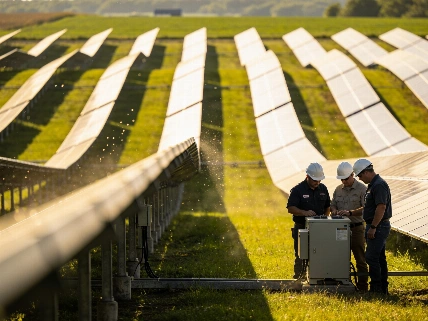
For city planners and water managers, limited resources typically mean constraints on growth and new projects. But for investors, the same scarcity can turn water rights, transmission corridors, or land with utility access into valuable assets. This dynamic is especially visible as new technologies, such as artificial intelligence and carbon capture, drive up demand for electricity, water, and supporting infrastructure.
Fragmented Oversight Creates Gaps
One of the main challenges for local governments is that oversight of water, land use, energy, and emerging technologies is often divided among separate agencies. Each agency may manage its own area effectively, but many of the most significant risks and opportunities arise in the spaces between them. For example, a water allocation or zoning approval is a long-term commitment for a community, but if a project underperforms or relocates, the investor may retain asset value while the community is left with the consequences.
In Colorado, for instance, water, land, and energy are governed by different agencies, each with its own definitions and permitting processes. This specialization can make it difficult to see how decisions in one area affect others, leading to fragmented governance. As a result, new technologies that do not fit neatly into existing categories-such as carbon capture, utilization, and storage (CCUS)-can expose gaps in oversight and accountability.
New Technologies, Old Systems
Emerging technologies often create novel demands on resources that existing governance systems were not designed to handle. For example, Colorado tracks water use through frameworks developed for irrigation and municipal supply, but water injected underground for carbon storage does not fit these categories. This lack of clear definitions can make it difficult for agencies to measure and manage new forms of resource use.
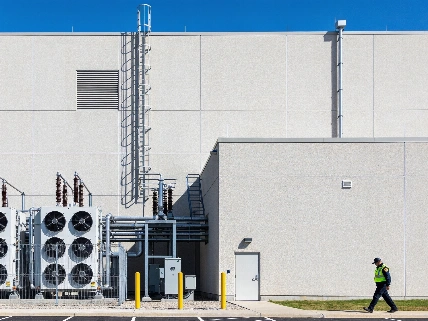
Data centers are another example. As demand for data storage grows, these facilities increasingly compete for water, power, and land. Yet the agencies responsible for these resources often operate independently, and similar projects may face very different standards in neighboring jurisdictions. This can lead to competition between communities for investment, even as they rely on the same underlying resource systems.
Systemic Risks and Regional Competition
Communities that decline a project may see investment shift to a neighboring area, but the underlying scarcity remains. In some cases, competition for resources intensifies, as each jurisdiction seeks to attract development while depending on shared infrastructure like water systems and electric grids. This pattern is visible throughout the American West, where the Colorado River connects states, municipalities, and water users under different authorities but within the same physical system.
Understanding these interactions requires a holistic view of how water, land, energy, and infrastructure are interconnected. No single agency or institution naturally sees the entire system, and information is often siloed across disciplines and jurisdictions. As a result, risks related to climate change and resource scarcity can emerge in ways that are difficult to anticipate or manage.
Improving Visibility and Coordination
Improving governance means making these cross-agency interactions visible and ensuring that decisions account for the full range of risks and opportunities. As highlighted in a recent report on how local governments are using data to address climate risks, better coordination and information sharing can help communities respond more effectively to emerging challenges.
Ultimately, climate change and resource scarcity are systems problems that do not respect agency boundaries or traditional categories. Local governments, universities, and other institutions must find ways to see the bigger picture and govern interactions that no single entity is designed to manage alone.
Matt Weisner is an independent researcher at Colorado State University.