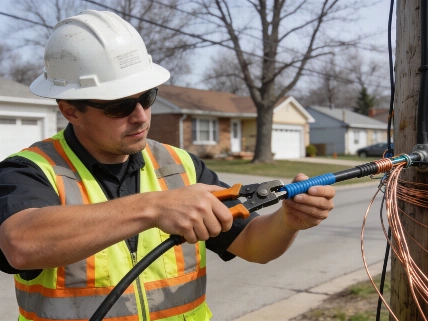
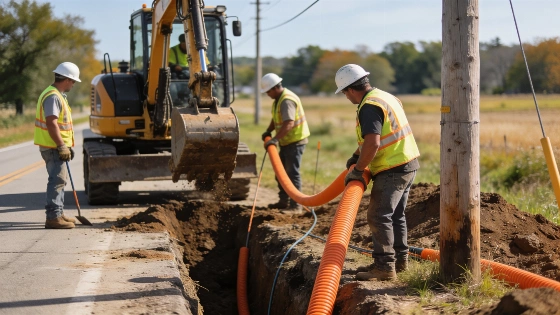
A new report finds that nearly 7,000 broadband projects funded by the $42 billion BEAD program will require more than 86,000 permits, with many projects facing complex and lengthy approval processes at federal, state, and local levels.
Thousands of broadband expansion projects across the United States are at risk of delays due to a complex web of permitting requirements, according to a recent report from the Advanced Communications Law and Policy Institute at New York Law School. The findings come as states and internet providers prepare to deploy new high-speed internet infrastructure under the $42 billion Broadband Equity, Access and Deployment (BEAD) program.
The report estimates that 6,933 planned terrestrial broadband projects will need a total of 86,402 distinct permits before construction can begin. More than half of these projects will require at least 10 separate permits, and about one in seven will need more than 20, spanning federal, state, and local agencies.
Multiple Agencies, Lengthy Reviews
According to the report, 95% of the projects will undergo a federal environmental review, while 76% will need state-level permits-often related to highway right-of-way access. Additionally, 71% of projects must secure agreements with private entities or third parties, and 62% require municipal permits. On average, a single broadband build involves coordination with eight different entities, each with its own process and timeline.
The most common drivers of permit requirements include crossing wetlands and floodplains, as well as existing infrastructure such as roads, highways, railroads, and utility corridors. For example, 4,964 projects will cross roads and highways, 3,072 will intersect railroads, and many more will impact transmission and pipeline corridors.
Funding, Timelines, and Local Challenges
The BEAD program, managed by the U.S. Department of Commerce and the National Telecommunications and Information Administration, was designed to expand broadband access nationwide. However, recent rule changes aimed at saving taxpayer money have reduced available funding, with estimated savings of $21 billion-half of the original allocation under the 2021 infrastructure law.
Researchers warn that the combination of reduced budgets and complex permitting could lead to project delays or cancellations. Many local governments, especially in rural or under-resourced areas, may struggle to process multiple permit requests quickly. Some municipalities lack clear timelines or fee caps for permit decisions, adding further uncertainty for project developers.
Calls for Streamlining and Support
Lawmakers in Congress have held hearings and passed some legislation to streamline broadband permitting, but progress remains slow. Local government groups are cautious about federal efforts to override their authority, preferring to maintain control over local permitting decisions. The report suggests that some of the remaining BEAD funds could be used to help states and localities hire additional permitting staff and improve coordination.
Permitting challenges are not unique to broadband. Similar issues affect other infrastructure projects, including affordable housing, data centers, and energy facilities. The report's authors hope that the current focus on broadband will encourage broader reforms to make permitting more efficient and consistent across the country.
In the meantime, the federal government requires states and localities to hold permitting roundtables to address delays and collect feedback from project subgrantees. These efforts aim to identify bottlenecks and improve the process, but significant hurdles remain as the BEAD program moves forward.
Permitting for major infrastructure projects in the U.S. typically involves multiple layers of government, each with its own rules and paperwork. Overlapping requirements and unclear jurisdiction can lead to projects being stalled in lengthy reviews, sometimes with little coordination between agencies. As broadband expansion continues, the ability of local, state, and federal agencies to process permits efficiently will play a critical role in determining how quickly new internet service reaches underserved communities.