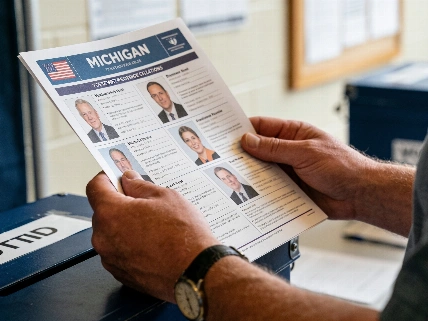
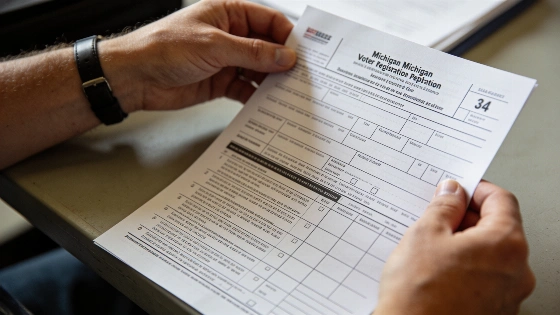
A proposal to require proof of citizenship for voting in Michigan will not appear on the November ballot after both the US Supreme Court and Michigan Supreme Court denied emergency appeals from supporters seeking last-minute approval
Michigan voters will not decide this fall on a proposal that would have required proof of citizenship to vote, after both the US Supreme Court and Michigan Supreme Court rejected urgent appeals to place the measure on the November ballot.
The decision ends a months-long push by Americans for Citizen Voting-Michigan, whose effort to tighten voter registration rules was halted after state officials found a significant number of invalid petition signatures. The group submitted nearly 710,000 signatures, but the Michigan Bureau of Elections determined that too many were faulty for the proposal to qualify.
Courts Deny Last-Minute Appeals
On Thursday, US Supreme Court Justice Brett Kavanaugh declined to grant an injunction that would have forced the proposal onto the ballot, offering no explanation for the denial. Hours later, the Michigan Supreme Court also rejected the group's request, calling it an "extraordinary" attempt to revive a measure already blocked by a deadlocked Board of State Canvassers vote the previous week.
Americans for Citizen Voting-Michigan argued that the Bureau of Elections took too long to review its petitions, leaving little time to challenge the findings. However, the Michigan Supreme Court noted that state law does not require a longer review window and that any change would need to come from the Legislature.
What the Proposal Would Have Changed
The proposed amendment would have imposed some of the strictest proof-of-citizenship requirements in the country. New voters would have been required to provide documentation of citizenship when registering, a rule currently enforced in only four states. Existing voters would also have faced new verification requirements if the state could not independently confirm their citizenship status.
The measure would have eliminated the current option allowing voters without a valid photo ID to cast a ballot by signing an affidavit under penalty of perjury. Supporters said these changes were necessary to protect election integrity, while critics argued they would create unnecessary barriers for eligible voters.
Current Law and Recent Cases
Federal and Michigan law already require voters to be US citizens, and instances of noncitizen voting in Michigan are rare. In 2024, state officials charged five noncitizens with allegedly voting in an election, according to the Michigan Bureau of Elections. The blocked proposal would have added new documentation requirements beyond existing law.
What Will Appear on the Ballot
With the citizenship proposal officially off the table for 2026, only two statewide measures are set for Michigan's November ballot. Voters will decide whether to call a constitutional convention, a question that appears automatically every 16 years, and whether to limit political spending by utilities and large state contractors through a separate initiative.
The process for placing constitutional amendments on the Michigan ballot requires groups to collect hundreds of thousands of valid signatures and clear review by the Bureau of Elections and the Board of State Canvassers. Disputes over signature validity and review timelines have become increasingly common in recent years, often leading to legal challenges and last-minute court decisions.
The collapse of the proof-of-citizenship proposal underscores the high bar for changing Michigan's election laws through citizen initiatives. While supporters of stricter voting requirements may regroup for future cycles, the courts have made clear that deadlines and procedural rules will be strictly enforced, regardless of political pressure or the volume of signatures collected.