Oakland University has deployed Michigan's first Beaver Deceiver to control flooding along a campus trail without removing beavers or their dam. The project uses a specialized tube system to balance water levels and protect both wildlife and infrastructure.
Flooding along a well-used trail at Oakland University in Rochester Hills forced campus officials to make a choice: remove the beavers and their dam under a footbridge, or find a way to live with them. The university chose to keep the beavers. On August 12, 2026, Michigan's first Beaver Deceiver was installed to manage water levels without disturbing the animals, according to Yahoo News.
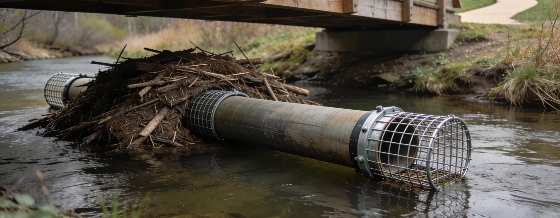
The Beaver Deceiver, also called a pond leveler, lets water flow through beaver dams while leaving the beavers undisturbed. After a pair of beavers settled in Galloway Creek in 2023 and built their dam, water started backing up and flooding the trail. Instead of removing the dam or the beavers, the university worked with state agencies, including the Michigan Department of Environment, Great Lakes, and Energy (EGLE), to install the new system under an official permit. This oversight ensures the project meets state environmental and safety standards.
How the Beaver Deceiver works
The device uses a tube that runs through the dam, allowing water to pass from one side to the other. Metal cages protect both ends of the tube so beavers can't chew through it. The design also muffles the sound of running water, which matters because beavers will try to block any leaks they hear. By keeping the noise away from the dam, the device makes it less likely the beavers will try to plug the tube. This method follows best practices recommended by local watershed councils and environmental groups in Oakland County.
The Clinton River Watershed Council says the beavers can keep building and maintaining their dams, but the risk of flooding for campus infrastructure is reduced. Project Beaver, a nonprofit based in Oregon, compares the system to a bathtub overflow drain: it keeps the pond's water level at a safe height without alerting the beavers. The project's collaborative approach reflects a shift among Michigan communities toward non-lethal, science-based wildlife management.
Balancing wildlife and infrastructure
Beaver ponds attract many kinds of wildlife and help restore wetlands, but unchecked water levels can damage trails, roads, and other infrastructure. Oakland University's approach moves away from lethal beaver removal, which was once common in Michigan when state policy favored open streams. The project was completed with help from state agencies and environmental groups, and may serve as a model for other communities in the region, including those under Oakland County government.
Other places have seen similar results. In Devon, England, reintroduced beavers turned wetlands into buffers against floods and drought. In west London, beavers built a wetland near a McDonald's and helped hold back floods. In Scotland, beaver dams trapped pollution as communities looked for better water management. These examples show that beavers can reshape landscapes and provide ecological benefits, though their dams still need to be managed to avoid conflicts with people.
Michigan's changing approach to beavers
Centuries of trapping and habitat loss nearly wiped out beavers in Michigan. As industry spread, their range shrank even more. For years, state policy focused on removing beavers to keep streams open, but recent projects like Oakland University's Beaver Deceiver show a new willingness to balance ecological value with protecting infrastructure. This is the first installation of its kind in Michigan, though similar strategies have been used elsewhere to let beavers and people share waterways. The City of Farmington and Farmington Hills, both in Oakland County, have also faced wildlife and water management challenges, often working with county and state agencies for solutions.
Managing the impact of wildlife on infrastructure is not unique to Oakland University. In another Michigan case, nearly 3,000 native mussels were moved downstream of the Peninsular Paper Dam in Ypsilanti to protect them from sediment disruption before dam removal, as reported earlier. These efforts show the importance of universities, local governments, and state departments like EGLE working together on environmental challenges.
Oakland University's decision to install a Beaver Deceiver is a practical, science-based response to a local problem. By working with state agencies and environmental groups, the university has found a way to protect both its campus and the beavers that have returned to Galloway Creek. The project may offer a useful example for other Michigan communities facing similar issues, showing that coexistence with wildlife is possible with the right tools and partnerships.