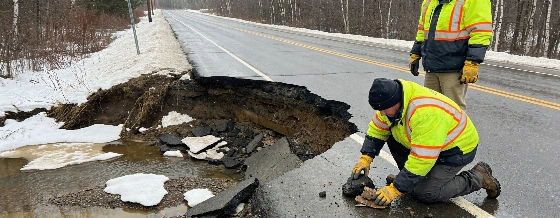
Seven Northern Michigan counties will get over $700,000 in state disaster relief to help repair roads and public buildings after severe winter storms caused power outages and flooding.
Seven counties in Northern Michigan are set to receive more than $700,000 in state disaster relief after winter storms earlier this year caused widespread damage. Governor Gretchen Whitmer approved the funding on September 17, 2026, as part of a nearly $7 million statewide package aimed at helping local governments recover from storms that left thousands without power and led to major flooding. (Michigan.gov)
The state has allocated $709,225 specifically for Alcona, Alpena, Delta, Missaukee, Ogemaw, Roscommon, and Wexford counties. The money comes from the Disaster and Emergency Contingency Fund, which is meant to help local governments that have already used up their own resources. Unlike federal grants, this funding is direct state compensation, so local officials can start repairs without waiting for federal approval or reimbursement.
Counties receiving aid
The funding will go to the seven counties in Northern Michigan that were hit hardest by the March 2026 winter storm. According to MLive, the storm brought heavy snow, ice, and strong winds, causing widespread power outages and disrupting heating fuel deliveries. Local officials reported damage to roads and public buildings, which put extra strain on county budgets and slowed recovery. (MLive) The relief funds are meant to help cover these costs so communities can move forward with repairs.
The state package also includes money for other regions: $1,970,861 for Allegan, Baraga, and Lansing; $547,944 for Branch, Cass, and St. Joseph; $1,924,692 for the Department of Natural Resources and the Department of Environment, Great Lakes, and Energy; $1,623,255 for Houghton and Ontonagon; and $223,986 for Oakland County. Oakland County officials say their share will go toward local infrastructure and emergency response, as outlined in recent emergency management updates.
Impact of winter storms
During the March 2026 storms, thousands of people in Northern Michigan lost power, and many communities faced flooding as snow melted. The damage included washed-out roads, damaged public buildings, and interruptions to essential services. The new funding is expected to help counties fix these problems and restore critical infrastructure, according to the Michigan Department of State Police, Emergency Management and Homeland Security Division.
Local leaders say recovery will take time. The funding provides immediate help, but some repairs and rebuilding may continue for months as communities figure out what else needs to be done. The City of Farmington and other municipalities are tracking how the money is distributed and working with county emergency managers to make sure resources are used where they are needed most.
State response and next steps
This disaster relief is part of a broader state response to emergencies across Michigan. Governor Whitmer said the funding is needed to help communities recover from storms, flooding, tornadoes, and a major water main break, all of which have affected Michigan in 2026. The package also covers the state's 25% share for FEMA Public Assistance related to the Cheboygan Dam flooding and other disasters, as confirmed by Oakland County and state records.
Local governments are now preparing to use the new funds for infrastructure repairs and restoring normal operations. The state's action aims to address urgent needs in rural and less-populated areas, but how quickly recovery happens will depend on the pace of repairs and whether more support is needed later on.
In Michigan, disaster relief funding is managed by state agencies working with local governments. The process involves assessing damage, requesting assistance, and allocating funds based on verified needs. This system is meant to make sure resources reach the hardest-hit communities while keeping oversight of public spending. Residents can follow updates and public hearing notices through their county and city websites, such as the City of Farmington City Council and Farmington Public Schools board meeting minutes.