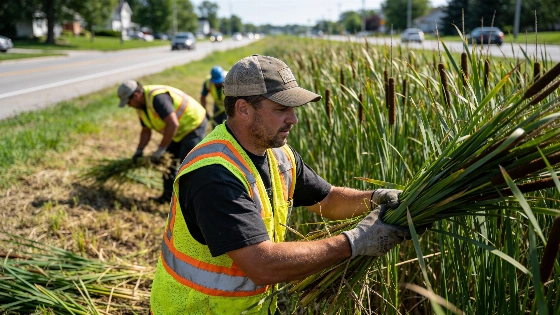
Oakland County will treat invasive Phragmites and knotweed along main roads through October, aiming to protect native plants and prevent infrastructure damage in dozens of local communities.
Oakland County is launching a coordinated effort this summer to control invasive plant species along major roadways, focusing on Phragmites and knotweed that threaten both native vegetation and local infrastructure. The project, which began this month, will continue through October and covers a wide range of communities across the county.
County officials say the spread of these invasive plants can lower property values, damage roads and buildings, create public safety hazards, and degrade natural habitats. The Road Commission for Oakland County is partnering with the Oakland County Cooperative Invasive Species Management Area (CISMA), a coalition of 44 townships, park agencies, nonprofits, and other organizations, to address the problem in right-of-way areas along high-traffic corridors.
Communities and Areas Affected
The treatment program will target main roads and other heavily traveled areas in Addison, Bloomfield, Brandon, Commerce, Groveland, Highland, Holly, Independence, Lyon, Milford, Oakland, Orion, Oxford, Rose, Springfield, Waterford, West Bloomfield, and White Lake townships. Cities and villages included are Auburn Hills, Beverly Hills, Bingham Farms, Birmingham, Bloomfield Hills, Clarkston, Farmington, Farmington Hills, Franklin, Holly, Lake Angelus, Lake Orion, Lathrup Village, Leonard, Madison Heights, Novi, Novi Township, Orchard Lake Village, Ortonville, Pontiac, Rochester, Rochester Hills, South Lyon, Southfield, Troy, Walled Lake, Wixom, and Wolverine Lake.
According to county officials, Phragmites can grow up to 15 feet tall in wet areas, forming dense stands that block sightlines at intersections, disrupt drainage, crowd out native plants, and increase the risk of fires. Knotweed is also a concern because it spreads rapidly and can damage roads and buildings, especially when cut or disturbed.
Safety Guidelines and Resident Involvement
Crews will use treatment methods approved by the Michigan Department of Environment, Great Lakes, and Energy (EGLE). Residents and motorists are asked to avoid entering treated areas until sprays have dried completely. Property owners are also urged not to plant or dispose of invasive species in road right-of-ways and to report any plants causing driving hazards to the Road Commission for Oakland County.
Last year, the county removed approximately 172 acres of Phragmites and knotweed from local roadways. The ongoing effort is part of a broader strategy to protect public infrastructure and maintain safe travel conditions throughout Oakland County.
For more information about invasive species management or to report concerns, residents can visit oaklandinvasivespecies.org.
Oakland County's approach relies on collaboration between local governments, park services, and community organizations. The CISMA model allows for coordinated action across municipal boundaries, making it possible to address invasive species on a regional scale. The Road Commission's involvement ensures that treatments are focused on areas where invasive plants pose the greatest risk to transportation safety and infrastructure. Residents play a key role by following safety guidelines and reporting problem areas, helping to make the program more effective.
- Local Government
- Rules & Public Services
- Transportation & Infrastructure
- Public Works & Capital Projects
- Public Safety
- Environment & Great Lakes
- Water & Drinking Water
- Novi
- Southfield
- West Bloomfield Township
- Birmingham
- Bloomfield Hills
- Bloomfield Township
- Troy
- Pontiac
- Rochester Hills
- Wixom
- Walled Lake
- Commerce Township
- Milford
- Orchard Lake Village
- Beverly Hills
- Oakland County Parks and Recreation
- Public Works
- Invasive Species