Several New York elected officials, including the governor's running mate and Albany's mayor, have acknowledged using artificial intelligence to help write opinion articles, raising questions about transparency and new disclosure rules
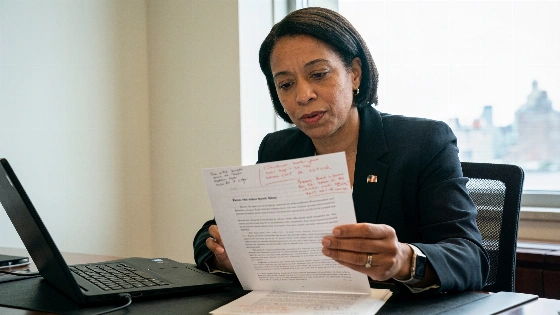
In recent months, a growing number of New York politicians have turned to artificial intelligence tools to help draft opinion pieces published in major news outlets, according to an analysis by New York Focus. The trend includes high-profile officials such as the governor's running mate and the mayor of Albany, who have confirmed that AI played a role in preparing their public communications.
New York Focus reviewed 54 op-eds attributed to state and local officials and published since May 1 in City & State, the Albany Times Union, and the New York Daily News. Using the AI-detection tool Pangram, the analysis found that just over half-28 articles-contained text identified as AI-generated. Nine politicians acknowledged using AI in the creation of 10 articles, while others were unsure or did not respond to inquiries.
AI Use Remains Undisclosed Despite Pending Law
None of the reviewed op-eds initially disclosed the use of AI, even though the New York legislature passed a bill this year that would require news outlets to add disclaimers to content "substantially composed, authored or otherwise created" with generative AI. The bill, known as the FAIR News Act, awaits the governor's signature and would empower the attorney general to investigate violations, with penalties starting at $1,000 per incident. City & State began adding disclosures to some articles only after being contacted by New York Focus.
Officials who admitted to using AI described it as a tool for organizing, editing, or summarizing their own ideas and public statements. For example, Adrienne Adams, the Democratic nominee for lieutenant governor, used AI to compile and summarize her comments on child care for a May op-ed. Albany Mayor Dorcey Applyrs' office said generative AI was used to synthesize and proofread content for a July article about the city's fiscal recovery. Other officials, such as City Councilmember Frank Morano, said AI helped refine their drafts but emphasized that the final positions were their own.
Mixed Reactions and Policy Changes at News Outlets
Reactions from news organizations have varied. City & State's news and opinion editor said the use of AI violated the publication's policies and announced that all future op-eds would be screened with AI-detection tools. The Daily News and Times Union also indicated they would review their processes and expect original content from contributors, though Times Union allows AI for editing and proofreading.
Some officials said AI was used by co-authors or as part of group writing efforts, making it difficult to track exactly how much content was AI-generated. Others, like Councilmember Julie Won and Assemblymember Landon Dais, described using AI to refine drafts or shorten articles at the request of editors. In several cases, staffers said AI was used for editing, translation, or research support, but not for generating original ideas or positions.
Public Concerns and Next Steps
The use of AI in political communications has sparked public debate, with some voters expressing concern about authenticity and transparency. Last year, a mayoral campaign in New York City faced criticism after a single citation revealed the use of ChatGPT for research. The pending FAIR News Act aims to address these concerns by requiring clear disclosure of AI-generated content in published materials.
As AI tools become more common in government and media, officials and editors are reevaluating their policies. The debate over how much AI involvement is acceptable-and how to ensure transparency-continues as the state awaits a final decision on the new disclosure law. For comparison, cities across the U.S. are also exploring AI for other government functions, such as streamlining housing permit reviews, as reported in a recent Farmington Voice article on municipal automation.
While the current focus is on opinion writing, the broader question of AI's role in public service and communication is likely to grow as technology advances and new regulations take effect.