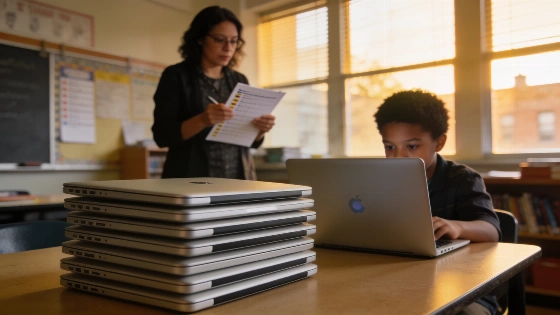
New York City has canceled a costly T-Mobile contract that provided LTE service for school-issued Chromebooks, citing duplication and high expense. The move is expected to save tens of millions as the city shifts to a more targeted internet access program for students.
New York City has pulled the plug on a $200 million contract with T-Mobile that equipped hundreds of thousands of school-issued Chromebooks with cellular service, ending a deal that had drained city coffers for months and drawn sharp criticism from education officials and watchdogs.
The decision, announced eight months into Mayor Zohran Mamdani's administration, halts a program that was costing the city $3.5 million every month. The T-Mobile contract, signed in the final months of former Mayor Eric Adams's tenure, had committed the city to pay for up to one million lines of LTE service for student laptops and other devices-regardless of how many students actually needed the service.
Contract Scrapped After Internal and Public Pushback
According to reporting by New York Focus, the Adams administration bypassed competitive bidding and signed the deal directly with T-Mobile, leaving out other major vendors like Verizon and AT&T. The city agreed to purchase 350,000 Chromebooks bundled with LTE service, even though internal data showed most public school students already had internet access at home. City officials had raised concerns that the contract forced New York to pay a flat fee for unused lines, and questioned whether the Department of Education had requested the devices in the first place.
Department of Education spokesperson Nicole Brownstein said the city already had a program in place allowing schools to provide LTE service through Verizon for $10 per month per student who actually needs it. She described the T-Mobile contract as duplicative and unnecessary, noting that schools have been instructed to identify families without internet and connect them through existing programs before the new school year begins on September 10.
Financial and Policy Implications for Schools
The T-Mobile contract, which had been in effect for about a year, was one of the most expensive single technology expenditures in recent city history. At nearly $50 million per year, it far exceeded the cost of other programs targeted for cuts in Mayor Mamdani's first budget, such as a $9.9 million consulting contract with McKinsey for the Department of Social Services. The city did not provide an official estimate of total savings from the cancellation, but the move is expected to redirect tens of millions of dollars to other priorities, even as some costs may shift to the Verizon LTE program for students who lack home internet.
The abrupt end to the T-Mobile deal comes as New York City faces growing scrutiny over technology spending in schools. The city's school board recently rejected a contract for Oracle software, and a new state bill introduced this month would sharply limit the use of screens in classrooms and restrict the distribution of school-issued devices. Mayor Mamdani is also preparing to announce new rules that would ban individual screens for students until third grade, according to the New York Times.
Broader Context and Next Steps
School board member Naveed Hasan praised the cancellation and called for further reforms, including renewed investment in city-owned technology infrastructure. The Department of Education has directed principals to ensure that any student without home internet receives LTE service through established channels, with the T-Mobile plans officially ending August 31. The 350,000 Chromebooks have already been distributed, but their cellular connectivity will now depend on demonstrated need rather than blanket coverage.
New York City's experience highlights the risks of large-scale technology contracts that outpace actual demand and bypass competitive review. As the city moves to tighten oversight and rein in spending, the lesson is clear: public dollars must be matched to real needs, not vendor-driven deals. The abrupt reversal of the T-Mobile contract signals a new willingness at City Hall to scrutinize inherited agreements and prioritize targeted, accountable solutions for students and families.