Congressman Tom Barrett hosted EPA Administrator Lee Zeldin at Enbridge's Stockbridge Terminal and Michigan State University on September 26. Their talks covered energy reliability, fuel transport and PFAS research.
On September 26, officials visited Enbridge's Stockbridge Terminal and Michigan State University's Center for PFAS Research. Congressman Tom Barrett hosted EPA Administrator Lee Zeldin during the tour, according to the Barrett House announcement.
The visit put pipeline operations and university research in the same discussion. Barrett and Zeldin met with energy leaders to talk about fuel transport, refinery capacity, infrastructure and energy prices. The announcement described a policy and research visit. It did not announce a new rule, grant program or enforcement action.
Energy infrastructure discussion
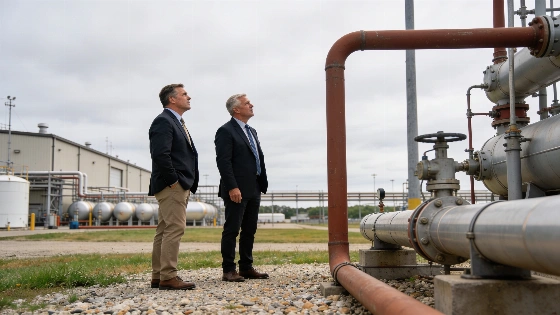
At the Stockbridge Terminal in Stockbridge, officials focused on the systems that move fuel and help maintain energy supplies. The release named pipelines, fuel transportation and refinery capacity as central subjects. Those choices affect what consumers and businesses pay for energy.
Barrett said he supports pausing diesel exports to reduce shipping costs. The material provided does not say that such a pause has become policy. It also does not say diesel exports have stopped. Barrett's position remains an argument from the congressman, not a reported change in fuel policy.
Zeldin said the administration is following the law and applying common sense. He also said it is working to unleash U.S. energy dominance while reducing what he described as trillions of dollars in regulatory costs. Environmental protection was part of that discussion. The announcement gave no new rule, funding decision or schedule tied to the visit.
The group also discussed the proposed Great Lakes Tunnel for Line 5. The Detroit News reported that Zeldin supported the project. He said federal agencies had completed extensive due diligence before permits were issued. Michigan is still reviewing the project's environmental permitting. That keeps the remarks tied to the state's wider debate over pipeline safety and the Great Lakes.
That remains disputed ground.
PFAS research at MSU
The delegation visited Michigan State University's Center for PFAS Research. The center studies PFAS effects on human health, agriculture and the environment. Its work also includes ways to reduce harm. The stop concerned applied research and scientific capacity. It was not an announcement of new PFAS standards.
MSU's work also has an agricultural focus. On September 21, the Michigan Department of Agriculture and Rural Development announced a $400,000 grant led by Dr. Subhasis Giri. The project will measure PFAS in soil, track movement across fields and study accumulation in corn and soybeans.
The grant gives context to the university visit. It does not show that officials announced or awarded the grant during the tour.
The public announcement set clear limits. It provided no testing results, research timeline, regulatory thresholds, cleanup decisions or findings from a specific laboratory project. EPA's current PFAS framework addresses drinking water. It also says requirements must be workable for water systems. The research discussion therefore sits within an active federal regulatory debate.
No new standard was announced.
Barrett's policy position
The release placed the tour within Barrett's wider energy agenda. It said he supports reopening the Palisades nuclear plant. It also said he backs permitting changes that would speed federal environmental reviews while keeping health and safety protections in place.
Those statements describe Barrett's policy preferences. They do not show that the permitting changes have taken effect. They also do not show that the Palisades nuclear plant has reopened. The announcement supplied no timeline for either action.
The tour paired an operating fuel terminal with a research institution. That made energy policy both an infrastructure issue and an environmental issue. Pipelines and refinery capacity concern how fuel moves through the economy. PFAS research concerns how chemical risks are measured, reduced and managed.
What the visit establishes for Michigan communities
For Mid-Michigan, the confirmed development is the tour and the discussions at Stockbridge and Michigan State University. The announcement identifies no new project, regulatory order, price change or public deadline resulting from the visit.
For readers in Farmington and Farmington Hills, the announcement identifies no City of Farmington or City of Farmington Hills resolution, permitting action or public hearing connected to the tour. Residents seeking unrelated municipal notices, meeting agendas or civic-calendar updates can consult the City of Farmington portal. The material reviewed identifies no Farmington Public Schools board action or Oakland County administration decision.
The event is best read as policy engagement, not completed policy action. Barrett emphasized lower shipping costs and greater energy capacity. Zeldin emphasized federal energy production alongside environmental protection. State of Michigan departmental registries and later agency notices would be the places to check for any new permit, grant or regulatory change.
The announcement clearly lists the issues officials chose to discuss: fuel transport, refinery capacity, energy prices, Line 5 and PFAS research. Until officials announce specific rules, funding or operational changes, the visit remains an exchange of positions and an inspection of relevant sites. It did not change what Michigan residents must do.