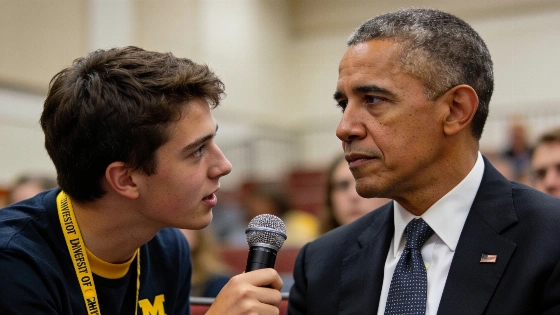
A University of Michigan student pressed Democratic Senate candidate Abdul El-Sayed on Iran and Israel during the October 8, 2026, debate with Republican Mike Rogers.
Iman Dashti asked the question during the first 2026 debate for Michigan's open U.S. Senate seat. He wanted to know whether Democratic candidate Abdul El-Sayed supports Iran and whether El-Sayed considers Iran a greater threat than Israel.
The October 8 debate also covered the war with Iran. Gasoline prices and tariffs entered the discussion. The Associated Press reported that El-Sayed and Republican former congressman Mike Rogers kept arguing during a commercial break, a sign of how hard-edged the contest had become.
El-Sayed rejected the premise that voters should decide which country poses the greater danger. He called the comparison absurd and said Iran and Israel had each shown they could create danger in different ways.
That answer matters because an earlier account of the exchange suggested that El-Sayed had left the question unanswered. The debate record supports a different account.
Dashti later appeared on Fox & Friends Weekend to explain why he wanted Iran policy addressed in a public forum. His question sought El-Sayed's position on Iran and his method for judging threats involving Iran and Israel.
The exchange unfolded in a closely watched race for an open Senate seat. El-Sayed, a former public-health official and Ann Arbor resident running on a progressive platform, is challenging Rogers, who previously represented Michigan in Congress. According to reporting by The New York Times, El-Sayed would become the first Muslim member of the U.S. Senate if elected.
Before the debate, the race was considered one of the country's most competitive Senate contests. El-Sayed told CNN that he expected to win by seven percentage points. Democratic sources cited in the same coverage questioned that outlook.
After the debate, El-Sayed's campaign said he had attacked Rogers over the Iran war. The campaign also described Rogers as someone who had supported the conflict from the beginning.
For Farmington-area readers, the available reporting does not identify the City of Farmington, the City of Farmington Hills or the Farmington Public Schools board as sponsors, participants or respondents in the debate. The event was a statewide Senate campaign appearance, not a municipal meeting, school-board forum or local public hearing. Residents seeking separate local agendas and civic notices can consult the City of Farmington portal.
Nothing in the reporting indicates that the Oakland County administration or a State of Michigan departmental registry helped organize the exchange. That distinction matters in local coverage. A University of Michigan student's participation in a statewide political event should not be described as an action by a Farmington-area government or school district.
The University of Michigan has also appeared in local coverage involving a separate proposed research project. That coverage includes a data center report. The proposal and the Senate debate question are separate matters, though both involve public scrutiny of issues connected to the university.
The exchange establishes a narrower point than a campaign policy shift. Dashti raised a direct question about Iran and Israel. El-Sayed rejected the comparison and described both countries as dangerous in different ways. The debate record shows that foreign policy became a confrontation point, but it does not establish a new policy commitment, an institutional response from the University of Michigan or a connection to local municipal decision-making.