Michigan's rate of school vaccine waivers has climbed to 7.1 percent, the highest in ten years, with nearly 25,000 students exempted in 2025. Health officials warn this trend could increase outbreaks of diseases like measles and whooping cough.
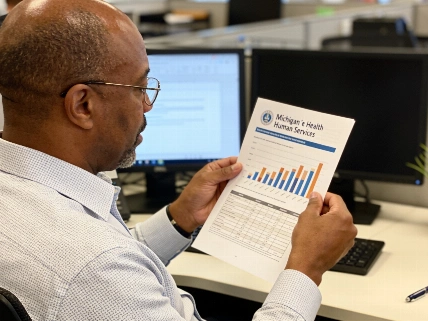
Michigan is seeing a sharp rise in the number of students receiving vaccine exemptions, reaching levels not seen in ten years. In 2025, 7.1 percent of students were granted waivers from routine immunizations, according to the Michigan Department of Health and Human Services (MDHHS). That's nearly 25,000 waivers among more than 345,000 students with complete immunization records statewide. This is the fifth year in a row that exemptions have increased, raising concerns among health officials and school administrators. State data shows the trend is widespread.
The increase comes as Michigan reported 16 measles cases over the summer, and as national confidence in childhood vaccines has dropped. The Centers for Disease Control and Prevention (CDC) reported 3,294 confirmed measles cases in the U.S. in 2026, up from 2,289 in 2025. Most of those affected were unvaccinated or had unknown vaccination status. Local health officials in Oakland County say lower vaccination rates make it harder to contain outbreaks, especially in areas where coverage is already low.
Rising exemptions and local differences
The rise in exemptions isn't spread evenly across Michigan. Urban and suburban districts like Ann Arbor, Portage, East Grand Rapids, and Novi keep vaccination rates close to the 95 percent mark needed for herd immunity. In contrast, rural districts such as Lapeer, Howell, and North Branch report double-digit exemption rates among kindergarteners. Online schools have some of the highest waiver rates, with Oxford Virtual Academy leading the state for kindergarten exemptions.
Kindergarteners are most affected, with 7.7 percent receiving waivers in 2025, up from 6.8 percent the year before. Seventh graders had a 7.2 percent waiver rate, and students new to their districts reported a 6.6 percent rate. Public schools overall had a 90 percent immunization rate, while private schools were lower at 80.9 percent. County-level differences are stark: Saginaw County had the lowest waiver rate at 3.9 percent, while Houghton County reached 23 percent. These gaps mean some communities face much higher risks of outbreaks than others.
Policy changes and parental views
Michigan's waiver rate dropped to 3.1 percent in 2015 after the state began requiring parents seeking nonmedical exemptions to attend an educational session at their local health department. This policy, enforced by agencies like the Oakland County Health Division, led to fewer exemptions at first. But rates started climbing again after 2021, around the time of the COVID-19 pandemic and growing skepticism toward official vaccine guidance. Farmington Public Schools board records show ongoing debates about how to balance parental rights with public health rules.
Some areas have made it easier to get waivers, and the Michigan State Board of Education has heard from parents who feel schools aren't honoring their exemption requests. The MDHHS says nonmedical exemptions must still be certified by local health departments, following the rule adopted in 2015. Cities like Farmington and Farmington Hills rely on county and state health officials for updates to school entry requirements and for communicating with families about immunization policies.
National context and federal changes
Michigan's exemption rate is now above the national average. The CDC reports that the national kindergarten exemption rate rose to 4.2 percent for the 2025-2026 school year, with 41 states and the District of Columbia seeing increases. About two dozen states now have exemption rates above 5 percent, which public health experts say raises the risk of outbreaks in schools and childcare centers.
Recent federal actions have added to the uncertainty. In 2025, President Donald Trump signed an executive order reducing the number of recommended childhood vaccines, a move criticized by the World Health Organization. Michigan's chief medical executive responded by reaffirming the state's commitment to the vaccine schedule recommended by the American Academy of Pediatrics and other health groups. Local school boards, including those in Farmington and Farmington Hills, have continued to follow state and CDC guidelines despite changes at the federal level.
Advocacy and community response
In response to falling vaccination rates, the Michigan for Vaccines coalition launched in 2025 to push for stronger immunization policies. The group includes public health workers, doctors, and parents who have seen the effects of vaccine-preventable diseases firsthand. Veronica McNally, who lost her infant daughter to whooping cough in 2012, is a leading voice for vaccination campaigns in Michigan.
Advocates say misinformation online is fueling vaccine hesitancy. They warn that when parents skip immunizations, it can put entire communities at risk, especially as outbreaks of diseases like measles and whooping cough become more common. In the summer of 2026, two Michigan counties reported measles cases linked to out-of-state travel, showing how quickly diseases can spread when coverage drops.
Michigan's vaccine waiver system is shaped by state rules, local enforcement, and changing federal guidance. Parents seeking nonmedical exemptions must complete an educational session, but this approach has become less effective as skepticism and misinformation have grown. What happens next will depend on whether state leaders decide to tighten exemption policies or invest in new public education efforts to rebuild trust in vaccines.
The MDHHS says the state's approach to vaccine exemptions is under review as officials weigh the risks of more outbreaks against parental rights and federal policy changes. The outcome will determine whether Michigan can reverse the current trend and improve protection for its schoolchildren.