Erosion along Michigan's Lake Michigan shoreline is accelerating, with climate change and development putting pressure on the state's dunes. Agencies, environmental groups, and property owners are at odds over how to protect homes and ecosystems.
Lake Michigan's sand dunes are eroding faster than before, and the debate over how to manage the shoreline is growing more heated. The western Michigan coast holds the world's largest freshwater dune system, with more than 74,000 acres protected by the state. But about 19% of the shoreline is now lined with seawalls or similar barriers, a sign of both the push to protect property and the risks these structures pose to the environment.
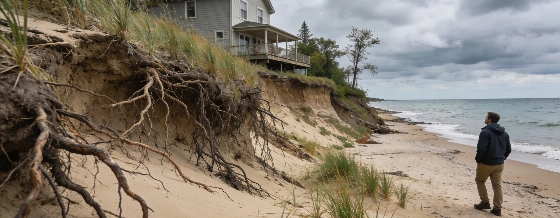
High water and stronger storms have become more common in recent years, according to the Michigan Environmental Council. These conditions have caused dunes to shift and, in some cases, put houses in danger of falling into the lake. The state's Department of Environment, Great Lakes, and Energy (EGLE) says erosion is a natural part of a healthy coast, not just a problem to be solved with engineering. This view shapes much of the current policy debate.
Shoreline hardening and its consequences
Building seawalls, rock barriers, and other hard structures to stop erosion is one of the most controversial responses. While these can protect individual homes, state experts and researchers warn that they interrupt the natural movement of sand and often make erosion worse elsewhere. A 2026 Harvard-linked study found that widespread shoreline hardening increases erosion, reduces the supply of new sand, and limits public access to the lake. Both state agencies and environmental groups often refer to this research in public discussions and hearings.
EGLE has allowed temporary sandbags during high water years, such as 2019 and 2020, but requires their removal once water levels drop. Some homeowners have pushed back, leading to proposals that would let anyone use sandbags on Great Lakes shores without a permit. The Michigan Environmental Council and other groups oppose this, citing concerns about plastic pollution and the long-term health of the lake's drinking water, which serves millions of people, including those in Oakland County and Farmington.
Natural solutions and ongoing debate
Alternatives to hardening include beach nourishment-bringing in sand to rebuild the shore-and planting native plants to stabilize dunes. Beach nourishment needs regular upkeep and often fails without vegetation. Native plants, with deep roots, are seen as a more lasting way to hold sand and restore dune shapes, as used at Sleeping Bear Dunes National Lakeshore. Farmington and Farmington Hills have looked at similar nature-based approaches in their own stormwater and green infrastructure plans, as shown in recent municipal updates.
No single solution has solved the problem. State officials and environmental advocates agree that each approach has trade-offs, and that local planning is key. The removal of some dune protections from Michigan law in 2012 has made it harder to limit shoreline building, fueling more debate about how close homes and infrastructure should be to the water. Local governments, including the Oakland County Board of Commissioners, have held public hearings to gather input on shoreline management and environmental resilience, showing the role of civic engagement in shaping policy.
Development pressures and policy shifts
Efforts to bring back rules on anti-erosion methods have met resistance from some property owners and developers, who see them as barriers to growth. The Michigan Environmental Council argues that smarter development-building farther from the shoreline-would lower future risks and avoid repeating past mistakes. The council's work continues, but the policy situation remains unsettled, with no new final decisions reported as of 2026 in official records.
Bridge Michigan reports that about 19% of the state's western shore is now hardened, reflecting both the urgency to protect property and the unintended effects on the ecosystem. As climate change drives unpredictable lake levels and storms, the stakes for Michigan's dunes and coastal communities are rising. Farmington Public Schools have added climate adaptation and water quality topics to their curriculum, underlining the relevance of these issues for local families.
For residents and policymakers, the challenge is both technical and political. The debate over Michigan's sand dunes tests whether the state can balance immediate property concerns with the long-term health of its natural resources. As reported earlier, Michigan's approach to environmental stewardship often means weighing economic interests against conservation. The outcome of the current shoreline debate will affect public access, drinking water quality, and the resilience of Michigan's coastal communities.