Michigan officials have started a high-stakes effort to save Great Lakes whitefish by collecting wild adults for captive breeding after invasive mussels devastated natural populations and commercial harvests plummeted in recent years
Michigan's whitefish population in Lake Michigan is on the brink of collapse, forcing state and tribal agencies to launch an urgent rescue operation this fall. With invasive zebra and quagga mussels decimating the food web, officials are now collecting wild whitefish to breed in captivity, hoping to preserve the species before it disappears from the lake entirely.
For years, scientists watched as invasive mussels stripped away the plankton that young whitefish depend on, leaving the water so clear that hatchlings either starved or died from sun exposure. In some areas of Lake Michigan and Lake Huron, almost no whitefish have survived to adulthood for two decades. The commercial harvest has plunged from 6.9 million pounds in 2009 to less than 2 million pounds last year, according to state data.
Captive Breeding Effort Begins
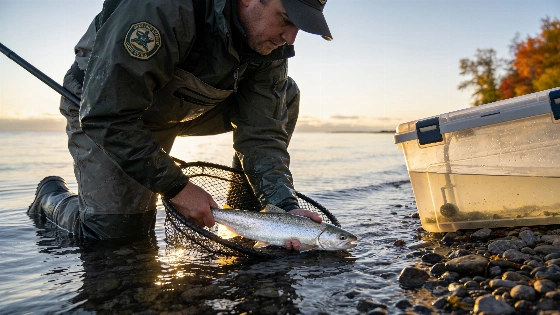
Armed with $350,000 from the state budget and nearly $900,000 from the Great Lakes Fishery Trust, Michigan Department of Natural Resources and the Little Traverse Bay Bands of Odawa Indians are leading the effort. This fall, teams will collect spawning whitefish from Naubinway to Saugatuck, focusing on the most threatened genetic stocks. The eggs will be incubated at Wolf Lake State Fish Hatchery, with plans to transfer surviving fish to other hatcheries across Michigan.
Current funding only covers a few years of hatchery operations and can support just a fraction of the 18 unique whitefish populations in lakes Michigan and Huron. Organizers hope to attract additional support from neighboring states and federal agencies, but the clock is ticking as the remaining wild whitefish age out of the population.
Mussel Invasion Leaves Few Options
Invasive mussels now dominate every Great Lake except Superior, and no effective control method has been found. The filter-feeding mussels have fundamentally altered the ecosystem, leaving whitefish and other native species struggling to survive. The rescue plan is a last-ditch attempt to preserve genetic diversity until a solution for mussel control is developed and the lakes can support wild whitefish again.
State, tribal, and nonprofit scientists are also exploring broader strategies, including using inland ponds, lakes, or rivers as refuges for whitefish. But these options require significant funding and long-term commitment. The scale of the challenge is daunting: the federally funded lake trout recovery has taken decades and hundreds of millions of dollars, and is still ongoing.
Funding and Legislative Action
Efforts to control invasive mussels remain severely underfunded. According to reporting by Bridge Michigan, researchers have resorted to building equipment from scrap metal and worry about the future of their work. In response, Michigan's congressional delegation has introduced legislation to allocate $500 million over the next decade for mussel control research, but the bill has yet to gain traction in Congress.
Whitefish are not the only species at risk. The collapse of their population signals broader ecosystem distress, with ripple effects for commercial fisheries and the communities that depend on them. The urgency of the situation has prompted calls for immediate action and greater investment in both rescue and prevention.
Context and Next Steps
The current rescue effort is limited in scope, targeting only the most imperiled whitefish bloodlines. If additional funding is secured, the program could expand to cover more populations and develop new methods for reintroducing whitefish once mussel populations are controlled. For now, the focus remains on preserving what genetic diversity remains before it is lost for good.
Michigan's approach reflects a growing recognition that invasive species can rapidly destabilize entire ecosystems. Similar challenges have been reported elsewhere in the state, such as the relocation of thousands of native mussels ahead of dam removal projects, as reported earlier.
While the outcome of the whitefish rescue remains uncertain, the state's willingness to act decisively-despite limited resources-marks a shift from years of inaction. The fate of Michigan's whitefish now depends on whether lawmakers, agencies, and the public are prepared to match the scale of the crisis with sustained investment and coordinated action.