Michigan drivers caught by automated cameras in work zones or passing stopped school buses will face fines but not license points under a new state law. The change aims to address privacy concerns and insurance impacts as camera enforcement expands.
Michigan drivers who are ticketed by automated cameras for speeding in construction zones or passing stopped school buses will no longer receive points on their licenses, following a new state law signed by Gov. Gretchen Whitmer. The law, which took effect in 2026, ensures that violations captured by traffic enforcement cameras result only in fines, not points that could affect driving privileges or insurance rates.
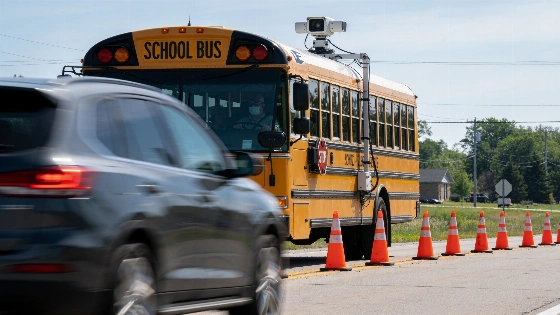
At least three Michigan school districts, including Grand Rapids, Dearborn, and Detroit, have already installed stop arm cameras on more than 200 school buses to catch drivers who fail to stop when buses are loading or unloading children. The Michigan Department of Transportation (MDOT) is also developing a camera-based enforcement system for construction zones, though the program has not yet launched. Officials now expect work zone camera enforcement to begin no earlier than 2027.
Under the 2024 law, drivers caught by cameras going at least 10 miles per hour over the speed limit in a construction zone will receive a mailed warning for a first offense. Repeat violations within three years can result in fines of up to $150 for a second offense and up to $300 for a third. For school bus stop arm violations, fines can reach $500. However, in both cases, no points will be added to the driver's record, and insurance companies cannot use these violations to raise rates.
The move to automated enforcement has raised privacy concerns among some Michigan residents and advocacy groups, including the American Civil Liberties Union of Michigan. Critics argue that camera systems can only identify the vehicle and its registered owner, not necessarily the person driving at the time of the infraction. Supporters of the law say this limitation makes it unfair to assign license points, which are intended to penalize individual drivers.
According to MDOT, the agency is responsible for implementing the construction zone camera program, including distributing warnings and fines, even though it has not traditionally served as an enforcement agency. Local law enforcement agencies, not MDOT, review video evidence from school bus cameras to determine whether a fine should be issued.
Automated traffic enforcement is not unique to Michigan. According to the Governors Highway Safety Association, at least 19 states allow automated speed enforcement, and the National Conference of State Legislatures reports that at least 30 states permit school bus stop arm cameras. Some states, however, have banned speed cameras or faced legal challenges over their use.
Privacy debates have also emerged around automated license plate readers, such as Flock cameras, which are used by law enforcement to locate missing persons or suspects. In response, Michigan lawmakers have introduced bipartisan legislation to limit how long data from these cameras can be stored and to require regular reporting on their use.
Supporters of Michigan's new camera enforcement laws argue that the primary goal is to improve public safety, especially in work zones where speeding has led to fatalities. Data from the Michigan State Police shows that in 2025, there were 5,959 work-zone-involved crashes and 24 fatalities, down from 6,731 crashes and 28 fatalities in 2024, even before the cameras were installed.
The new law reflects a growing trend toward using technology to enforce traffic safety while balancing privacy and fairness concerns. As camera enforcement expands in Michigan, drivers should be aware that while fines may be issued by mail, their driving records and insurance rates will not be affected by these automated violations.
Automated camera enforcement in Michigan is governed by state law and implemented by agencies such as MDOT and local school districts. The process for issuing fines involves capturing video or photographic evidence, reviewing it for violations, and mailing citations to the registered vehicle owner. The law's design aims to improve safety in high-risk areas like school bus stops and construction zones, while addressing concerns about fairness and privacy. Residents can expect further updates as MDOT finalizes its work zone camera program in the coming years.