A new Michigan program lets iron workers and other skilled trades earn college credit for completing registered apprenticeships, reducing the time needed for an associate degree at participating community colleges
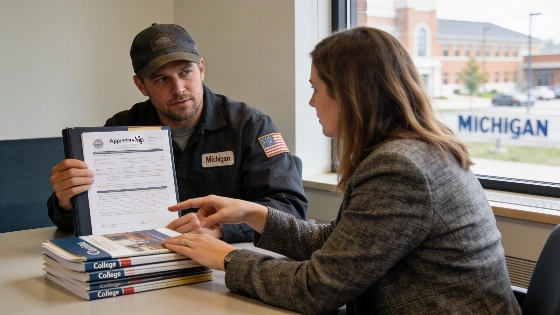
Iron workers across Michigan now have a direct route to college credit for their apprenticeship training, following a new statewide initiative that recognizes the value of hands-on learning in the skilled trades. The Michigan Department of Labor and Economic Opportunity (LEO) and Oakland Community College have launched a program that allows graduates of registered building trades apprenticeships to receive college credit, making it easier for workers to pursue associate degrees and expand their career options.
For many in the trades, this means years of on-the-job training can now count toward a formal college credential-without starting from scratch. The program is already available to iron workers and is expanding to other trades, with more unions and colleges joining the effort.
How the Program Works
The Michigan College Credit for Apprenticeships Program evaluates the curriculum of registered apprenticeship programs and translates that experience into college credit at participating community colleges. According to LEO, workers who complete a qualifying apprenticeship may need only one additional semester of coursework to finish an associate degree, depending on the trade and college.
So far, 12 skilled building trade unions-including the International Association of Bridge, Structural, Ornamental and Reinforcing Iron Workers-have signed on. Their apprenticeship programs are being reviewed to determine how many credits will transfer. Twenty-eight public and tribal community colleges in Michigan have agreed to accept these credits, with 16 colleges already ready to enroll iron workers using the new system.
Participating Unions and Colleges
Unions involved in the program include the International Association of Heat and Frost Insulators and Allied Workers, International Brotherhood of Electrical Workers, International Union of Operating Engineers, and several others representing a wide range of skilled trades. The list of participating colleges features Bay de Noc Community College, Henry Ford College, Lansing Community College, Macomb Community College, Oakland Community College, and more.
As more unions complete the curriculum evaluation process and additional colleges finalize their credit mapping, the number of eligible workers and institutions is expected to grow. The program is designed to help tradespeople at any stage in their career-whether they want to learn new technologies, move into management, or start their own business-by making their apprenticeship experience count toward a college degree.
Impact on Michigan's Workforce
State officials say the initiative supports Michigan's Sixty by 30 goal, which aims to have 60 percent of working-age residents earn a postsecondary credential by 2030. By recognizing the rigorous training that occurs in registered apprenticeships, the program offers a practical path for skilled workers to advance their education and earning potential without duplicating effort.
For iron workers and other tradespeople, the change means greater flexibility and more options for career advancement. It also strengthens the pipeline of qualified workers for Michigan's construction and infrastructure sectors, which continue to face high demand for skilled labor.
Program Context
The Michigan College Credit for Apprenticeships Program is a collaboration between LEO, the state's Skilled Building Trades Unions, the Michigan Department of Lifelong Education, Advancement, and Potential (MiLEAP), the Michigan Community College Association, and the Michigan Workforce Development Board. The program's structure ensures that learning gained on the job is formally recognized by higher education institutions, reducing barriers for workers who want to pursue further education.
Workers interested in the program can find more information and a list of participating unions and colleges at Michigan.gov/CollegeCreditApprenticeships. As the program expands, more trades and colleges are expected to join, making this pathway available to a broader segment of Michigan's workforce.