School-choice programs are spreading, homeschooling is growing, and AI-assisted schools are gaining ground. Michigan has not said whether it will join a new federal tax-credit program as reading and math results remain weak.
A new federal Education Freedom Tax Credit takes effect Jan. 1, 2027. Michigan has not announced whether it will take part. The decision comes as families find more ways to educate their children outside the traditional public-school system.
Parents may not wait for Lansing.
Families are choosing alternatives
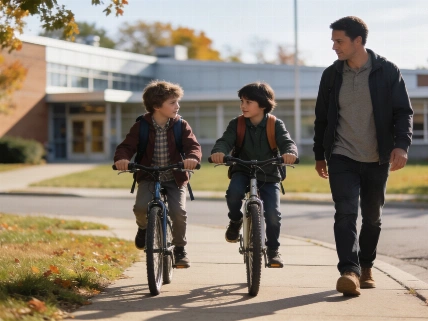
The COVID-19 pandemic lockdowns gave many families a close look at different ways to educate children. That experience helped push demand for school-choice programs across the country.
Brookings reports that 17 states have adopted universal school-choice programs since the pandemic. They use education savings accounts or scholarships. The programs can help families pay for private schools, tutoring and other approved educational services.
The new federal tax credit will offer scholarships only in states that officially participate. Household income generally cannot exceed 300% of area median gross income, according to EdWeek. As of Sept. 24-25, 2026, 30 states had joined the program. Several Democratic governors had not yet said whether their states would participate.
This is not a direct federal payment to families. Donors can receive a dollar-for-dollar federal tax credit of up to $1,700 when they give to scholarship-granting organizations. Those groups then distribute the grants under rules that are still being written. Brookings says important details on eligibility, administration and accountability remain unfinished.
Michigan Gov. Gretchen Whitmer has not announced the state's plan. For families in the Farmington area, basic questions include which organizations qualify, how applications will work and whether schools or providers have room for new students.
Residents can monitor district information through the Farmington Public Schools portal. The Farmington Public Schools board, the City of Farmington and the City of Farmington Hills are separate local institutions. Each has different responsibilities.
Homeschooling has grown during the same period. The Johns Hopkins Institute of Education estimated that 2.8% of school-age children were homeschooled in 2019. The figure reached 5.92% during the 2023-24 school year, according to reporting by The Journal.
The legal barriers have changed, too. Three major U.S. Supreme Court education decisions over the last decade held that states cannot exclude students from choice programs only because they attend private or religious schools.
That gives alternatives more room to grow. Access still depends on state rules, provider capacity and family resources.
Technology is changing the classroom
Some families are also testing schools built around new technology. The Wall Street Journal's Katherine Bindley reported that some high-income families are turning to AI-assisted schools. These schools emphasize negotiation, problem-solving and entrepreneurship alongside conventional academics.
Alpha School in Austin, Texas, offers one example. It launched 12 years ago and added eight schools last year. The school expected nearly two dozen more to open later this fall.
Its growth shows how quickly families with the means to experiment can move toward a different model.
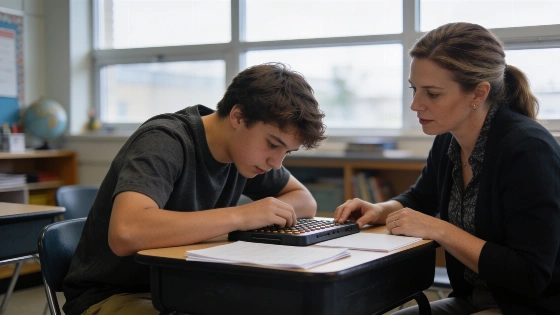
Technology will not replace a teacher or mentor. A skilled teacher can use new tools to tailor lessons to individual students. Those tools can also support skills that conventional classrooms may struggle to develop.
School boards and state regulators will still need to oversee student privacy, staffing and instructional quality. That includes the relevant Michigan departmental registries.
Michigan's performance problem
Michigan's academic results give parents a reason to search elsewhere. Whitmer identified the state's literacy decline in her first State of the State address. She said Michigan had experienced the worst decline in childhood literacy since 2014 among states measured every year.
In her most recent State of the State address, Whitmer said Michigan ranked 44th in fourth-grade reading.
More spending has not fixed the problem. National Assessment of Educational Progress math and reading scores show Michigan students doing worse even as education spending has increased. A recent Michigan education analysis examined the same gap between higher spending and weaker reading results.
For families, those results create pressure to consider private schools, tutors, homeschooling or technology-assisted programs. The options will not be equally available to every household. More parents are looking beyond the school assigned to their children.
Oakland County administration and local school districts will also matter. Families may need their help with transportation, special-education services and other public supports. Those services may not follow a student into every alternative program.
The cost of standing still
Michigan policymakers are dealing with three changes at once. State policy allows wider educational choice. Parents are more willing to seek alternatives. Technology can provide more individualized instruction.
The shift is already visible.
In 2000, Netflix was a struggling startup when its team offered to sell the company to Blockbuster for $50 million. Blockbuster dominated home-video rentals. Its chief executive, John Antioco, reportedly heard the proposal but did not take it seriously.
Ten years later, Blockbuster had filed for bankruptcy. Streaming was becoming the preferred form of home entertainment.
Education will not change in exactly the same way. A teacher's judgment, encouragement and mentorship cannot be reduced to an algorithm. Michigan's declining results still make resistance to every new model a poor strategy.
Michigan should give families more room to choose. Every education option should also have to show real value for students.
The state's leaders can prepare public schools for a more flexible, technology-assisted future. They can also defend a system whose reading and math results are already disappointing. Waiting for the change to pass is not a policy. It lets families and other states move ahead without Michigan.