Michigan plans to pay CDM Smith to study and test replacing fuel taxes with per-mile charges. The plan raises questions about contractor independence and its possible effect on communities such as Farmington and Farmington Hills.
Minutes from the June 2 meeting of Michigan's State Administrative Board say CDM Smith will help make a mileage tax viable in the state. The $6.3 million contract covers a study and a proposed pilot. The company also works on road-use charging systems.
That overlap has drawn questions from Rep. Matt Maddock, R-Milford. He wants to know whether Michigan will receive an independent assessment.
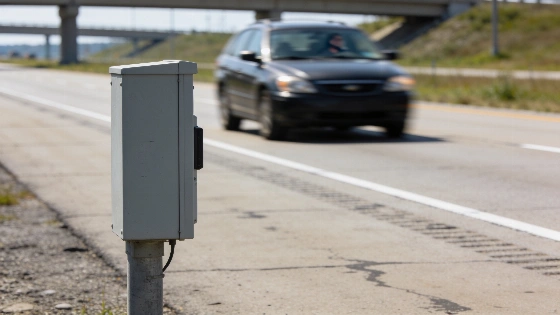
The contract covers a feasibility study for a road usage charge, or RUC. The plan could eventually replace some taxes collected at the pump with a per-mile fee. CDM Smith is also expected to help design and operate a pilot that would test whether the system could work in Michigan.
The initial account listed a contract amount, a participant target and a proposed schedule. The available primary records reviewed for this update did not independently confirm those details.
For Farmington and Farmington Hills, this is more than a state budget issue. A mileage charge could affect commuters, commercial traffic, electric-vehicle owners and households that use local roads to reach employment centers elsewhere in Oakland County.
The City of Farmington and the City of Farmington Hills would not set a statewide fee. Their residents could still be asked to test or use a future system.
Contract draws conflict concerns
Maddock said Michigan selected a company with a financial connection to the type of system under review. CDM Smith describes its work as support for a shift away from traditional fuel-tax revenue toward what it calls sustainable user-based fees.
The company has worked with officials in Washington, Hawaii, Minnesota and Utah.
Those facts do not show that CDM Smith acted improperly. They do raise a credibility issue for a study that could shape Michigan transportation funding policy.
No fresh direct comment from CDM Smith, the Michigan Department of Transportation, the State Administrative Board or Michigan legislators appeared in the available search results. The search did not independently confirm or rebut the conflict-of-interest concern.
The company's role goes beyond a written report. The State Administrative Board minutes say the contractor will handle project management, planning and procurement, statewide public outreach and education, plus legislative engagement.
That scope puts pressure on the state to explain the process. Local governments and civic groups would want to know how mileage will be measured, how personal data will be protected, whether rural and suburban drivers will face different treatment, and how revenue will be divided between state and local transportation programs.
Transparency matters here.
Six-month pilot planned
The pilot has been described as a six-month project scheduled to begin in February 2027. Jenny Roberts of CDM Smith said on the Talking Michigan Transportation podcast that organizers hoped to enroll 1,000 participants and make public education central to the effort.
Independent sources available for this update did not confirm the 1,000-person target or the February start date. Both details should be treated as proposed, not final.
The fiscal year 2026 budget required the feasibility study and the pilot, according to Jocelyn Garza, a Michigan Department of Transportation spokesperson. The reported $6.3 million would come from restricted state trunkline funds used to maintain and administer Michigan highways.
The amount still needs confirmation in a primary state contract or award document.
Michigan law offers a useful timing point. The Legislature's Chapter 257 summary says fees collected under the relevant provision must be credited to the transportation fund through Oct. 1, 2027.
That language does not show that Michigan has adopted a statewide mileage tax. It does matter to questions about how a future road-use charge would be handled.
The pilot is meant to test more than technology. State documents list technical feasibility, political palatability and public acceptance as goals.
That assignment gives the outreach work added weight. The same company would help test the policy and explain it to the public.
Residents who take part through civic networks, neighborhood groups or public meetings may ask how the campaign will separate neutral education from advocacy. The Farmington Public Schools board does not set state transportation policy. School transportation, bus routes and family commuting costs still show why local institutions may follow the study's assumptions.
Public opinion shifts after presentation
Michigan's 2024 transportation survey found that many respondents initially viewed a mileage tax negatively. Among 19,000 respondents, 43% expressed a negative or slightly negative opinion. Another 37% held a positive or slightly positive view, while 19% were neutral.
The results changed after respondents watched a Michigan Department of Transportation video about the proposal. The positive or slightly positive share rose to 43%. The negative or slightly negative share fell to 34%. The neutral share rose to 23%.
The presentation matters.
A public information campaign can explain the proposal. It can also affect how residents judge it. The information supplied for the contract does not identify a separate independent evaluator.
Any evaluation should disclose the survey wording, the order of the information, participation rates and demographic breakdowns. It should also say whether respondents are asked to compare mileage charges with existing fuel taxes.
Those details would help residents in Farmington, Farmington Hills and other parts of Oakland County decide whether the results measure public acceptance or a reaction to one presentation.
Questions about the transportation need
A former Michigan State Police officer attended an August meeting of a committee advising the state on the mileage tax. The officer questioned whether replacing fuel taxes is the right answer to Michigan's road-funding needs.
Meeting minutes record the officer's view that electric vehicles are not responsible for the condition of the state's roads. The officer also said electric vehicles account for only 1.2% of registered vehicles.
The officer pointed to Michigan's higher vehicle weight limit compared with other states. He said heavier vehicles cause more damage to the state's roads.
That argument shifts the debate away from electric-vehicle revenue. It focuses instead on how the state assigns road use and road wear among vehicle types.
Transportation coverage in 2026 has discussed a wider shift toward mileage-based user fees. States are examining the option as fuel-tax revenue becomes less predictable because vehicles use less fuel and electric vehicles become more common.
That background explains why Michigan is studying the idea. It does not show that a mileage charge would be fairer, cheaper or more effective than other funding options.
Michigan has not presented the mileage tax in the supplied material as an adopted replacement for pump taxes. For now, the state has a required study and a planned pilot.
No final pilot results, official cancellation or confirmed contract revision appeared in the available authoritative material.
Transportation committee leaders Rep. Pat Outman, R-Six Lakes, and Sen. Erika Geiss, D-Taylor, did not respond to requests for comment. Their committees are the House Transportation and Infrastructure Committee and the Senate Transportation and Infrastructure Committee, respectively.
State departmental registries and contract records should clarify the award amount, performance requirements, evaluator role, participant eligibility and reporting deadlines.
Until those records are available, claims about the exact contract value, launch date and enrollment target should remain attributed and provisional.
Michigan has a legitimate need to examine highway funding as vehicle technology changes. Paying a company that markets road-use charging systems to study and promote the same approach can weaken public confidence before the pilot starts.
The record does not prove wrongdoing by CDM Smith. It does show why MDOT and lawmakers need to explain how they will protect independence when the contractor's business interests overlap with the policy under review.
Readers following Michigan's wider approach to energy and infrastructure oversight can review this earlier state review.