Michigan lawmakers and candidates are calling for statewide rules on Flock Safety license plate cameras as concerns mount over privacy, data sharing and the rapid spread of surveillance technology across local communities
Michigan's political landscape is now sharply focused on the unchecked spread of Flock Safety license plate cameras, as candidates from both major parties demand new statewide rules to address mounting privacy concerns and the reach of police surveillance technology.
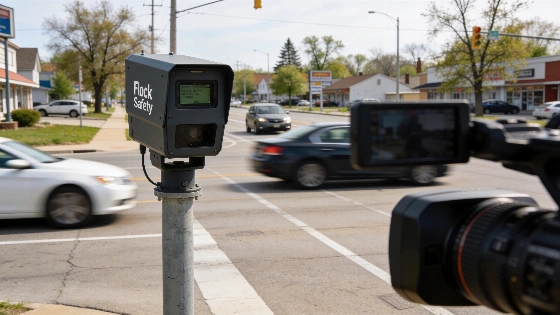
With more than 125 local law enforcement agencies across Michigan contracting with Flock Safety, the Atlanta-based company's automated cameras have become a routine sight at intersections and along busy roads. These devices capture images of every passing vehicle, logging license plates for police use-often without drivers' knowledge or clear limits on how long the data is kept or who can access it.
Statewide Scrutiny and Political Pressure
Democratic gubernatorial nominee Jocelyn Benson has called for immediate action, arguing that residents deserve transparency about when and how their movements are tracked. Benson wants the Legislature to set clear rules on who can access camera data, how long it is stored, and when it must be deleted. Her Republican opponent, John James, has echoed the need for balance, insisting that privacy rights are non-negotiable but that law enforcement must still be able to pursue criminals and protect the public.
The debate has spilled into Michigan's U.S. Senate race as well. Democrat Abdul El-Sayed has criticized what he calls the "mass proliferation" of Flock cameras, warning that ordinary drivers are being swept into a growing surveillance net. El-Sayed has accused Republican rival Mike Rogers of supporting unchecked expansion of the technology, though Rogers' campaign has stated he opposes tracking law-abiding citizens without oversight.
How Flock Cameras Work and Why Residents Are Concerned
Flock Safety cameras are typically installed at major intersections or entry points to communities. Each time a vehicle passes, the camera photographs the rear of the car and records the license plate number. Police agencies say the system helps them quickly locate missing persons, recover stolen vehicles, and solve crimes. However, privacy advocates argue that the technology amounts to round-the-clock surveillance of millions of innocent drivers, with little public input or oversight.
Concerns escalated in 2025 after reports surfaced that data from Flock cameras was being used for immigration enforcement and searches related to abortion access. While Flock Safety says it does not directly share data with federal agencies, investigations have shown that local and state police sometimes conduct searches on behalf of federal partners, including Immigration and Customs Enforcement. The lack of clear boundaries on data sharing has fueled public pushback at city meetings and town halls across Michigan.
Proposed Legislation and Law Enforcement Response
Legislation is now pending in both the Michigan House and Senate that would set a 14-day limit on how long license plate data can be retained and restrict camera use to specific law enforcement purposes, such as finding missing people, locating stolen vehicles, and investigating crimes. Republican Senator Jim Runestad, who sponsored the Senate bills, described the current situation as "the wild, wild west," with no consistent rules on data retention or sharing between municipalities.
Law enforcement groups, including the Michigan Sheriffs' Association, have said they are open to statewide regulation but worry that a two-week data retention window could hamper investigations that take longer to resolve. Flock Safety itself has responded to criticism by introducing new safeguards, such as requiring police to label searches with a case number and reducing the default data retention period from 30 days to seven.
Broader Context and Next Steps
Michigan is not alone in grappling with the rapid expansion of automated license plate readers. At least 16 states have adopted policies to regulate how such data is collected and used. The issue has also drawn attention in other states, as reported earlier about Pennsylvania's legislative efforts to set limits on Flock cameras and similar technology.
For now, Michigan communities remain divided. Some have rejected new camera contracts, while others continue to expand their use. The Legislature has yet to pass statewide rules, leaving local governments to set their own policies-or none at all. Residents who drive past these cameras each day are left with few answers about where their data goes or how it might be used in the future.
As the debate intensifies, it is clear that Michigan's approach to police surveillance technology is at a crossroads. Lawmakers and candidates are under pressure to deliver real transparency and enforceable limits, not just campaign rhetoric. Until the state enacts clear, enforceable rules, the balance between public safety and personal privacy will remain unsettled-and Michigan drivers will continue to be tracked by a system that operates largely out of public view.