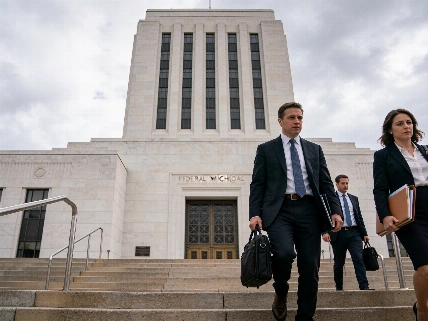
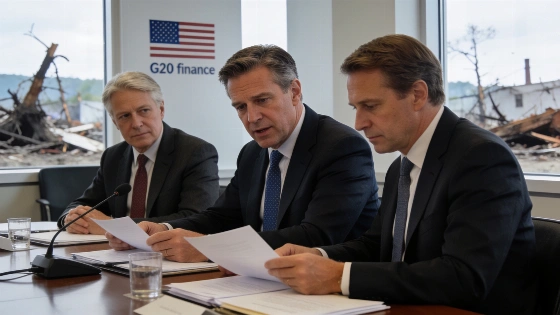
Treasury Secretary Scott Bessent is hosting G20 finance ministers in Asheville, North Carolina, as the U.S. seeks support on Iran and faces strained trade relations with key allies. The meetings follow renewed hostilities and recent hurricane recovery efforts.
Finance ministers from the world's largest economies are gathering in Asheville, North Carolina, this week for the Group of 20 (G20) meetings, hosted by U.S. Treasury Secretary Scott Bessent. The summit comes at a time of heightened international tension, with the United States pressing for stronger action against Iran and facing strained trade relations with major allies due to recent tariff increases.
The meetings, scheduled for Monday and Tuesday, are set against the backdrop of renewed hostilities between the U.S. and Iran, as well as escalating trade friction with Canada following a breakdown in negotiations. Bessent aims to use the summit to build consensus on economic growth and address rising global debt, but the current climate has made it more challenging to rally traditional allies.
Focus on Iran and Economic Pressure
One of the central issues for the U.S. delegation is seeking broader international support to isolate Iran, as the conflict in the region has now surpassed six months. While the U.S. conducted another strike on Iran over the weekend, Bessent has emphasized a preference for economic measures over military escalation. He announced plans to impose new sanctions on an additional bank and stated that the administration is prepared to use what he described as "financial violence" if necessary.
President Donald Trump has so far refrained from implementing the threatened "economic D-Day" against Iran, instead focusing on warning Iran's trading partners. China, as the largest buyer of Iranian oil, remains a particular challenge. Bessent indicated that all options remain under consideration regarding potential sanctions on Beijing, but rejected claims that the administration is hesitant to confront China. He also noted that both countries share an interest in reopening the Strait of Hormuz and preventing Iran from developing nuclear weapons.
Tariffs and Trade Tensions with Allies
The G20 meetings are taking place shortly after the U.S. imposed new tariffs on Canadian goods, following failed trade talks. These actions have disrupted established economic relationships and drawn criticism from some former officials, who argue that the U.S. must do more to consult with its allies if it hopes to secure their cooperation on broader international issues.
Daniel Fried, a former assistant secretary of state for European affairs, commented that the U.S. may struggle to rally its usual partners under the current circumstances. He suggested that more careful consultation with allies will be necessary to build the support needed for U.S. initiatives at the G20 and beyond.
Asheville's Recovery Sets the Stage
This year's G20 finance meetings are being held in Asheville, a city still recovering from the devastation of Hurricane Helene in September 2024. The hurricane resulted in more than 250 deaths and caused nearly $80 billion in damage across the Southeast, including Florida and the Carolinas. Bessent has pointed to Asheville's ongoing rebuilding efforts as a symbol of resilience and economic renewal, using the city's recovery as a backdrop for discussions on global growth and debt challenges.
During the summit, Bessent plans to highlight the U.S. agenda on deregulation, energy independence, and sovereign debt restructuring for developing countries. He has called attention to the global "mountain of debt" and stressed the need for economic growth as a solution.
The G20 meetings are expected to conclude with a joint statement addressing economic priorities and ongoing international challenges. Any agreements reached could influence future U.S. policy on sanctions, trade, and international cooperation.
The Group of 20 brings together finance ministers and central bank governors from the world's largest economies to coordinate policy on global economic issues. The outcomes of these meetings often shape international responses to crises and set the tone for future cooperation among member nations.