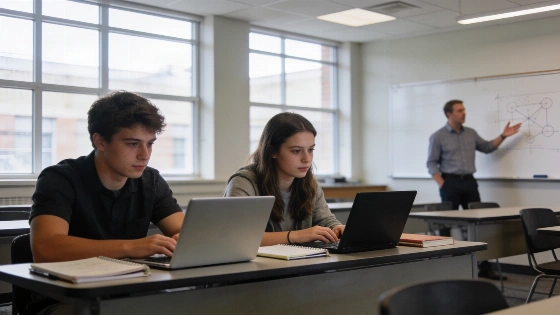
Davenport University, Adrian College, Northwood University and the College for Creative Studies are now offering three-year bachelor's degrees, aiming to reduce costs and attract more students as enrollment challenges persist across Michigan.
Four Michigan colleges have introduced three-year bachelor's degree programs, reducing the traditional timeline by a full year in an effort to make higher education more affordable and responsive to workforce needs. Davenport University, Adrian College, Northwood University, and the College for Creative Studies are now offering 90-credit bachelor's degrees, compared to the standard 120 credits required over four years.
This move comes as tuition costs continue to rise and many colleges face declining enrollment. The new programs are designed to save students both time and money, while also aligning more closely with employer expectations for job-ready graduates.
Colleges Respond to Cost and Enrollment Pressures
Davenport University in Grand Rapids began offering a three-year Bachelor of Applied Science in Applied Marketing this fall, following a year-long redesign of its curriculum and accreditation process. The program targets working adults, career changers, and traditional students seeking a faster, more affordable path to a degree. According to Davenport, tuition for a student taking 30 credits over two semesters is $31,770, meaning those who complete the degree in three years could save more than $30,000 by skipping a fourth year, with additional savings possible through financial aid.
Enrollment at Davenport has dropped from 8,715 students in 2014 to 4,815 in 2024, a nearly 45% decline, which is significantly higher than the statewide average. The university's leadership says the new degree is not simply a cut-down version of an existing program, but a focused curriculum designed to meet both student and workforce needs.
Northwood University in Midland has also launched a three-year bachelor's degree in cybersecurity, joining a national consortium of institutions working to innovate bachelor's programs. Tuition at Northwood is $17,650 per semester for 12 to 17 credit hours, so students could save more than $35,000 by completing their degree in three years, before aid and scholarships are applied.
Accreditation and Academic Standards
The Higher Learning Commission, which accredits degree-granting colleges and universities in the region, began reviewing and approving reduced-credit bachelor's degrees in 2024. According to the commission, these programs must maintain the same academic rigor and quality as traditional 120-credit degrees and demonstrate that they meet both student needs and accreditation standards. Since the guidelines were issued, 77 reduced-credit bachelor's degrees have been approved at 33 institutions.
Adrian College, located in southeast Michigan, is offering two new 90-credit bachelor's degrees in business administration, with enrollment expected to begin in spring 2027. The College for Creative Studies in Detroit has also received approval to offer a three-year Bachelor of Arts in Business for Creative Industries. While Northwood and Davenport have seen enrollment declines, Adrian College's enrollment has increased by nearly 8% over the past decade, and the College for Creative Studies has remained essentially flat.
Debate Over Academic Quality
The introduction of three-year bachelor's degrees has sparked debate among educators and academic organizations. Critics, including leaders of the American Association of University Professors and the American Federation of Teachers, argue that reducing credit requirements could undermine academic integrity and limit students' intellectual development. They contend that a bachelor's degree should provide both workforce preparation and broad intellectual growth, not just a faster route to employment.
Supporters of the new programs say they offer a practical solution for students who want to enter the workforce sooner and reduce their educational debt. Some students, like Davenport junior Gwendolyn Spigarelli, see value in the option to complete a degree more quickly, especially for those eager to start their careers.
Broader Trends and Next Steps
The move toward accelerated bachelor's degrees is part of a larger national trend as colleges seek to attract a broader range of students amid a shrinking population of traditional college-age applicants. Employers are also encouraging accreditors to allow more flexible degree options that better align with industry needs.
Michigan has recently increased funding for programs that help high school students earn college credits, such as the $40 million allocation for dual enrollment highlighted in a recent Farmington Voice report. These efforts reflect a growing emphasis on affordability, efficiency, and workforce alignment in higher education across the state.
Some Michigan colleges, like Concordia College, are also experimenting with accelerated programs that allow students to complete traditional 120-credit degrees in three years by taking classes year-round. While not all institutions are facing enrollment declines, the push for shorter, more affordable degree options is likely to continue as colleges adapt to changing student demographics and economic pressures.
The Higher Learning Commission will continue to review and approve new reduced-credit programs, and Michigan colleges are expected to monitor the outcomes of these initiatives as they consider expanding similar offerings in the future.