Federal Reserve Chair Kevin Warsh signaled that further interest rate increases could be on the table as U.S. inflation remains above the central bank's 2% target, raising questions about the timing and impact of future Fed decisions.
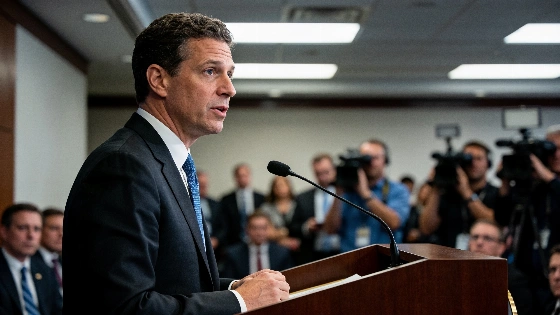
Federal Reserve Chair Kevin Warsh indicated Friday that the central bank may need to raise interest rates in the coming months if inflation does not show clearer signs of slowing. Speaking at the Fed's annual conference in Jackson Hole, Wyoming, Warsh said recent data shows inflation has eased slightly, but underlying trends remain a concern for policymakers.
Warsh, who took over as Fed chair in late May, emphasized that inflation is still running above the central bank's 2% target. He noted that while some recent reports suggest a modest cooling, the overall pace of price increases has not improved enough to assure the Fed that inflation is moving toward its goal at a satisfactory rate.
Wall Street Reacts to Fed's Stance
Following Warsh's remarks, financial markets responded with caution. The yield on the two-year Treasury note, which often reflects expectations for Fed policy, rose from 4.22% to 4.30%. This movement suggests investors are increasingly anticipating a possible rate hike in the near future. However, yields on longer-term Treasuries remained mostly unchanged, indicating that markets do not expect a prolonged period of higher rates.
Warsh's comments reassured some on Wall Street that the Fed remains focused on fighting inflation, even as he avoided providing detailed guidance on the timing of any policy moves. According to Jon Faust, an economist at Johns Hopkins and former adviser to previous Fed chair Jerome Powell, Warsh managed to communicate a tougher approach on inflation without committing to specific actions.
Inflation Data and Policy Uncertainty
Recent inflation figures show that 54% of goods and services tracked by the government saw price increases of 3% or more over the past year. While this is down from the pandemic peak, it remains well above the 32% average seen in the two decades before the pandemic. The Fed's preferred inflation measure stood at 3.7% in July, still above the target.
Warsh argued that current interest rates may not be restrictive enough to slow economic activity and bring inflation down. He pointed to strong business investment in artificial intelligence infrastructure and continued robust consumer spending as signs that higher rates may be needed. The next Fed meeting is scheduled for September 15-16, but Warsh's remarks did not confirm whether a rate hike will occur at that time.
Debate Over Fed Communication
Warsh has expressed skepticism about providing what analysts call "forward guidance"-detailed signals about future rate moves-arguing that it can limit the Fed's flexibility. Some economists believe he could offer more insight into his policy views without committing to specific actions. On Friday, Warsh reiterated his preference for keeping the Fed's options open, while clarifying that short-term interest rates remain the main tool for addressing inflation.
His approach has drawn attention as President Donald Trump continues to call for lower interest rates and has renewed efforts to remove Fed Governor Lisa Cook, a move that could shift the balance of the seven-member board. The ongoing debate over the Fed's direction has contributed to rising bond yields, which can increase borrowing costs for the government and consumers.
Broader Economic Context
Long-term Treasury yields have climbed in recent weeks, driven by factors such as growing federal deficits and heavy borrowing by technology firms investing in AI infrastructure. Last week, the 30-year Treasury bond yield reached its highest level in 19 years, prompting Treasury Secretary Scott Bessent to take steps to buy back bonds and ease upward pressure on yields.
For more on how federal policy debates are affecting local and national institutions, see our coverage of recent tensions between state election officials and the Trump administration.
The stakes for the Fed's next moves remain high, as inflation continues to outpace wage growth for many Americans. Warsh's cautious but firm tone signals that the central bank is prepared to act if inflation does not move closer to its target in the months ahead.
The Federal Reserve's decisions on interest rates directly influence borrowing costs for households, businesses, and local governments. As the central bank weighs its next steps, communities across the country will be watching closely for signs of relief from persistent inflation and clarity on the path forward for monetary policy.