Abdul El-Sayed, Michigan's Democratic U.S. Senate nominee, apologized to the state's Jewish Democratic Caucus for remarks made after a March synagogue attack, aiming to address concerns and move past recent controversies ahead of the general election
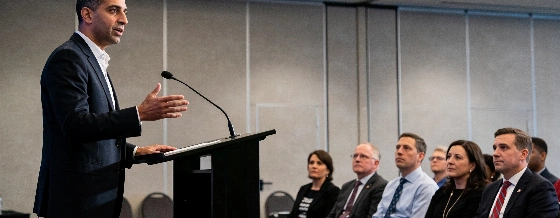
Abdul El-Sayed, the Democratic nominee for U.S. Senate in Michigan, publicly apologized to the state's Jewish Democratic Caucus on Saturday for comments he made following a violent incident at a Detroit-area synagogue in March. The apology came during a party convention in Lansing, where El-Sayed addressed concerns about his earlier remarks and sought to unify the party after a contentious primary season.
El-Sayed's initial comments, made in response to an attack at Temple Israel in West Bloomfield, drew criticism from some community members who felt his statements appeared to justify the violence by referencing the attacker's personal losses in the Middle East. El-Sayed clarified that his intention was not to excuse the act, but to provide context, and acknowledged that the timing and framing of his remarks may have caused pain.
Background on the Synagogue Attack
The March incident involved a man who drove his vehicle into Temple Israel, a prominent synagogue in a Detroit suburb, and fired at a security guard before dying by suicide. Authorities later identified the attacker as Ayman Mohammad Ghazali, who had reportedly lost four relatives in an Israeli airstrike on Lebanon the week before the attack. The event heightened security concerns and prompted widespread condemnation from local and state leaders.
In a video statement at the time, El-Sayed condemned the violence but added that "hurt people hurt people," referencing the attacker's family tragedy. This comment led to accusations from critics that he was rationalizing the attack, prompting calls for clarification and an apology from Jewish organizations and political figures.
Political Context and Response
El-Sayed's apology is part of a broader effort to bring together Michigan Democrats after a primary campaign marked by sharp divisions. He recently defeated U.S. Rep. Haley Stevens in a closely watched race and has faced scrutiny over past associations and allegations of antisemitism, including his connection to commentator Hasan Piker. With the general election approaching, El-Sayed is working to address concerns within the party and focus on the upcoming contest against Republican nominee Mike Rogers, a race that could influence control of the U.S. Senate.
During his remarks to the Jewish Democratic Caucus, El-Sayed emphasized that he did not intend to minimize the pain experienced by the Jewish community and expressed regret for any hurt his words may have caused. He stated that providing context for the attack was not appropriate at that moment and reiterated his condemnation of violence targeting places of worship.
Looking Ahead to the General Election
The U.S. Senate race in Michigan is expected to be closely contested, with both parties viewing the seat as critical to determining the balance of power in Washington. El-Sayed's efforts to address intra-party concerns and clarify his positions come as he seeks to build a broad coalition of support ahead of November's election. The apology to the Jewish Democratic Caucus marks a step in his campaign's attempt to move beyond recent controversies and focus on issues important to Michigan voters.
Michigan's Jewish community, one of the largest in the Midwest, has played an active role in state politics and advocacy. The response to the Temple Israel attack and subsequent political discourse highlights the ongoing challenges of addressing security, community relations, and political rhetoric in a diverse state. As the campaign continues, both major candidates are expected to engage with a wide range of constituencies and address concerns raised during the primary season.