
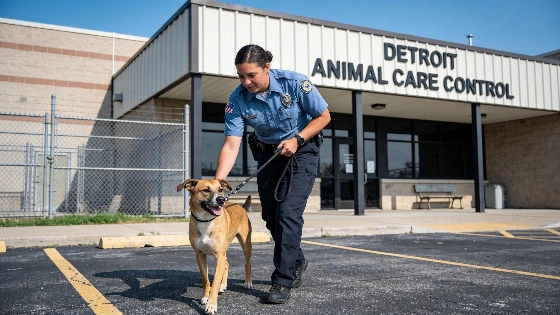
A review of Detroit's animal control records finds that euthanasia rates for dogs and cats dropped after Abdul El-Sayed became health director in late 2015, despite recent political claims suggesting otherwise
Recent claims in Michigan's U.S. Senate race have put Detroit's animal control operation under scrutiny, with critics alleging that thousands of dogs and cats were euthanized while Abdul El-Sayed served as the city's health director. However, a review of city and state records shows that animal euthanasia rates actually declined during El-Sayed's tenure.
El-Sayed, who led Detroit's health department from August 2015 to early 2017, has faced criticism from Republican opponents and national party organizations. They have cited figures as high as 4,000 animals euthanized "under his watch," using the issue in campaign messaging and fundraising efforts. El-Sayed's campaign, meanwhile, maintains that he inherited a troubled department and implemented reforms that improved outcomes for animals in city care.
Oversight Shift and Department Changes
Detroit's animal control operation was transferred from the police department to the health department in October 2015, shortly after El-Sayed began his role as health director. Prior to this change, the department faced significant challenges, including staffing shortages, outdated procedures, and a whistleblower lawsuit alleging poor conditions and high euthanasia rates.
El-Sayed was not named in the lawsuit, which was filed before he assumed oversight. According to city officials at the time, the move to place animal control under the health department had been planned before the lawsuit was filed. Once in charge, El-Sayed replaced the animal control director and brought in Melissa Miller, an experienced animal shelter professional, to lead the agency. He also established a committee to review operations and set new policies aimed at increasing animal transfers to rescues and shelters rather than resorting to euthanasia.
Animal Euthanasia Data
State records show that Detroit Animal Control euthanized 2,260 dogs and cats in 2015. In 2016, the first full year under El-Sayed's oversight, that number dropped to 1,107. When El-Sayed left the department in early 2017, the annual total was 1,385. Over the three-year period from 2015 to 2017, a total of 4,752 animals were euthanized, but El-Sayed's direct oversight covered only about 16 months of that span.
Based on monthly averages, approximately 1,900 animals were euthanized during the period El-Sayed managed the department. This is less than half the figure cited by some critics, who included full-year totals for periods before and after his leadership. The figures do not include animals euthanized at the request of owners.
Reforms and Outcomes
During El-Sayed's tenure, Detroit Animal Care and Control underwent restructuring and prioritized transferring animals to outside shelters and rescues. According to Miller, who led the agency after El-Sayed's appointment, more than 65% of animals were placed with families or rescue organizations within two years, compared to over 80% euthanized in the years prior to the leadership change.
El-Sayed's administration also addressed operational issues such as lack of food budget and inconsistent animal care, which had previously made adoptions more difficult. The department's save rate improved significantly, and annual euthanasia numbers remained below 2015 levels through 2018.
Context and Political Claims
The Republican National Committee and other critics have continued to cite high euthanasia numbers in campaign materials, but these claims do not align with the actual period of El-Sayed's oversight or the documented decline in euthanasia rates. The city's animal control operation has since seen fluctuations in annual euthanasia totals, with 2,559 animals euthanized in 2025, more than double the 1,101 reported in 2024, according to recent records.
Detroit's experience highlights the challenges of reforming municipal animal control operations and the importance of accurate data in political debates. The city's animal care policies and leadership changes during El-Sayed's tenure resulted in measurable improvements for animals in Detroit's care, according to available records and agency officials.
Detroit Animal Care and Control is responsible for managing stray and surrendered animals within city limits. The agency's policies and leadership have a direct impact on animal welfare outcomes, including euthanasia and adoption rates. Changes in oversight, staffing, and procedures can significantly affect these outcomes, as seen during the period reviewed. Residents and animal advocates continue to monitor the agency's performance as part of broader discussions about public services and accountability in Detroit.