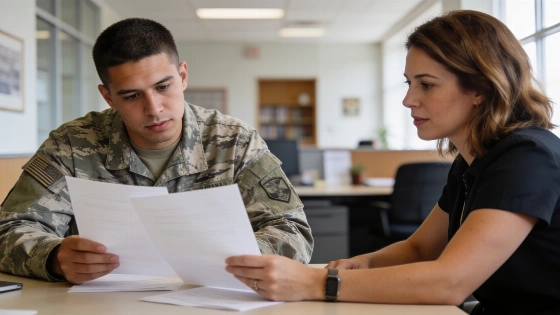
With traditional college enrollment declining, U.S. colleges are being called to treat military-connected students as a core population, not a niche group, by building coordinated support systems that go beyond processing benefits.
As the number of traditional college-aged students continues to fall nationwide, higher education institutions are being urged to rethink how they serve military-connected students-including veterans, active-duty service members, and their families. Experts say these learners represent a significant and growing segment of the student population, yet many colleges still treat them as an afterthought rather than a strategic priority.
Military-connected students now number more than 800,000 across the country, according to recent data. In addition, nearly 900,000 people benefit from Veterans Affairs education programs each year. These students include first-time college-goers, working adults, parents, and mid-career professionals, many of whom bring leadership experience and a strong sense of purpose to campus.
Support Often Fragmented
Despite the long-standing relationship between the military and higher education-dating back to the original GI Bill-many colleges still focus primarily on processing benefits paperwork for military-affiliated students. After admissions, these students are often left to navigate academic, financial, and career challenges on their own unless they actively seek help. This fragmented approach can make it difficult for military-connected learners to persist and complete their degrees, even when tuition is fully covered.
Military-connected students are more likely than traditional students to enroll part-time, transfer between institutions, or pause their studies due to deployments, relocations, or family obligations. Research shows that simply making support services available is not enough; utilization varies widely, and many students do not engage with resources unless outreach is intentional and coordinated.
Examples of Coordinated Support
Some colleges and states are beginning to address these gaps. Golden Gate University, for example, integrates support for military learners into its broader student success model. The university participates in the Post-9/11 GI Bill and Yellow Ribbon Program, but also offers dedicated success coaching and a veterans center staffed by military veterans. The goal is to help students not just enroll, but stay on track, complete their degrees, and transition into meaningful careers.
Fordham University has established an Office of Military and Veterans' Services, supports a Student Veterans of America chapter, and provides programming to help military-connected students translate their service experience into academic and professional pathways. These efforts focus on helping students articulate their skills, plan coursework, and prepare for life after graduation.
State Initiatives and Policy Changes
States are also taking steps to improve education-to-career pathways for veterans. In Alabama, lawmakers have advanced a bill to create a faster route for veterans to become teachers, allowing eligible candidates with a minimum number of college credits to earn a temporary teaching certificate and begin working in classrooms with mentorship. The state has also launched a partnership with a mental health platform to provide veterans with free teletherapy and 24/7 crisis support.
As colleges face demographic shifts and increased scrutiny over the value of higher education, experts argue that serving military-connected students is both a practical necessity and a public good. These learners are backed by significant public investment and have a clear demand for postsecondary education.
Colleges and universities are being called to move beyond treating military-connected students as a niche group and instead recognize them as a central part of the future of higher education. Coordinated support systems that connect financial aid, academic advising, career guidance, and a sense of belonging are seen as essential for student success.
Military-connected students have long contributed leadership, maturity, and purpose to American campuses. As the higher education landscape changes, institutions that invest in intentional support for this population may be better positioned to thrive in the years ahead.
- Jobs & Employment
- Benefits & Assistance
- U.S. News for Michigan
- Explainers & Practical Guides
- Data & Investigative Analysis
- School Calendar
- School Closure
- School Delay
- School Enrollment
- Student Registration
- Oakland Community College
- Schoolcraft College
- Oakland University
- University of Michigan
- Wayne State University
- Veterans Benefits