A committee memo puts the proposed USDA work at $150,000 a year and suggests a three-year agreement. Neither figure has been independently confirmed.
Bloomfield Township's current ordinances bar hunting, Trustee Mark Antakli said at the Oct. 12, 2026, meeting. Trustees unanimously approved developing a deer management plan with the U.S. Department of Agriculture. Nearly two dozen residents from across Metro Detroit attended and urged officials to consider nonlethal approaches.
The resolution leaves open whether organized culls will be part of the plan. It says they may take place during timeframes recommended by the USDA. Antakli said an ordinance change would be required before a cull could proceed.
The ordinance question remains the hard stop for any organized cull.
Reporting reviewed for this article confirms the vote, but did not independently establish any later township action or the status of a federal agreement.
Farmington Hills resident Nutan Shah, 63, a member of the Jain Society of Detroit, asked officials to address deer-related concerns without urban archery or organized killing. Jainism teaches nonviolence and minimizing harm to living things, including animals and plants.
Several residents proposed sterilization. Farmington Hills resident Michelle Dimaria said the procedure could keep deer in the area while preventing reproduction. Residents also pointed to White Buffalo Inc., which has worked with cities including Ann Arbor on deer management.
The township's Deer Management Advisory Committee said Ann Arbor's sterilization effort was unsuccessful and not cost-effective. Committee member John Cervenak also asserted that the Michigan Legislature has banned sterilization surgeries and drugs for deer. Official materials reviewed for this article did not verify that claim. Current-season guidance from the Michigan Department of Agriculture and Rural Development covers venison handling and sales, but says nothing about municipal deer-control rules or a sterilization prohibition. Antakli said the township could reconsider sterilization if state law changes. According to the committee, it is not currently an available option.
A committee memo estimates that a USDA biologist would cost $150,000 a year. Neighboring communities might share the expense, and the agreement would last three years, according to the memo. Those figures and terms have not been separately confirmed in the USDA materials reviewed. The materials include USDA publication records, but they do not establish a Bloomfield Township agreement or appointment.
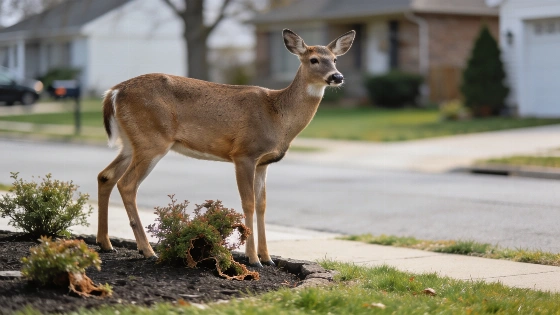
Residents have reported deer colliding with vehicles and going after dogs. Others said deer chase people. Residents have also complained about landscaping damage, and said repellents and fencing have not worked.
The debate follows a cull conducted about a year and a half earlier by Farmington Hills and Farmington. Southfield also took part. The effort removed 70 white-tailed deer across the three cities. Critics urged officials to pursue nonlethal methods.
Michigan's statewide deer hunting season began on Oct. 7, 2026, according to the state agriculture department. Its guidance discusses processing and selling venison. It also covers transfers. The guidance does not establish that hunting is permitted under Bloomfield Township ordinances. Statewide hunting rules and local restrictions are separate questions.