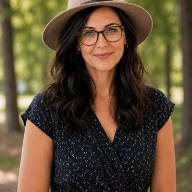
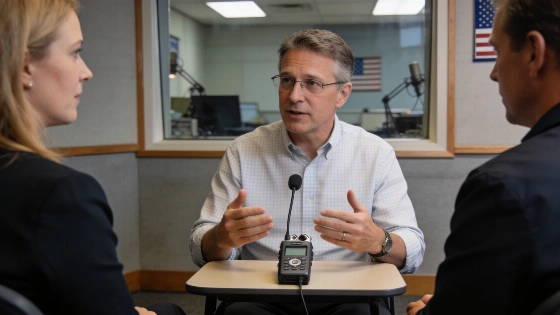
Nicole Bedera says USA Today reused interview material in other Cornell stories without telling her. The dispute comes as the university's handling of Jane Doe's allegations faces renewed scrutiny.
Nicole Bedera says she agreed to speak with USA Today about sexual-assault allegations at Cornell University after making clear she did not want her comments used to cast doubt on the survivor's credibility. Later, she found material from that interview in stories by journalists she had never spoken with. She believed one story presented the survivor's account as inconsistent.
USA Today said reporters covering the same story routinely share interviews and other information. The outlet also said Bedera's comments were neither altered nor taken out of context. The disagreement turns on what that newsroom practice meant for a source who says she made off-the-record remarks in a separate interview.
The dispute is unfolding as the case faces renewed legal scrutiny. In a civil lawsuit filed in September 2026, Jane Doe alleges that members of the Chi Phi fraternity pressured her to consume alcohol and ketamine before sexually assaulting her on October 19, 2024. The seven defendants deny wrongdoing. As of October 12, 2026, no criminal charges had been filed.
After the lawsuit became public, Tompkins County District Attorney Matthew Van Houten said his office was reopening its review. New York Gov. Kathy Hochul appointed state Attorney General Letitia James as special prosecutor for an independent investigation. [1][2][3][10]
Bedera studies how institutions respond to sexual-assault allegations. She discussed her concerns with WAMC's Sam Dingman. Before that, she had interviewed with USA Today reporter Alyssa Goldberg and said she wanted to ensure her remarks would not be used to undermine Jane Doe, the survivor identified in the Cornell coverage.
Bedera examines what she calls institutional betrayal. She is also the author of "On the Wrong Side: How Universities Protect Perpetrators and Betray Survivors of Sexual Violence."
Goldberg published a story that Bedera said reflected the institutional-betrayal framing they had discussed. USA Today journalists Rachel Hale and Chris Kenning also published stories about the case using material attributed to Bedera. She says she had not spoken directly with either reporter.
Hale's story included a remark Bedera recognized from her conversation with Goldberg. Bedera said the remark had not been published before, and took its appearance as evidence that the interview audio had been shared. Kenning's article paraphrased her, she said, and described a timeline in which Jane Doe's account supposedly shifted.
That framing troubled Bedera. In her view, the article treated alleged inconsistencies as established fact based on information from law enforcement. She said determining whether Jane Doe's account changed would require examining the available evidence.
Van Houten has said the initial decision not to bring criminal charges relied substantially on a six-page written statement from Jane Doe. He said it did not allege that she had been forcibly drugged or raped by multiple people. In later police interviews on November 14 and 15, 2024, however, she reportedly said she was "100% sure" she had been raped. The district attorney said he did not receive complete transcripts of those interviews. [2]
By the time Bedera saw Kenning's story, Dingman noted, The New York Times had reported that Jane Doe consistently described the incident as rape from her first report to police. Bedera said she contacted an editor to challenge the story. She believed it should have been updated in light of that reporting.
Bedera said the editor replied that USA Today interviews were proprietary. She understood this to mean the outlet could use and share interview material among its journalists, leaving her little recourse if she objected to how a comment was used.
The available material does not establish that the recordings were placed in an artificial-intelligence service. Bedera described that as a fear, including the possibility that an off-the-record comment could later surface without its original context.
Dingman said WAMC reporters also share interviews and source material within their newsroom to support coverage across broadcasts. He said the practice depends on colleagues using material responsibly, and acknowledged that a source may not share the newsroom's assumptions about how an interview will be used.
After more than a decade speaking with journalists, Bedera said, the experience felt unusual. She was particularly concerned that the stories could give readers the impression she had personally spoken with reporters she had never met.
The disagreement comes alongside questions about Cornell's own investigation. The university's Title IX proceeding was conducted privately. Two students were expelled and two others suspended. Cornell did not provide its findings to the district attorney.
Cornell police offered their investigative materials to the prosecutor, who declined to review them, according to reporting on the case. Cornell's trustees separately commissioned King & Spalding to review the university's handling of the matter. Former acting U.S. Attorney General Sally Yates led that investigation. [5]
A USA Today spokesperson told WAMC that sharing interviews and other information among reporters working on the same story is standard newsroom practice. The outlet said the original reporter is credited as a contributor on each article. It also said Bedera's comments were not altered or used out of context, and that it values her expertise and contributions.
Questions about privacy and public court records have also surfaced. On October 9, a judge ordered part of the civil case record sealed after a filing inadvertently included the address of a U.S. Marine and his family. They were unrelated to the case but shared a name with a defendant. The court directed that redacted documents be filed to reduce the risk of doxxing. [9]
Attribution alone does not show whether a source knew who might use an interview or how the material could be framed. Bedera's account and USA Today's stated policy leave a gap between her understanding of the interview and the outlet's sharing practice. Newsrooms that share reporting internally should make those boundaries clear to sources, particularly in coverage where the framing of a survivor's credibility carries substantial weight.
The available record establishes Bedera's concern. It does not establish that her audio was processed by an AI service or that her comments were deliberately distorted. Related coverage includes USA Today's case report and ABC News' account of Jane Doe's statements to a university hearing panel.