More than 700 illegal drones were intercepted during the 2026 FIFA World Cup, prompting new investments and coordination among U.S. cities and states to strengthen airspace security for major events and future drone operations.
During the 2026 FIFA World Cup, U.S. authorities intercepted over 700 unauthorized drones, marking a significant shift in how cities and states approach airspace security. The large-scale event, hosted across 11 U.S. cities, became a proving ground for new counter-drone technologies and interagency coordination, according to federal and industry officials.
While the tournament itself concluded without major security incidents, the preparations and response to drone threats have set a new standard for public safety at large gatherings. Officials say the experience is already shaping how local governments plan for future events and everyday drone activity.
Federal Funding and Rapid Rollout
In the lead-up to the World Cup, unauthorized drones were identified as a top concern by public safety leaders in host cities. In response, Congress allocated $500 million for the Counter Unmanned Aircraft Systems Grant Program, with the Federal Emergency Management Agency (FEMA) distributing $250 million to states hosting matches and the Washington, D.C. region. The funding aimed to help states detect, track, and mitigate drone threats.
However, a 76-day federal government shutdown in early 2026 delayed the rollout of these resources. Many cities and states had to move quickly to acquire equipment and finalize agreements once the shutdown ended, leading to what some described as a "chaotic" but ultimately effective deployment of new security measures.
Technology and Coordination in Action
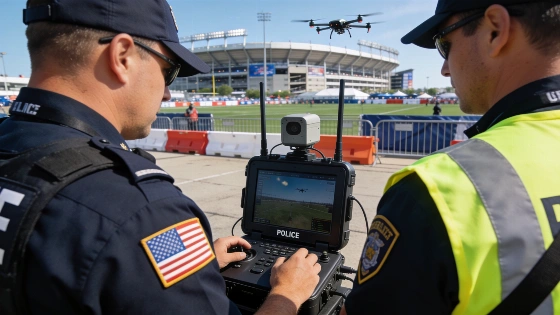
Kansas City, one of the host cities, managed to submit its paperwork just before the shutdown, giving it a slight head start. Like other cities, Kansas City had to coordinate across multiple jurisdictions, including state, county, and local agencies, to ensure a unified approach to drone detection and response. Technology providers such as Airspace Link and D-Fend Solutions played key roles, supplying systems that allowed agencies to monitor, take control of, and safely land unauthorized drones without disrupting the event.
Local law enforcement agencies reported that the new technology significantly improved their ability to detect and respond to drone activity. Despite the compressed timeline, hundreds of illegal drones were brought down during the tournament, with security operations largely invisible to players and spectators.
Looking Ahead: Lasting Impact on Drone Policy
With the World Cup concluded, attention is turning to how the infrastructure and lessons learned can be applied to future events and routine drone operations. The remaining $250 million in federal funding is expected to support additional states and help build long-term capacity for managing drone traffic.
Companies are also expanding commercial drone services, such as delivery programs in Kansas City and other cities, while law enforcement agencies are increasingly using drones for public safety tasks. The Federal Aviation Administration is moving toward finalizing rules for drones to operate beyond visual line of sight, which could further expand drone use for deliveries, inspections, and emergency response.
Officials and industry leaders agree that the World Cup served as a catalyst for advancing drone security and airspace management in the U.S. The event highlighted both the challenges and opportunities of integrating drones into daily life, and set the stage for continued investment and regulatory development.
The rapid deployment of counter-drone systems during the World Cup demonstrated the importance of interagency cooperation and clear guidance for local governments. As drone technology becomes more common, cities and states are expected to play a larger role in managing their skies, with ongoing support from federal programs and private-sector partners.