
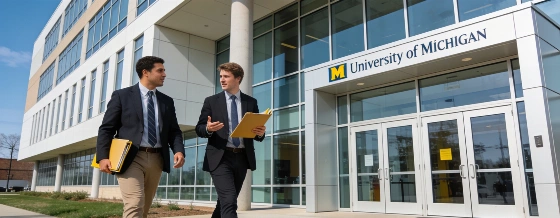
The University of Michigan has opened a $10 million center dedicated to histotripsy research, aiming to advance noninvasive medical technology and expand its clinical use.
The University of Michigan has opened its $10 million Histotripsy Research Center, announced on September 16, 2026. The new facility is designed for research, not patient care, and is recognized by local and regional outlets as a dedicated space for scientific work in Ann Arbor and Oakland County. This distinction matters for the community, as the center is focused on supporting research and collaboration rather than offering clinical services at this stage. (WEMU-FM).
Histotripsy, a noninvasive technology developed at the University of Michigan since 2002, is at the core of the center's work. The facility offers researchers free access to specialized equipment, lab space, and trained staff. The university highlights this as part of its commitment to experimental medicine and innovation, a point also made by President Domenico Grasso in university materials.
Currently, the only FDA-approved clinical use of histotripsy is the Edison system by HistoSonics, which received De Novo clearance for treating primary and metastatic liver tumors on October 6, 2023. While recent studies have explored possible uses for histotripsy in organs like the thyroid, pancreas, breast, prostate, brain, and skin, no additional FDA approvals for these uses have been confirmed as of September 2026. The center aims to generate the research needed for future regulatory steps and wider clinical adoption.
The university's investment also supports the local research community, including partnerships with area schools and municipal agencies. Farmington Public Schools and other Oakland County institutions may see more STEM outreach and research internships as the center grows. Both Ann Arbor and Farmington Hills have noted the value of university-led research in recent civic updates. Residents can find information about upcoming public meetings and research events on the Farmington Hills City Council calendar.
By offering no-cost access to advanced research tools, the center is expected to draw investigators from across Michigan and beyond. This approach encourages collaboration among academic, municipal, and healthcare partners, supporting the university's goal of tackling major societal challenges through interdisciplinary work. It also aligns with Michigan's broader push for biomedical innovation and economic growth.
As research at the center moves forward, local healthcare providers and emergency services in Ann Arbor and Oakland County will be watching for new clinical trials and educational programs. The University of Michigan's work in histotripsy research adds to its reputation as a leading medical institution and is expected to bring long-term benefits to patients, students, and the wider community in southeast Michigan.