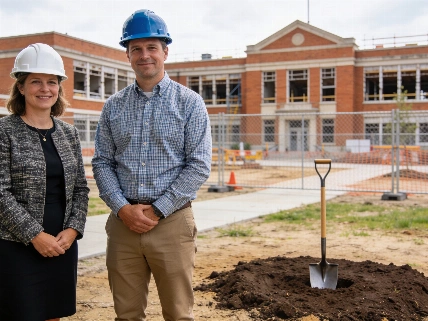
The $383.4 million Southeast Michigan Psychiatric Hospital is due to accept patients in late October. The Northville campus will provide 264 beds and expanded care for adults, children and adolescents with severe mental illness or developmental disabilities.
Michigan formally completed the Southeast Michigan Psychiatric Hospital in Northville on Oct. 7, 2026. The $383.4 million facility is scheduled to accept patients in late October.
The campus will provide 264 beds for people whose care needs have outgrown Michigan's limited inpatient capacity. It will serve adults, children and adolescents with severe mental illness or developmental disabilities.
The project adds 54 beds to Michigan's four state-run psychiatric hospitals, bringing the statewide total to about 600. The Michigan Department of Health and Human Services says patients from Walter P. Reuther Psychiatric Hospital in Westland will begin moving to Northville later in October.
That increase helps a system replacing older facilities, but it does not close the gap. The Treatment Advocacy Center reported in 2024 that Michigan lacked more than 1,000 psychiatric beds even after privately operated facilities were counted.
The completed campus covers 406,000 square feet and contains 231 rooms. Of the 264 beds, 192 are for adults and 72 are for children and adolescents. The building has 198 single rooms with private bathrooms and 33 double rooms, according to the MDHHS project briefing.
Northville replaces two older state facilities: the former Hawthorn Center, a children's psychiatric hospital on the same site, and Walter P. Reuther Psychiatric Hospital, which opened in 1979. Reuther is expected to close once its patients move to the new campus.
Michigan Department of Health and Human Services acting director Amy Epkey said construction finished on schedule and below the approved budget. Gov. Gretchen Whitmer and the Michigan Legislature supported the budget investments that financed the project. Michigan's fiscal year 2027 budget includes $33.8 million to begin operating the hospital.
Hospital director Mary Clare Solky said the facility will provide compassionate, high-quality psychiatric care. The hospital will have 72 youth beds within its 264-bed total. Some stays are expected to last three to six months, while others may run a year or longer.
Once it opens, the complex is expected to be Michigan's only psychiatric hospital with inpatient care for children. It will also be the state's largest facility for adults and minors at the same time. Separate residential and programming areas will serve each group.
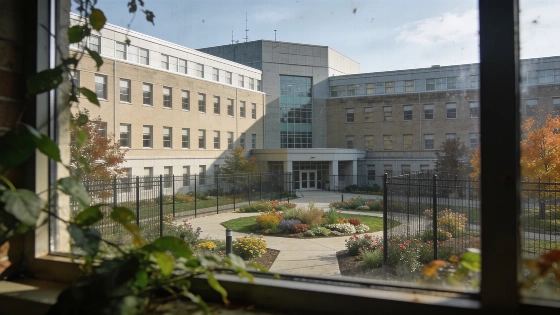
The design breaks with the institutional feel of older psychiatric hospitals. Nature imagery and floral colors appear in the halls, patient rooms and playgrounds. The building also makes broad use of natural light. Indoor four-season rooms have open mesh windows throughout the year.
The campus includes 12 secure outdoor courtyards, a gym, art rooms, a music room, a hair and nail salon and other gathering spaces. A fully equipped practice apartment will let adult patients work on independent-living tasks. The medical offices include a dentist.
For families in Farmington, Farmington Hills and nearby Oakland County communities, the hospital will matter most when local crisis systems, schools and outpatient providers cannot safely handle a person's needs. The City of Farmington and City of Farmington Hills do not operate the state facility. The Farmington Public Schools board and Oakland County administration handle community and education responsibilities separate from state psychiatric hospitalization.
The new hospital takes on two problems at once: aging state facilities and a shortage of beds for people who need extended psychiatric treatment. Patients may stay for months or more than a year. That makes these beds different from the short-term stabilization beds used elsewhere in the behavioral health system.
Michigan's shortage grew out of a longer change in the way states deliver mental health care. Psychiatric hospitals became overcrowded, so Michigan and other states shifted care closer to home instead of relying mainly on large inpatient institutions. Under former Gov. John Engler, Michigan closed more state psychiatric hospitals during the 1990s.
The shift put more pressure on the hospitals that remained. Funding problems added to that strain in later decades. Northville restores some state capacity, but the Treatment Advocacy Center's 2024 estimate shows why 264 beds cannot meet demand across Michigan.
The number of beds is a separate issue from the building's design. A calmer setting may make inpatient care more humane, but capacity still determines how many people can receive that care at one time. State of Michigan departmental registries and public health agencies will continue to track the hospital's operations, licensing and future capacity.
State Sen. Sarah Anthony, whose legislative work has focused on mental health care, said the facility could reduce the number of Michigan families who leave the state to find treatment. She also called the need part of a national crisis and said she hopes the project leads to more pro-mental-health policies and resources.
The pressure reaches beyond state hospitals. Michigan's reported shortage also reflects the difficulty of connecting people with severe mental illness or developmental disabilities to suitable inpatient care, even though privately run facilities provide psychiatric services as well.
Michigan's psychiatric hospital history explains the need for both modernization and more capacity. Older hospitals became overcrowded. The shift toward community-based treatment reduced the state's inpatient footprint, but it did not erase the need for intensive care. Northville therefore adds beds to the system without solving the shortage on its own.
That distinction matters to families trying to find care. The hospital will offer a new setting and 264 beds later this fall, while the available figures show that Michigan needs more than one facility to match demand. The project repairs part of a strained public system and recognizes that hospital closures did not remove the need for inpatient treatment.
Michigan will have a newer, more specialized state facility once Northville opens, but the capacity problem will remain. The available evidence points to a practical result: Northville should improve access for some patients and families while the state continues to face a shortage of more than 1,000 beds.
The scale of that pressure is consistent with the capacity concerns described in an earlier Michigan health project, although the Northville hospital will provide direct psychiatric care rather than medical education.