Michigan set a 2026 deadline for 90% curbside recycling access in urban areas, but many communities remain behind due to high costs and limited infrastructure, raising questions about the state's ability to meet future recycling targets.
Michigan communities are falling short of a state goal to provide curbside recycling to 90% of single-family homes in urban areas by January 2026, with many local governments citing high costs, infrastructure gaps, and logistical challenges as key barriers. The state established the benchmark in 2022 as part of an overhaul of its solid waste laws, but did not include penalties for communities that miss the target.
According to the Michigan Department of Environment, Great Lakes and Energy, about 80% of Michigan residents had access to curbside recycling in 2025, up from just under 60% two years earlier. However, many communities-especially those with large numbers of apartments or multifamily housing-still lack service. Some local officials say they have not yet built the systems needed to meet the state's deadlines, and in some cases, were unaware of the specific requirements.
In Dickinson County, for example, the Iron Mountain-Kingsford-Norway urban area was required to offer curbside recycling by January 1, 2026. Local planners report that limited infrastructure, such as a shortage of collection trucks, and the high cost of expanding service have slowed progress. In Alpena County, the Northeast Michigan Materials Management Authority plans to expand curbside recycling only after completing a new facility expected to cost up to $5.9 million and open in early 2027. The organization estimates it will need four new recycling trucks, each costing about $500,000, to serve county residents.
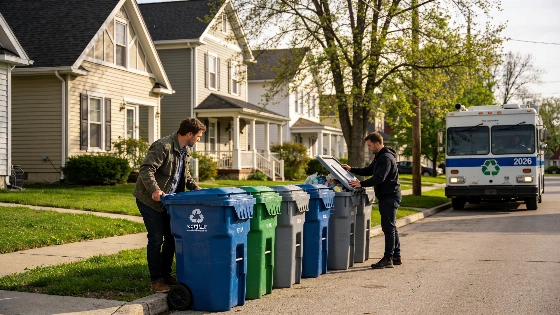
Funding for these expansions comes primarily from federal and state grants, along with local surcharges. Since early 2024, counties and planning areas have requested $7.28 million of the $9.4 million available through Michigan's Materials Management Planning Grants Program. The state has also distributed more than 350,000 curbside recycling carts since 2019 as part of its recycling initiatives.
Barriers to Expansion
State officials and local planners point to several obstacles slowing the rollout of curbside recycling. These include the high cost of trucks and facilities, inconsistent public participation, residents not properly separating recyclables, and the need for more public education. In some areas, coordination between municipalities using different collection systems adds complexity to expanding access.
Michigan's approach relies on collaboration, planning, and technical assistance rather than enforcement. The state encourages counties and planning areas to include recycling expansion steps in their materials management plans, but does not penalize communities that fall short. According to state guidance, the benchmarks are intended as planning goals, not mandates.
Communities can meet the benchmark through various models, including municipal collection, contracted private haulers, or subscription-based programs. If a municipality does not meet the curbside access goal, its local plan should outline steps to make progress toward the target.
Looking Ahead
The curbside recycling benchmark is part of Michigan's broader effort to increase its statewide recycling rate from about 25% to 30% by 2029, and eventually to 45% beyond 2030. The state's recycling access rate remains below the national average, with 68% of Michigan households having access compared to 73% nationwide, according to a 2024 report from The Recycling Partnership.
Local officials say meeting the 2026 benchmark is only the beginning. In Allegan County, for example, curbside recycling is already available in 21 communities, but access varies and officials are now focused on improving participation and collecting better data on recycling habits. Coordinating efforts across municipalities and determining how to fund future improvements remain ongoing challenges.
For many Michigan communities, expanding curbside recycling will require continued investment in infrastructure, public education, and regional cooperation. Without penalties for missing the state's targets, progress is likely to depend on the availability of funding and the ability of local governments to overcome logistical and financial hurdles.
Michigan's materials management law requires counties to update their waste management plans and set recycling benchmarks, but many are doing so for the first time in decades. As local governments work to collect baseline data and coordinate new services, the process is expected to remain complex and resource-intensive in the years ahead.