The University of Michigan's preliminary October reading fell to 46.3 as year-ahead inflation expectations rose to 4.7%, leaving households less willing to make major purchases.
September's final reading gave way to a weaker October result. The University of Michigan's preliminary sentiment index fell to 46.3, down 1.8 points, or about 3.7%, from 48.1. It missed the 47.8 median forecast in a Reuters survey of economists and reached its lowest level in roughly five months, close to May's 44.8 reading.
The political comparison is stark. Consumer sentiment under President Trump is down 13.6% from October 2025 and more than 34% below October 2024, when the index stood at 70.5 under President Biden. Those figures describe survey sentiment. They do not establish that a single administration or policy caused the monthly move.
For households in the Farmington area, the national survey supplies context rather than a local cost-of-living measure. The City of Farmington and City of Farmington Hills are separate municipal governments. The Farmington Public Schools board and Oakland County administration have different public responsibilities. None of those local institutions is represented by the University of Michigan's consumer survey.
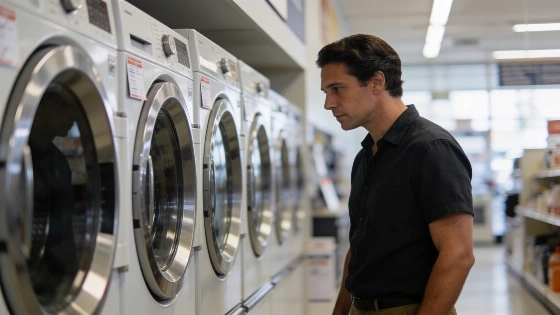
Buying conditions for durable goods deteriorated most sharply during the month.
High prices and borrowing costs pushed consumers away from major purchases even as expectations for personal finances and business conditions edged higher. That split matters in practice. A household can expect some improvement in its finances or in business conditions over the next year and still decide that appliances, vehicles and other durable goods cost too much right now. The preliminary results do not provide a separate dollar measure for those purchases.
Only about three in 10 respondents said they would spend as usual on goods that had become substantially more expensive. Survey materials linked the rise in inflation expectations to tariffs imposed by the Trump administration and higher gasoline prices. Both factors can hit household budgets and transportation costs.
Joanne Hsu, director of Surveys of Consumers, said sentiment changed little overall, falling 1.8 index points from September. She also reported steep declines among lower-income consumers and people with smaller stock portfolios, groups with fewer resources to absorb additional price increases.
The year-ahead inflation reading rose from 4.6% in September to 4.7% in October. That was 1.3 percentage points above February's 3.4% reading. Reuters linked the increase to higher costs developing amid the conflict involving the United States, Israel and Iran. The survey materials also pointed to tariffs and gasoline prices.
Long-run inflation expectations moved higher too, from 3.4% in September to 3.5%. Both the one-year and five-year measures reached their highest levels since May 2026. The five-year result also exceeded the 2.8% to 3.2% range recorded during 2024.
A separate September survey from the Federal Reserve Bank of New York showed median one-year inflation expectations rising to 3.9%, up 0.3 percentage point and the highest level since May 2023. Respondents put three-year expectations at 3.3% and five-year expectations at 3.0%. That survey offered a separate measure of concern about future prices.
Sentiment improved among Democrats and Republicans in October, but the gains were offset by a decline among independents. The overall index therefore moved little, even as some household groups reported sharper deterioration and inflation expectations continued to rise.
The University of Michigan has also drawn attention for a separate change in its public profile through a rankings report. The October survey measures something different: how consumers assess their finances and the economy.
Hsu's assessment points to cost-of-living frustration across party lines. Consumers described the economy's trajectory as weaker than it was at the beginning of the year. The distributional results show that lower-income households and people with smaller investments suffered the steepest monthly setbacks.
The preliminary results do not show that a single political party or event caused the decline. They show households pulling back from large purchases at current prices and borrowing costs while expectations for future inflation rise.
The figures of 46.3 for sentiment, 4.7% for one-year inflation expectations and 3.5% for five-year expectations are preliminary. The University of Michigan scheduled the final October results for release on October 23, 2026, so each measure could change in the final publication.