Michigan schools are rolling out hands-on CPR and emergency response lessons for students through the American Heart Association's programs, aiming to boost lifesaving skills in classrooms statewide ahead of the 2026-27 school year
Michigan classrooms are no longer waiting for emergencies to strike before preparing students to act. Schools across the state are now embedding CPR and emergency response training directly into the school day, equipping students with the skills to intervene when seconds matter most.
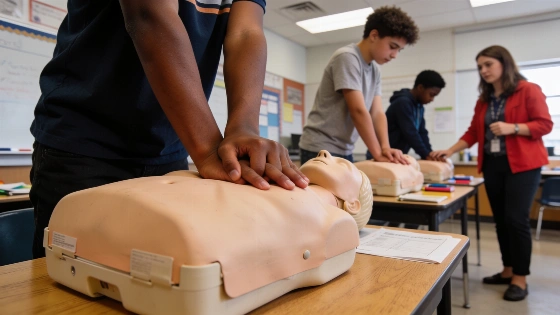
Through the American Heart Association's Kids Heart Challenge and American Heart Challenge, students are learning how to recognize cardiac arrest, call 911, perform Hands-Only CPR, and spot stroke symptoms using the B.E. F.A.S.T. system. The initiative is not limited to health class-it's a statewide push to make lifesaving knowledge as routine as reading and math.
Why schools are taking action
Every year, more than 350,000 people in the United States experience cardiac arrest outside a hospital, including about 23,000 children, according to the American Heart Association. In these moments, survival often depends on the actions of bystanders-frequently classmates, teachers, or family members-who can provide immediate help before emergency responders arrive. In rural Michigan, where ambulance response times can be longer, the need for bystander intervention is even more urgent.
Since 2021, the two American Heart Association programs have reached over 1.1 million participants nationwide. Michigan schools are now joining that effort in greater numbers, with registration open for the 2026-27 academic year. Participating schools receive CPR training kits, educator resources, and access to community health grants to support local wellness projects.
What students and families learn
The curriculum goes beyond emergency response. Under the current "Activate Your Heart Power" theme, students are encouraged to build healthy habits-daily physical activity, balanced nutrition, adequate sleep, and avoiding tobacco and vaping. The program's interactive tools are designed to engage students and families, making health and safety a shared responsibility at home and at school.
Schools that sign up gain access to funding for wellness infrastructure, educator training, and community health initiatives. The American Heart Association also provides instructional materials to help teachers deliver hands-on CPR practice and reinforce emergency protocols throughout the year.
How the program fits into Michigan schools
Michigan's approach reflects a broader trend of integrating practical health education into the K-12 system. By making CPR and emergency training part of the regular curriculum, schools aim to ensure that every student-not just those in health or science tracks-can respond effectively in a crisis. The program's reach extends to families and staff, creating a network of potential responders in every school community.
For districts considering participation, the American Heart Association offers support with registration, training, and grant applications. Schools interested in joining for the 2026-27 year can apply now to secure resources and plan for implementation.
As Michigan schools move to embed these skills in daily learning, the state is betting that early, widespread training will save lives-not just in classrooms, but wherever emergencies happen. The decision to prioritize hands-on emergency education signals a shift toward practical, community-centered health readiness in Michigan's schools.