Michigan's Line 5 pipeline remains in limbo as legal battles and permit reviews continue. Recent court decisions have blocked tunnel construction, leaving the pipeline's fate unresolved for residents and businesses across the state.
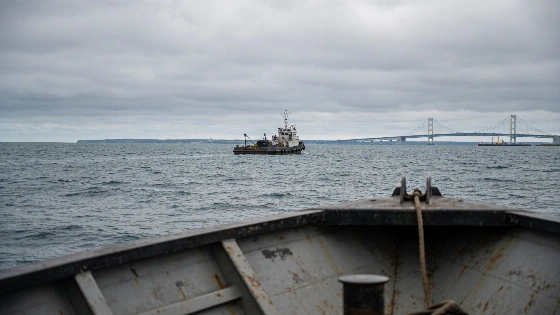
The future of Michigan's Line 5 pipeline remains unsettled after more than a decade of debate, with recent court decisions and ongoing permit reviews leaving both the existing pipeline and proposed tunnel project in question. The 73-year-old pipeline, operated by Enbridge Energy, continues to transport up to 540,000 barrels of petroleum daily beneath the Straits of Mackinac, while legal and regulatory challenges persist.
Efforts to address the risk of an oil spill in the Great Lakes have divided residents, environmental groups, and state officials. While some advocate for shutting down the pipeline entirely, others support rerouting it through a new tunnel beneath the lakebed. Despite recent federal approval for tunnel construction, a key state permit was vacated, halting progress and adding new uncertainty to the project's timeline.
Legal Battles Over Shutdown
Michigan Attorney General Dana Nessel filed a lawsuit in 2019 seeking to close Line 5, citing unacceptable environmental risks. Governor Gretchen Whitmer joined the effort in 2020, ordering the pipeline's closure after anchor strikes raised concerns about its vulnerability. Enbridge challenged the order in federal court, arguing that federal law preempts state action on pipeline regulation.
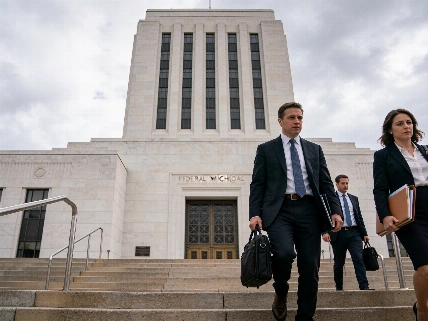
Both the state and Enbridge remain locked in litigation. Nessel's case is pending in Ingham County Circuit Court, while Whitmer's shutdown order is under review by the federal Sixth Circuit Court of Appeals. In December, a federal judge sided with Enbridge, ruling that Michigan lacked authority to order a shutdown. The state has appealed, and legal briefs are ongoing. The Trump administration has also weighed in, supporting Enbridge's position that Michigan cannot unilaterally close the pipeline.
Public criticism has intensified, with some environmental advocates accusing state leaders of not doing enough to oppose Enbridge. The legal process has been slowed by jurisdictional disputes and appeals, and no clear resolution is expected in the near future.
Tunnel Project Faces Permit Hurdles
Enbridge has secured most of the federal and state permits needed to begin constructing a tunnel to house a replacement segment of Line 5. Earlier this month, the U.S. Army Corps of Engineers granted a permit allowing the company to impact wetlands and waters during tunnel construction, determining the project is "not contrary to the public interest." However, opponents are expected to appeal the decision.
At the state level, the Michigan Supreme Court recently vacated a 2023 permit from the Michigan Public Service Commission that would have allowed Enbridge to reroute the pipeline into the tunnel. The court ruled that commissioners had not adequately considered environmental impacts, requiring a more thorough review before any new permit can be issued. Additional state permits issued in July are also likely to face appeals from environmental groups.
Enbridge is still awaiting a crucial wastewater discharge permit from the Michigan Department of Environment, Great Lakes, and Energy (EGLE), which is expected to decide by September 30 whether the company can release treated water into Lake Michigan during construction.
Election Could Shift Pipeline Policy
The outcome of Michigan's November general election could significantly influence the state's approach to Line 5. Republican gubernatorial candidate John James has pledged to end litigation against Enbridge and support the tunnel project, while Democratic candidate Jocelyn Benson has called for a statewide audit of aging pipelines and a plan to replace hazardous lines, including Line 5. On the attorney general side, Republican Doug Lloyd has promised to halt efforts to shut down the pipeline if elected, while Democratic candidate Eli Savit has not publicly stated his position.
The U.S. Senate race may also play a role. Democrat Abdul El-Sayed has called for a responsible shutdown of Line 5 in its current form and a more robust environmental review of the tunnel proposal. Republican Mike Rogers has previously expressed support for the tunnel. Congressional members have introduced legislation both to protect and to temporarily shut down the pipeline, reflecting the ongoing political divide.
For more on how Michigan's political landscape is shaping major infrastructure debates, see our coverage of recent questions about Jocelyn Benson's role in state policy.
What Happens Next
With multiple lawsuits, permit reviews, and appeals underway, the timeline for resolving the future of Line 5 remains unclear. Enbridge cannot begin tunnel construction until state regulators complete a new environmental review and issue the necessary permits. Meanwhile, the existing pipeline continues to operate, and both supporters and opponents are preparing for further legal and political battles.
The Michigan Public Service Commission will need to conduct a more comprehensive environmental assessment before deciding whether to reissue the tunnel permit. EGLE's decision on wastewater discharge is expected by the end of September. Depending on the outcomes of these reviews and the November election, the fate of Line 5 could remain uncertain for months or even years.
Line 5 has become a focal point for debates over energy infrastructure, environmental protection, and state versus federal authority. The pipeline's future will depend on the outcome of ongoing court cases, regulatory reviews, and the choices Michigan voters make at the ballot box.
- Politics & Elections
- Michigan Politics
- Transportation & Infrastructure
- Courts & Legal Affairs
- Verification & What We Know
- Environment & Great Lakes
- Office of the Governor of Michigan
- Michigan Public Service Commission
- Michigan Department of Attorney General
- Federal Agencies
- Water Bodies and Environmental Entities