
Saline Middle School's PTO offered families a direct-donation route around its Fall Fundraiser. The flyer made clear that the payment was voluntary, not a district fee.
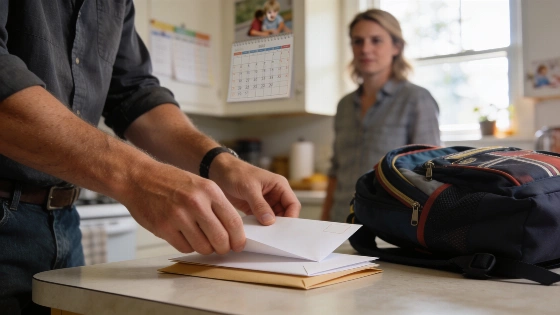
On October 7, 2026, Dan Reese's daughter brought home a flyer from Saline Middle School that priced an escape from familiar fundraising tasks.
Instead of sending students door to door with products and collection envelopes, the school's parent-teacher organization asked families to donate directly for activities they wanted to skip.
The distinction matters. Reporting identifies the Saline Middle School PTO, not the administration of Saline Area Schools, as the group that distributed the flyer. The PTO called the campaign its Fall Fundraiser and described it as a voluntary effort to provide additional support for teachers and students during the school year. Donations of any size were accepted.
Reese's photograph drew millions of views on X. The flyer listed $10 to avoid baking for a sale. It listed $25 to avoid asking friends for money. A $100 payment covered the fundraiser until the following year. Those figures describe the options printed on the flyer. Available reporting does not establish that every family had to choose one.
The form offered other choices as well. Families could donate to opt out of events ending in "-thon." Another amount replaced receiving a "free" T-shirt. A separate option covered people who did not plan to help and wanted the organization to "forget" about them.
That blunt wording, rather than a complicated prize chart or sales target, made the campaign stand out.
After the flyer circulated, the school publicized an additional incentive. Participants in Fall Giving could have a chance to attend a cider-and-doughnut party. No available report states how much the campaign raised or whether the collection had ended.
The campaign was not a tuition charge, a districtwide policy or a fee imposed by the school system. For readers comparing the arrangement with local practice, the Saline Area Schools website is the appropriate source for distinguishing district information from PTO activity. Available reporting does not connect the fundraiser to a legal dispute or action by a school board.
Reese described the idea as a welcome reprieve, not a rejection of school fundraising. His daughter still had to raise money for about 10 other activities, he said in a response to the post. The Saline fundraiser gave the family one chance to contribute without adding another sales campaign to the calendar.
The amounts made the request unusually plain. A $10 payment stood in for one specific obligation. A $25 payment covered the discomfort of soliciting friends. A $100 contribution removed the broader package of work.
Parents were being offered a direct choice instead of another bake sale or online campaign.
Why parents responded
Hundreds of comments beneath Reese's post praised the arrangement. Some called it a sensible way to request donations. Others compared it with schools that ask each parent for a fixed amount. Families can support sports or activities without signing up for snacks and sales. They can also avoid handling letters or meals.
One commenter described donating $75 through a fundraising website that charged nearly 20% in fees. The site then asked whether the donor wanted to add another $15 to cover those charges. The complaint points to another source of frustration: even when parents choose to give money, digital fundraising platforms can add cost and another decision.
Public schools need money beyond their regular budgets, so fundraising remains a practical concern. The work of raising it has shifted heavily onto families. More than half of American households now have two working parents, a change driven largely by financial necessity. School calendars have also accumulated spirit weeks and dress-up days that require parent participation.
That workload reaches beyond one fundraiser. The U.S. Surgeon General has issued an official warning about mental-health risks associated with parenting. A school request that removes several hours of organizing, baking, selling and follow-up can feel more useful than another activity marketed as family involvement.
The argument against an un-fundraiser
Critics have raised a legitimate concern. Removing door-to-door sales could take away a chance for students to practice communication, responsibility and selling. It also turns fundraising from a shared activity into a financial transaction in which parents pay to avoid an inconvenience.
That criticism deserves consideration, but it does not make every traditional fundraiser valuable. Reese responded that students already receive plenty of opportunities to interact, socialize and learn those skills through other activities. The PTO's approach creates a limited break rather than ending student participation in every fundraising effort.
The wider funding pressure behind these requests was examined in an earlier school funding breakdown. The report helps explain why districts keep seeking contributions while families question the time and fees attached to fundraising campaigns. The same distinction applies in Farmington. The Farmington Public Schools board, rather than a PTO, is the public body responsible for district governance. Parent organizations operate separately from the board.
For Farmington Voice readers, that governance distinction matters. A City of Farmington program involves different decision-makers from a Farmington Public Schools board action. A parent-group fundraiser would involve its own records and officials. The Michigan Department of Education oversees statewide education administration, but it is not the sponsor of an individual school PTO campaign.
A practical middle ground
Similar flyers have circulated at schools around the country under the name "un-fundraisers." The format is gaining attention because it matches what many parents already do privately: donate money to avoid spending scarce time coordinating a sale. Saline Middle School's PTO made that trade explicit instead of hiding it behind prize charts and repeated requests.
The model does not solve public-school funding problems or settle whether children should learn through fundraising. It addresses a narrower operational problem by letting families support the school without selling products or contacting their networks. Parents can also avoid managing deliveries.
Saline Middle School's flyer treated parental time as a real cost and school fundraising as a real financial need. A direct donation option cannot replace every community event. For this voluntary campaign, it put money toward the school while reducing pressure on families.