A proposed Michigan constitutional amendment requiring voters to prove U.S. citizenship was blocked from the November ballot after a split decision by the Board of State Canvassers. Organizers plan to appeal to the Michigan Supreme Court.
A proposal to require Michigan voters to provide proof of U.S. citizenship will not appear on the November ballot unless the Michigan Supreme Court intervenes, following a deadlock by the state's Board of State Canvassers on Monday. The board's 2-2 split along party lines left the measure short of the majority needed for certification, despite organizers submitting hundreds of thousands of signatures in support.
The proposed constitutional amendment, backed by the group Americans for Citizen Voting, would have imposed some of the strictest proof-of-citizenship requirements in the country. Supporters turned in 709,841 signatures in March, well above the 446,198 required. However, a random sample review by the Bureau of Elections and the board found the number of valid signatures fell just short of the threshold, with disputes over several signatures unresolved by the end of the meeting.
Board Deadlock and Next Steps
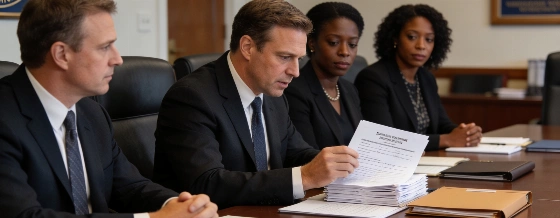
The Board of State Canvassers, which is evenly split between Democrats and Republicans, is tasked with certifying ballot initiatives based solely on the validity of submitted signatures. At least 629 valid signatures were needed from a 1,000-signature sample to move the proposal forward. The board determined that 626 were valid, but had not reached a final decision on several contested signatures before time ran out. The resulting tie vote means the proposal is blocked unless a court orders otherwise.
Americans for Citizen Voting has announced plans to appeal the decision, citing the narrow margin and the large number of signatures collected. Under Michigan law, organizers have until September 2 to file an appeal directly with the Michigan Supreme Court. The court faces a tight timeline, as ballots for military and overseas voters must be finalized by September 19, and all absentee ballots must be ready by September 24.
What the Amendment Would Change
If ultimately approved for the ballot and passed by voters, the amendment would require new voters to provide proof of citizenship when registering. Existing voters whose citizenship cannot be independently verified by the state would also need to provide documentation. This system would resemble Arizona's, where two separate voter rolls are maintained: one for those who have proven citizenship and can vote in all elections, and another for those who can only vote in federal contests.
The amendment would also eliminate the current option for voters without photo ID to sign an affidavit affirming their identity. Instead, a state-funded hardship program would help residents obtain identification documents at no cost. Voters unable to verify citizenship at the polls would cast provisional ballots and have six days after the election to provide the necessary documents for their votes to count.
Public Support and Ongoing Debate
Proof-of-citizenship requirements have broad public support, with a recent YouGov/CBS News poll indicating that 66% of Americans favor such measures. However, critics argue that additional documentation requirements could disenfranchise eligible voters who lack the necessary paperwork. Noncitizen voting remains extremely rare in Michigan, with only six individuals charged statewide for casting ballots in the 2024 general election out of more than 5.6 million votes cast.
The issue has become a focal point in national and state political debates. Former President Donald Trump has called for federal proof-of-citizenship requirements and urged Congress to pass the SAVE America Act, though the bill has not advanced in the U.S. Senate. In Michigan, the fate of the proposed amendment now rests with the state's highest court.
How the Ballot Process Works
The Michigan Board of State Canvassers is responsible for certifying ballot initiatives based on signature validity, not the content of the proposal. The Bureau of Elections conducts initial reviews and provides recommendations, but the board makes the final decision. Disputes over signature validity are common, and close calls can lead to legal challenges. In a similar example of ballot access issues, a statewide proposal to ban political donations from utilities was previously covered by Farmington Voice, highlighting the complexities of Michigan's ballot process (see our earlier reporting on utility donation bans).