
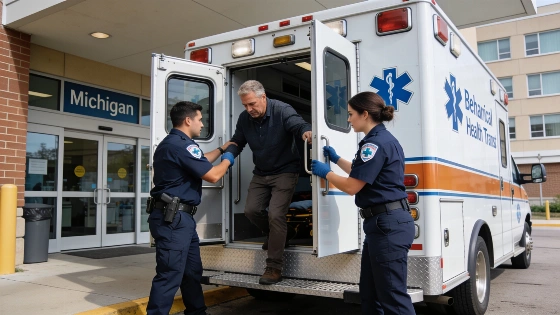
New bipartisan bills in Michigan aim to create a statewide system for behavioral health transportation, offering safer, more cost-effective options for residents in crisis and reducing strain on emergency services
Michigan legislators are advancing a bipartisan effort to overhaul how residents experiencing mental health crises are transported for care. The proposed legislation would establish a statewide framework for behavioral health transportation, aiming to improve patient safety, reduce costs, and free up emergency resources across the state.
Currently, individuals in acute mental health crisis are often transported by ambulance or law enforcement, options that can be costly and may not provide the most appropriate care environment. The new bills seek to address these gaps by introducing specialized vehicles and trained personnel dedicated to behavioral health transport.
Details of the Proposed Legislation
The legislative package, introduced in the Michigan Senate by Sen. Mark Huizenga, R-Walker, and Sen. Sylvia Santana, D-Detroit, and in the House by Reps. Steve Frisbie, R-Pennfield Township, and Amos O'Neal, D-Saginaw, would create clear guidelines for behavioral health transportation services. These guidelines would cover interfacility transfers and transportation to mental health evaluations, ensuring that patients receive care tailored to their needs.
Under the proposed framework, behavioral health transportation would become a Medicaid-covered service, removing financial barriers for patients seeking treatment. The bills also require that specialized vehicles be equipped with safety features such as partitions and disabled rear-seat controls. Providers would need to complete training in Mental Health First Aid, CPR, trauma-informed care, and de-escalation techniques to ensure safe and compassionate interactions during transport.
Impact on Hospitals and Emergency Services
Hospitals would benefit from the new system by no longer needing to use ambulances or emergency vehicles designed for trauma care to transport behavioral health patients. This change would help free up critical resources, such as acute care beds and paramedic time, for patients with urgent medical needs. According to lawmakers, paramedics have sometimes spent up to 16 hours on round-trip transports for behavioral health patients, leaving local communities without emergency coverage during that time.
Specialized behavioral health vehicles and trained staff are expected to improve patient outcomes by reducing anxiety and the need for de-escalation at both the point of transport and upon arrival at treatment facilities. Studies and recent incidents have highlighted the importance of appropriate transport in ensuring safety for both patients and providers.
Next Steps and Community Input
Lawmakers recently held a roundtable with medical professionals and industry stakeholders to gather feedback on the proposed reforms. There was broad agreement that Michigan's current system needs meaningful changes to improve efficiency and patient care. The bills are now moving through the legislative process, with further discussion and potential amendments expected in the coming months.
If enacted, the new framework would bring Michigan in line with other states that have adopted specialized behavioral health transportation, aiming to provide more humane and effective care for residents in crisis while ensuring responsible use of taxpayer dollars.
Michigan's behavioral health system has seen significant attention in recent years, with ongoing efforts to improve access and outcomes for residents. The proposed transportation reforms represent a targeted step toward addressing longstanding challenges in crisis response and resource allocation.