A new book by Sierra Nadeau reveals her family's hidden history in Michigan's Indian boarding schools, shedding light on the generational impact of these institutions and the silence that followed their closure in 1983
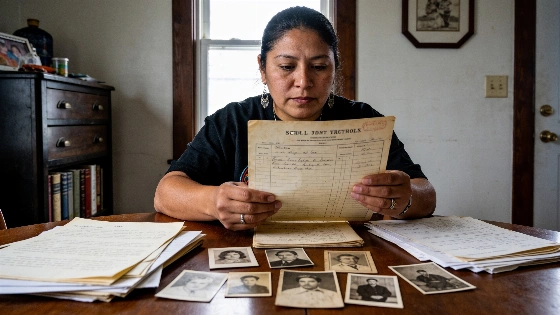
When Michigan journalist Sierra Nadeau began researching the history of Indian boarding schools for a news article, she did not expect to find her own family's name among the records. That discovery led to a two-year investigation and a forthcoming book, 'What the Ancestors Say,' which documents both her family's experience and the broader legacy of these schools in Michigan.
Nadeau, who grew up in Michigan's tribal communities, found her ancestors listed among the students at the Mount Pleasant Indian Industrial Boarding School. The school, which operated from 1893 to 1934, was one of several federal and church-run institutions in Michigan where Native American children were sent, often separated from their families and communities.
History of Boarding Schools in Michigan
According to the Federal Indian Boarding School Initiative Investigative Report released in 2024, there were at least 417 federally operated Indian boarding schools across 37 states during the 19th and 20th centuries. Michigan was home to five federal boarding schools located in Baraga, Mackinac Island, Schoolcraft County, Mount Pleasant, and Harbor Springs. Additional schools were identified in Marquette, Omena, and Assinins by the National Native American Boarding School Healing Coalition.
The last of these institutions, the Holy Childhood of Jesus Catholic Church and Indian School in Harbor Springs, closed in 1983. At these schools, Native American children were forbidden from speaking their languages or wearing traditional clothing. Many were assigned non-native names, and reports of physical and sexual abuse were common, as documented in federal investigations.
Personal Discovery and Family Impact
Nadeau's research revealed that her family attended the Mount Pleasant school for multiple generations, with her great-grandfather among those who spent part of their childhood there. The experience was rarely discussed within her family, a silence that Nadeau found to be common among Michigan's Native American families. Many survivors chose not to speak about their time in the schools, often as a way to protect future generations from the trauma they endured.
Records from the Saginaw Chippewa Indian Tribe of Michigan show that 229 students died at the Mount Pleasant school between 1893 and 1934. However, there is no comprehensive documentation of how many Native American children were sent to boarding schools in Michigan or how many died at these institutions.
Lasting Effects and Ongoing Recovery
Nadeau's book explores the lasting impact of boarding schools on Native American families, including intergenerational trauma, loss of language, and cultural disconnection. She notes that while not all challenges faced by Native communities today are directly linked to boarding schools, many are rooted in the broader history of colonialism and forced assimilation.
Despite these challenges, Nadeau expresses hope for the future, emphasizing the resilience of Indigenous peoples and the efforts of current generations to reclaim their heritage and identity. She credits her ancestors for enduring hardship and believes their perseverance has made it possible for her generation to reconnect with their roots.
Context: Michigan's Boarding School Legacy
The closure of the last boarding school in 1983 marked the end of a painful chapter in Michigan's history, but the effects continue to shape Native American communities. Efforts to document, understand, and heal from this legacy are ongoing, with tribal organizations and researchers working to recover lost histories and support survivors and their families. Nadeau's work adds a personal perspective to this broader movement, highlighting the importance of uncovering and acknowledging the past as part of community healing.