
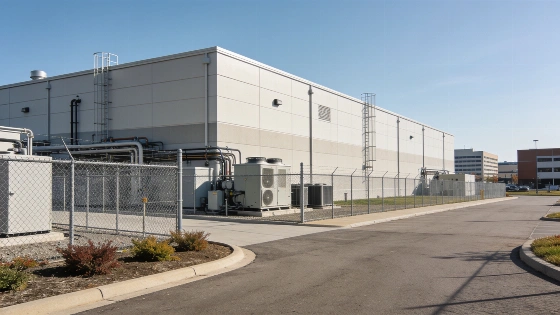
Michigan now hosts 77 verified data centers in 38 cities, with Southfield leading the state in facility count. The growing network supports everything from business operations to public infrastructure statewide.
Michigan's network of data centers is larger and more spread out than most people realize. According to a recent directory review, there are 77 verified facilities run by 48 providers in 38 cities. Southfield has the highest concentration, with 13 data centers within city limits. But a Reuters analysis from August 2026 counted only 70 active centers, with 2 more being built, 15 in planning, and 7 projects on hold. The difference between directory listings and operational sites points to the need for regular oversight by local governments and state regulators to keep records accurate and transparent.
These data centers are the physical infrastructure behind much of Michigan's daily life. They handle everything from city records and emergency services to banking, healthcare, and communications. While public debate often centers on artificial intelligence and its energy use, most Michigan data centers support a wide range of public and private operations across the Lower Peninsula. For example, Farmington and Farmington Hills use secure digital systems for municipal records, emergency response, and public schools, as shown in recent school board minutes.
Where Michigan's Data Centers Are Located
Southfield's group of centers includes 123NET DC1, DC2, and DC3, EdgeConneX DET01, and 365 Data Centers DT1, all located close together. Detroit, Ann Arbor, Grand Rapids, and Troy also have several centers, with addresses like 1320 3rd St in Detroit and 319 Executive Dr in Troy. Other cities with notable facilities include Auburn Hills, Battle Creek, Belleville, Byron Center, Caledonia, Cassopolis, Dearborn, Flint, Houghton, Kalamazoo, Kentwood, Lansing, Lowell Township, Monroe, Mount Pleasant, New Hudson, Royal Oak, Saline Township, Southgate, Van Buren Township, and Westland. In Van Buren Township, Google's planned 1-gigawatt data center has drawn attention from the Michigan Public Service Commission and Attorney General Dana Nessel, who has called for stronger protections for DTE ratepayers if the facility uses less power than expected or leaves early. This reflects the growing scrutiny of large projects by state officials and local residents.
Facilities vary in size and purpose. Some, like Switch's Pyramid Campus in Caledonia, are large-scale operations, while others, such as the Nexcess Dearborn Data Center, serve more specific or regional needs. The list includes both independent providers and major national companies like Microsoft, Google, Oracle, and Verizon. Dearborn recently moved to pause new data center proposals for six months, with the first council reading on September 8 and a planned moratorium from October through March 2027, in response to resident concerns and the fast pace of new projects.
Role in State Infrastructure and Economy
Data centers are now essential to Michigan's economy and public services. They provide secure storage and fast processing for businesses, schools, hospitals, and government agencies. Having multiple providers and types of facilities adds redundancy and resilience, which is important for emergency response and financial transactions. Oakland County officials have pointed out the role of digital infrastructure in supporting emergency management and public health, especially as more services move online.
The 77 verified facilities are spread out to maximize coverage and reliability. Southfield leads, but Grand Rapids, Ann Arbor, and Detroit have also seen major investments, with additional capacity in smaller towns. This network supports local operations and statewide projects, including cloud services, disaster recovery, and digital upgrades. Michigan's 2024 law granting sales and use tax exemptions for "enterprise data centers"-if they invest at least $250 million and create at least 30 jobs-has encouraged more growth. Still, the law's effect on local tax bases and transparency is debated among city leaders and residents.
Comparisons and Broader Digital Infrastructure
Michigan's data center growth is part of a wider push to expand digital infrastructure in the Midwest. As noted in a recent Oakland County update, the state is also investing in electric vehicle charging and broadband, though some residents still face issues with affordability and access. The rise of data centers is part of this modernization, even as debates continue over energy use and land development. In a 2026 Reuters survey, two-thirds of 600 likely Michigan voters opposed new data center construction, a view that has shaped local policy and statewide campaigns. Gubernatorial candidate Jocelyn Benson has called for an end to tax breaks and a moratorium on new projects.
Not all of Michigan's data centers are focused on artificial intelligence, but together they show the state's growing role as a digital hub. These facilities support everything from cloud computing to city databases, making them a steady but important part of daily life for millions of Michiganders. The challenge is to keep this backbone serving both public and private needs without straining local resources. As the digital economy grows, Michigan's ability to balance expansion with fairness and sustainability will shape its future.