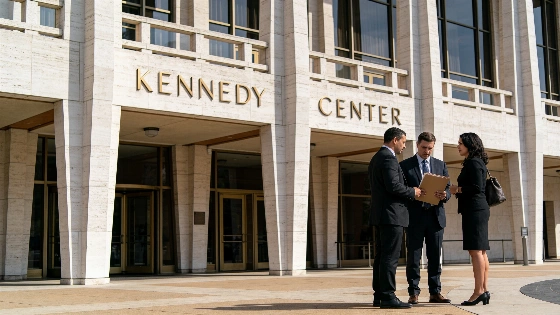
A federal judge is scrutinizing the Kennedy Center's decision to quickly restore President Donald Trump's name to the building, raising questions about the board's timeline and legal authority as a previous court order remains under appeal.
A federal judge in Washington, D.C. is pressing the Kennedy Center's board to explain its decision to move forward with plans to add President Donald Trump's name to the historic performing arts venue as early as September 8, despite a recent court order that blocked a previous attempt. The issue surfaced during a nearly two-hour hearing on Thursday, where U.S. District Court Judge Christopher Cooper challenged the urgency and legal basis for the board's actions.
Judge Cooper interrupted the Trump administration's attorney, Bradley Mayers, almost immediately to question why the board had set such a tight deadline for the inscription. Mayers responded that the timeline followed a board vote earlier in the month, but Cooper pressed for clarity on how this aligned with congressional intent and the statutes governing the Kennedy Center.
Legal Dispute Over Naming Rights
The controversy began after Judge Cooper ruled in May that the addition of Trump's name to the Kennedy Center was done illegally, ordering its removal. However, the Trump-aligned board has since voted to inscribe the building's facade with the phrase: "The John F. Kennedy Center for the Performing Arts Restored and Renovated By President Donald J. Trump." The board also approved a plan to add a second inscription if the Trump Kennedy Center Fund reaches $100 million, stating: "Endowed by the Trump Kennedy Center Fund." In addition, the plaza in front of the building would be renamed in Trump's honor.
Mayers argued that these moves are intended to recognize Trump's contributions rather than to rename the institution, noting that the Kennedy Center no longer brands itself as the Trump-Kennedy Center. He also asked the court not to rule on the endowment-related inscription, as no funds have yet been raised for that purpose.
Jurisdiction and Potential Consequences
Judge Cooper expressed skepticism about whether he had the authority to block the board's latest actions while the administration appeals his earlier ruling. He questioned Nathaniel Zelinsky, attorney for Rep. Joyce Beatty-an ex officio board member leading opposition to the Trump inscriptions-about the court's jurisdiction during the appeal process. Zelinsky warned that inaction could create a "black hole" where the previous decision could not be enforced.
The hearing also touched on the Kennedy Center's future, with administration lawyers suggesting in a recent filing that the building could face demolition if it cannot raise funds for renovations without Trump's recognition. This possibility raised concerns, especially given the administration's previous demolition of the White House East Wing to build a ballroom. Commerce Secretary Howard Lutnick, who attended the hearing, downplayed the likelihood of immediate action, stating that negative outcomes would not occur right away.
Context and Next Steps
The Kennedy Center's board is moving forward with its plans even as legal questions remain unresolved. The next steps will depend on Judge Cooper's ruling regarding his jurisdiction and the ongoing appeal. The situation echoes other recent federal court disputes over government actions, such as a case where a judge dismissed a Department of Justice lawsuit seeking Minnesota voter data, as reported in a recent Farmington Voice article.
The Kennedy Center, located in the nation's capital, is a major cultural institution that relies on both public and private funding for its operations and renovations. The outcome of this legal dispute could affect not only the building's appearance and fundraising efforts but also set a precedent for how naming rights and recognition are handled at federally supported venues.