General Motors plans to bring IONATE's Hybrid Intelligent Transformer to its Romulus, Michigan plant, aiming to improve power quality and manage rising electricity demand at the facility.
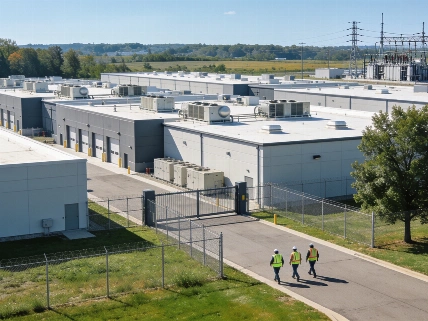
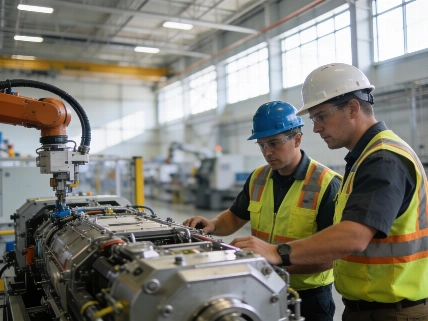
General Motors is preparing to install a Hybrid Intelligent Transformer system at its Romulus, Michigan manufacturing plant. If completed, this would be the first time IONATE's grid technology is used at this scale in a U.S. industrial facility. GM expects the system to give its team real-time insight and control over power quality and electricity use as production ramps up at the nearly 900,000-square-foot site. The Romulus plant is a key powertrain center for GM, producing 10-speed transmissions for full-size trucks and SUVs. The company recently invested $300 million to expand capacity, according to the GM Newsroom.
IONATE has announced the project, but as of now, GM and major news agencies have not released official confirmation about the installation at Romulus. This means the "first U.S. deployment" claim is not yet verified by primary sources, and local officials in Romulus and Wayne County have not issued public statements. Residents can check the City of Romulus website for updates or notices about industrial infrastructure projects.
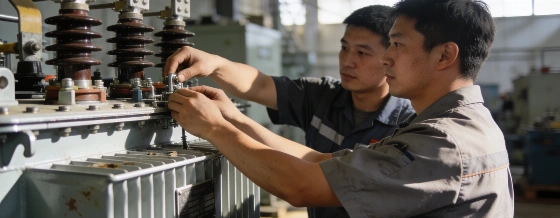
The Hybrid Intelligent Transformer (HIT) is designed to spot and correct power-flow problems before they disrupt manufacturing or affect the wider grid. Unlike standard transformers, the HIT combines traditional functions with real-time sensors and active controls, and operates at over 99% efficiency. It can be added to existing substations and industrial setups, so major upgrades or long shutdowns are not required.
Once in place between the grid and the plant's electrical systems, the HIT will monitor power quality, analyze disturbances, and react instantly to keep operations stable. IONATE says its technology can help industrial sites handle higher electricity demand, improve resilience, and cut wasted power by about 6%, all without waiting for utilities to upgrade transmission lines or substations. The City of Farmington and Farmington Hills have also been following regional grid reliability and industrial energy issues, as seen in recent city council meetings and Oakland County planning documents.
This project comes as manufacturers and data centers across the U.S. face more strain on aging grid infrastructure. With electrification and AI-driven operations pushing up electricity needs, companies are looking for ways to boost capacity and reliability without major construction. GM has confirmed plans to expand domestic supply chains and battery infrastructure, with new battery chemistries and energy efficiency targets set for 2028-2029, in line with Michigan's push for industrial modernization, as reported by CNBC.
Engineering teams from GM and IONATE have been working together on the rollout, with U.S.-standard 3 MVA IEEE units now built and tested. If the Romulus installation works as planned, the companies may expand the technology to other GM sites. Each HIT device is managed through IONATE's Aurora software, which can coordinate multiple transformers as a networked system. As more units are added, the platform can optimize power quality and grid stability across larger areas, including factories, data centers, and utility grids.
The Romulus project gives IONATE a chance to enter the U.S. industrial market after earlier work in Europe. For GM, the system could help improve energy management and reliability as production grows. This approach is part of a broader trend in Michigan and elsewhere, where utilities and manufacturers are testing new technologies to meet rising power demand. Michigan engineers are also exploring advanced nuclear projects to address similar challenges, as reported earlier.
IONATE's Hybrid Intelligent Transformer is built to work with existing industrial and utility infrastructure, reducing the need for expensive replacements. Its real-time data on power quality and usage could help manufacturers like GM avoid outages and improve efficiency. If the Romulus project succeeds, it may become a model for other companies facing grid constraints and higher energy needs. Community members interested in local economic or workforce impacts can check with the Farmington Public Schools board and Oakland County workforce development offices for updates on STEM education and job training tied to Michigan's manufacturing sector.