Long-term monitoring by Friends of the Rouge shows four frog species declining and several others increasing in the Rouge River watershed, raising questions about habitat changes and climate impacts in southeast Michigan.
Decades of volunteer monitoring in southeast Michigan's Rouge River watershed are revealing notable changes in local amphibian populations. According to Friends of the Rouge, a nonprofit organization, data collected since 1998 indicates that four frog species are declining, while three frog species and one toad are showing signs of growth.
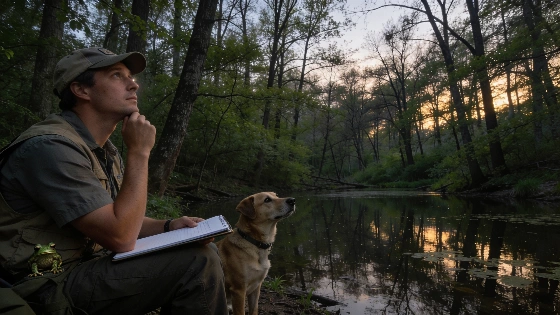
Volunteers, including Plymouth resident Larry Martin, regularly survey more than 450 square miles of the watershed by listening for the calls of seven frog species and one toad. The project, which began as a way to assess wildlife habitat in an area identified by the U.S. Environmental Protection Agency as environmentally degraded, now provides one of the region's most comprehensive records of amphibian trends.
Species Trends and Possible Causes
Analysis of the monitoring data shows that wood frogs, midland chorus frogs, northern leopard frogs, and spring peepers are being heard in fewer survey areas than in previous years. The decline is especially pronounced for spring peepers. In contrast, American toads, gray treefrogs, greenfrogs, and bullfrogs are being detected more frequently, with gray treefrogs showing the most significant increase.
Friends of the Rouge notes that most of the declining species are early callers, active in the first part of the season, while the increasing species tend to call later. Recent winters with extreme temperature swings may be putting additional stress on early-calling frogs. The organization also points to ongoing development and climate change as likely contributors to these shifts, though more research is needed to confirm the causes.
How the Monitoring Works
Each spring and summer, hundreds of volunteers are trained to identify amphibian calls and assigned to survey specific locations. The number and location of survey sites vary each year based on volunteer availability. Volunteers record which species they hear in each quarter-square-mile block, providing a broad view of amphibian presence across the watershed.
To help volunteers distinguish between similar calls, a web tool called Froggy Voice was developed, allowing users to listen to individual and overlapping calls. This tool has improved data accuracy, especially when multiple species are active at the same time.
Community Involvement and Next Steps
Friends of the Rouge continues to seek new volunteers for the monitoring program. Those interested can sign up on the organization's website, with registration typically opening in December. The nonprofit emphasizes that while the data points to concerning trends, further study is needed to understand the full impact on the watershed's ecological balance.
Amphibians are considered important indicators of environmental health, and changes in their populations can signal broader shifts in habitat quality. The Rouge River watershed's monitoring program is one of the longest-running citizen science efforts of its kind in Michigan, providing valuable information for researchers and local agencies.
The Rouge River watershed covers a large portion of southeast Michigan, including parts of Wayne, Oakland, and Washtenaw counties. Friends of the Rouge's amphibian monitoring project helps inform conservation efforts and guides future habitat restoration initiatives in the region.