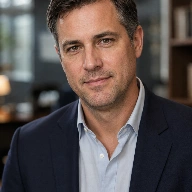
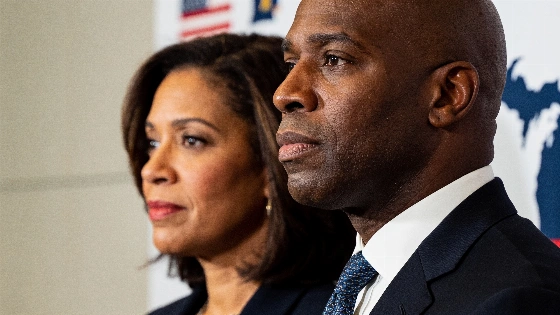
Jocelyn Benson has built a significant cash advantage over John James in the Michigan governor's race, with new filings showing major donations from utility and health executives as both campaigns face questions about donor transparency and campaign finance rules
Jocelyn Benson's campaign for Michigan governor has surged ahead financially, outpacing Republican rival John James by a wide margin in the latest fundraising period. But the money trail is drawing scrutiny from both sides, as new disclosures reveal donations from utility and health insurance executives-even as Benson publicly backs a proposal to ban such contributions.
With just over two months until the November 3 general election, Benson reported $5.9 million in her campaign account as of August 24, compared to James' $1.5 million. In the most recent five-week reporting window, Benson raised more than $1.8 million, tripling James' private fundraising haul. The financial gap has allowed Benson to dominate the airwaves, while James only recently launched his first broadcast ad.
Donor Details and Policy Contradictions
Benson's fundraising disclosures show she accepted contributions from Tricia Keith, president and CEO of Blue Cross Blue Shield of Michigan, and Gerardo Norcia, executive chairman of DTE Energy's board. Both donations would be prohibited under Proposal 2, a ballot measure Benson supports that would bar utility and state contractor executives from giving to candidates. Keith contributed $8,325, while Norcia gave $3,000. Despite this, Benson's campaign has continued to claim she is not taking utility money in the race, and did not respond to requests for comment on the apparent contradiction.
Other top donors to Benson include Dan Loepp, former Blue Cross CEO and a longtime supporter of Governor Gretchen Whitmer, as well as Matthew Grimm of Anduril and Denish Illitch, a University of Michigan regent. The Whitmer-controlled Building Bridges PAC also contributed the legal maximum of $83,250. More than half of Benson's recent donations-over $1 million-came from nearly 9,800 Michigan-based contributions, with an average donation of $102.
James' Funding and Super PAC Support
John James reported $1.2 million in private donations and received $371,000 in public funding during the same period. His donor list features six members of the DeVos family, who have a long history of political giving in west Michigan, as well as former GOP rival Mike Cox and his wife, Laura Cox. James also received support from Frank Crivello and Reese Fawcet of Phoenix Investors, a Florida-based real estate firm specializing in data centers, and John Kennedy of Autocam Medical.
James' campaign also accepted a $5,000 donation from a Blue Cross Blue Shield employee PAC and $250 from Kathy Regan, CEO of Vista Maria, a state contractor currently facing a class action lawsuit. While James' direct fundraising lags behind Benson's, his campaign has benefited from Mission Michigan, a super PAC that had spent more than $4.7 million on his behalf as of late July. The latest campaign filings do not capture super PAC spending, leaving the full financial picture incomplete.
Reporting Delays and System Issues
The release of James' campaign finance report was delayed by more than 24 hours due to technical errors in the Michigan Transparency Network, the state's campaign finance portal. James' campaign blamed Benson, who as secretary of state oversaw the system's rollout, for the malfunction. State officials said they were working to verify the accuracy of James' numbers, citing the complexity of Michigan's public financing rules. The campaign ultimately released top-line figures to the public before the full report was posted online.
Transparency issues have become a recurring theme in the race. As reported earlier, both campaigns have faced questions about their financial practices and the influence of major donors. The latest filings have only intensified calls for clearer rules and more consistent enforcement.
Primary Spending and Broader Context
Outside the main contest, the Republican primary saw businessman Perry Johnson spend $33 million of his own money, only to lose to James by nearly 15 percentage points. Former attorney general Mike Cox, who suspended his campaign before the election, reported $7.7 million in spending, with $5.3 million self-funded. On the Democratic side, Genesee County Sheriff Chris Swanson spent nearly $2.2 million but failed to run a single television ad and finished far behind Benson in the primary.
Michigan's campaign finance system allows for both direct contributions and outside spending by super PACs, creating a complex landscape for candidates and voters alike. Proposal 2, which Benson supports, aims to restrict donations from utilities and state contractors, but the current rules still permit such contributions. The ongoing debate over transparency and donor influence is likely to remain at the center of the governor's race as November approaches.
The latest campaign finance disclosures expose a familiar pattern in Michigan politics: candidates publicly championing reform while quietly accepting money from the very interests they claim to oppose. Benson's acceptance of utility and health insurance executive donations, despite her support for a ban, is a clear example of this double standard. Meanwhile, James' reliance on super PAC spending and high-profile donors underscores how both parties exploit loopholes in the state's campaign finance laws. Until Michigan enacts stricter rules and enforces them consistently, voters will continue to face a murky picture of who is funding their candidates-and why.