
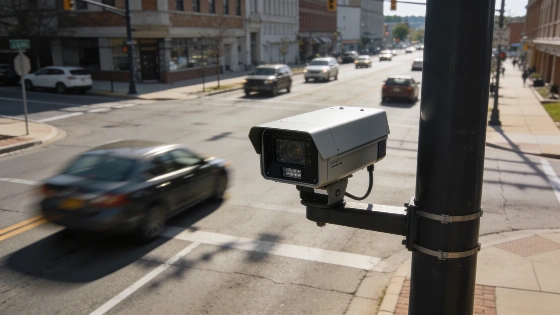
More than 100 automated license plate reader cameras are now installed across the Lansing region, with the highest concentration near Michigan State University. Residents can check camera locations and learn how their data may be used.
Automated license plate reader cameras, commonly known as Flock cameras, have been installed at more than 100 locations throughout the Lansing area, raising questions about privacy and surveillance. These cameras, operated by law enforcement agencies, Michigan State University, and local businesses, capture vehicle information as drivers travel through the region.
Interactive online maps, such as those provided by DeFlock and Eyes On Flock, allow residents to see where these cameras are located and which organizations are accessing the data. The tools do not track in-store security cameras but focus on outdoor devices that monitor public roads and parking lots.
Where Cameras Are Located
According to DeFlock's interactive map, as of August 13, the Greater Lansing area has approximately 116 Flock Safety cameras. Ingham County accounts for about 89 of these, including nearly three dozen in the city of Lansing. Eaton County has 27 cameras, while Clinton County currently has none reported. The highest concentration is in East Lansing, where around 53 Flock and Genetec cameras are positioned on or near Michigan State University's campus, most managed by the university's police and public safety department.
In Lansing, 24 of the city's 35 cameras are operated by the Lansing Police Department, with the remainder managed by businesses or unmarked on the map. Eaton County's cameras include nine in Charlotte, four in Eaton Rapids, one at a Lowe's in Grand Ledge, and about 13 in and around Delta Township, including seven surrounding a Meijer store on West Saginaw Highway.
How the Cameras Work and Who Uses Them
Automatic license plate readers are typically mounted on poles near streets and parking lots. They capture details such as license plate numbers, vehicle make and model, color, time, direction of travel, and sometimes unique features like bumper stickers or roof racks. The data is uploaded to a searchable network used by law enforcement to investigate crimes, locate missing persons, and manage parking or toll collection.
Flock Safety, the largest U.S. manufacturer of these cameras, reported more than 120,000 devices in use across 49 states as of June. DeFlock's map shows about 4,000 cameras statewide in Michigan, with high concentrations in metro Detroit, Flint, Saginaw, Kalamazoo, Battle Creek, Jackson, Grand Rapids, Muskegon, Holland, and Traverse City.
Privacy Concerns and Recent Changes
The widespread use of license plate readers has sparked debate over privacy and data security. Civil rights groups, including the ACLU, have criticized the lack of transparency and oversight, noting that fewer than 1% of scanned vehicles are linked to crimes. Concerns include the potential for misuse, such as tracking individuals without warrants or sharing data across state lines for unrelated investigations.
In response to criticism, Flock Safety announced in August that it would reduce its data retention period from 30 days to seven days and allow cities to set limits on which offenses other agencies can access their camera data for. The company also plans to publish its contract online to increase transparency.
Tracking and Transparency Tools
Residents interested in learning more about camera locations or whether their vehicle has been recorded can use several online resources. Websites like FlockHopper, Eyes On Flock, Have I Been Flocked, and Flock Camera Safety Map provide interactive maps and search tools. Some organizations that use Flock cameras also maintain public transparency portals, showing how many vehicles have been detected and how data is shared with other agencies.
While some communities have chosen to remove or stop using these cameras due to privacy concerns or vandalism, law enforcement agencies continue to rely on them for investigations and public safety programs. Reports of vandalism targeting Flock cameras have surfaced in southeast Michigan, including in Birmingham, Commerce, Farmington Hills, Novi, Pontiac, and other communities.
Automatic license plate readers have been in use for over 20 years in the United States, with vendors including Flock Safety, Genetec, and Motorola Solutions. The debate over their role in public safety versus privacy is ongoing, and residents can stay informed by checking available online resources and monitoring local government decisions regarding surveillance technology.
Community members who want to understand how these systems operate or voice concerns can attend local government meetings or contact their city or county officials. As technology and policies evolve, public input will continue to shape how surveillance tools are used in Michigan communities.