
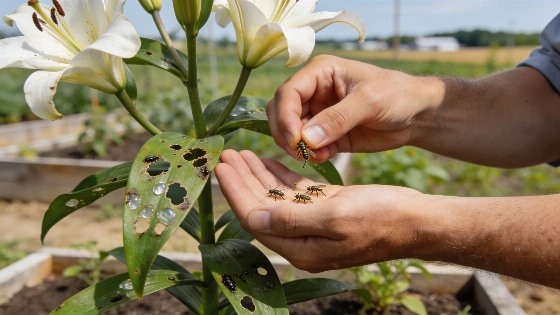
Michigan State University has released over 4,400 parasitoid wasps statewide to target the destructive scarlet lily beetle, aiming for long-term pest control without pesticides. Residents may see new research plots and volunteer-planted lilies in local gardens.
Michigan State University has launched a statewide biological control campaign, releasing more than 4,400 parasitoid wasps to combat the scarlet lily beetle-a pest that has devastated lilies in gardens across Michigan. Instead of relying on chemical pesticides, researchers are betting on these specialized wasps to suppress beetle populations over the coming years.
The scarlet lily beetle, an invasive insect, has become a persistent threat to lilies, stripping leaves, stems, and flowers and leaving gardeners with defoliated plants in just weeks. The beetle's rapid spread and destructive feeding habits have made it a top concern for both home gardeners and horticulturalists.
How the Wasps Work
The wasps released by MSU are parasitoids, meaning they lay their eggs inside the larvae of the scarlet lily beetle. As the wasp larvae develop, they kill their beetle hosts, reducing future beetle generations. This approach is designed to restore a natural balance, targeting only the invasive beetle without harming other species.
According to MSU's Department of Entomology, the project required years of planning and regulatory approval from both the U.S. Department of Agriculture and the Michigan Department of Agriculture and Rural Development. The wasps used are highly host-specific, minimizing risk to native insects and plants. Extensive testing was conducted to confirm their safety before any release occurred.
Statewide Effort and Community Involvement
Preparation for the wasp release began in 2022, when researchers established lily beds at the MSU Entomology Research Farm to serve as nurseries for the beetles and their natural enemies. However, the beetles quickly found these plots on their own, infesting the lilies before the wasps arrived.
MSU initially hoped to collect parasitoid wasps from established populations in New England, where similar biocontrol programs have been underway for decades. But containment there was so successful that few beetle larvae remained, forcing Michigan researchers to seek alternative sources for the wasps.
To expand the reach of the project, the North American Lily Society recruited volunteers across Michigan to plant over 100 lily bulbs in their gardens. These volunteer sites became additional release points for the wasps, with participants agreeing not to use insecticides so the biocontrol agents could establish themselves.
Long-Term Approach and Next Steps
Unlike chemical pesticides, which can provide immediate but temporary relief, biological control is a gradual process. It may take several years for the wasp populations to build up and significantly reduce beetle numbers. Researchers emphasize patience, noting that the goal is to create a sustainable, self-regulating system that keeps the scarlet lily beetle in check without ongoing chemical intervention.
Residents may notice new research plots or volunteer-planted lilies in their neighborhoods as the program continues. MSU and its partners will monitor the sites over the coming seasons to track the wasps' effectiveness and adjust strategies as needed.
Understanding Biological Control in Michigan
Biological control projects like this one require careful coordination between universities, government agencies, and community groups. Before any non-native species can be released, federal and state regulators must review safety data and approve the plan. In this case, MSU's team worked closely with the U.S. Department of Agriculture and the Michigan Department of Agriculture and Rural Development to ensure the wasps would not threaten native species or disrupt local ecosystems.
Michigan's approach builds on lessons learned from New England, where similar wasp releases have nearly eliminated the scarlet lily beetle in some areas. The hope is that, with continued monitoring and community support, Michigan gardens will see a gradual recovery of lilies without the need for routine pesticide use. This project demonstrates the value of long-term, science-based solutions to invasive species-solutions that require patience, collaboration, and a willingness to let nature do the heavy lifting.