Mobile driver's licenses are now available in 21 states and Puerto Rico, with over 8 million active credentials. Wider adoption and remote verification could soon make digital IDs a practical tool for banking, employment, and age verification.
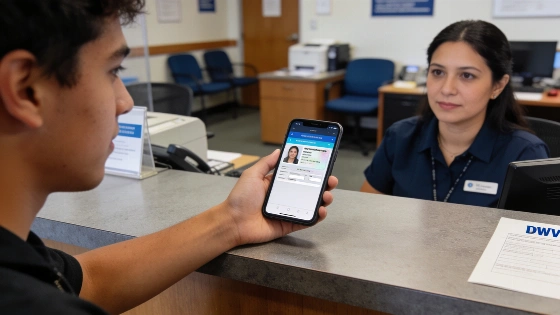
Mobile driver's licenses (mDLs) are gaining traction across the United States, with 21 states and Puerto Rico now offering digital versions of the traditional plastic ID. These digital credentials, issued by state motor vehicle agencies, are designed to provide secure, unfakeable proof of identity both in person and online.
While mDLs have been available for several years, their use has largely been limited to select airports and a handful of venues equipped to read them. Recent developments, however, are moving digital IDs closer to widespread adoption, with new features enabling secure remote verification for activities like opening bank accounts, proving age, or signing up for gig work platforms.
Remote Verification and Security Benefits
One of the most significant advancements is the ability to verify mDLs remotely. In a demonstration by the California Department of Motor Vehicles, a prospective delivery driver could share only the necessary fields-such as name, date of birth, and license number-directly from their phone, with verification completed in seconds. This process is faster and more secure than sending photos of physical cards, which can be easily counterfeited using generative artificial intelligence.
Because mDLs are cryptographically signed by the state, they are nearly impossible to fake. Only the required information is shared, reducing the risk of sensitive data being stored on multiple servers. This approach also addresses growing concerns about identity theft and fraud, which have become more prevalent as digital tools for creating fake IDs have improved.
Adoption Grows, but Gaps Remain
According to the American Association of Motor Vehicle Administrators, more than 8 million mDLs are now active, and about 45% of Americans live in a state where they can obtain one. The association projects that once a majority of states offer mDLs, adoption will accelerate further. States like California and Georgia have already enabled remote verification, and Georgia will require all law enforcement agencies to accept mDLs by mid-2027.
Use cases for mDLs are expanding quickly. Fans can now buy beer at stadiums like Camden Yards and Wrigley Field with a tap of their phone, and the Transportation Security Administration accepts mDLs at a growing number of airports. Police departments are piloting patrol-car readers, and more businesses are integrating digital ID verification into their onboarding processes.
Challenges to Universal Digital ID
Despite this progress, several challenges remain before mDLs become a universal tool. First, more states need to make remote verification accessible to businesses and organizations. Second, major wallet providers like Apple, Google, and Samsung must streamline how third-party verifiers access mDLs, ensuring the process is efficient and secure. Third, large states such as Texas and Florida have yet to implement mDLs, limiting the credential's usefulness for nationwide platforms. Finally, privacy concerns must be addressed, with states required to enforce data minimization and prohibit unnecessary tracking.
Experts argue that digital credentials, when implemented correctly, can protect privacy better than physical cards by allowing users to share only the information needed for a specific transaction. However, lawmakers must ensure that verifiers cannot request more data than necessary and that residents who prefer physical cards can continue to use them.
What Comes Next
States that move quickly to enable remote verification and address privacy concerns are likely to see the greatest benefits, including reduced fraud and more efficient identity verification for public and private services. Those that delay may find themselves left behind as digital identity becomes standard infrastructure for the internet age.
As more states adopt mDLs and expand their capabilities, residents can expect to see digital IDs become a routine part of daily life, from accessing government services to completing everyday transactions. The transition will depend on continued collaboration between state agencies, technology providers, and lawmakers to ensure security, privacy, and broad accessibility.
Mobile driver's licenses represent a significant shift in how Americans prove their identity, with the potential to streamline processes and enhance security across a range of services. The coming years will determine how quickly and effectively this technology becomes a fixture in communities nationwide.