
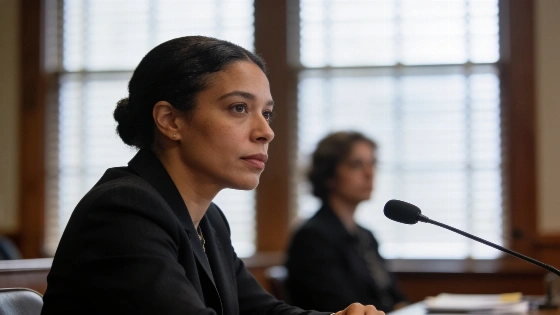
Michigan's proposed MARSE revisions would change evaluation deadlines, special education teacher endorsements and state complaint procedures. Written comments are due by 5 p.m. October 16, 2026, but the proposals have not been confirmed as final or in effect.
The Michigan Department of Education's Office of Special Education will accept written comments until 5 p.m. October 16, 2026. The proposed MARSE revisions cover evaluation deadlines, IEP notices, teacher endorsements and state complaint procedures.
The proposals are not final rules. Independent search results do not confirm that they have been adopted or taken effect. Available search results also did not include a complete official text of the proposed amendments to R 340.1721, R 340.1721b, R 340.1721e, R 340.1781, R 340.1782 or proposed new R 340.1784.
Districts, families and advocates should check the primary state record for the operative language. The details matter.
For families in Farmington and Farmington Hills, the immediate issue is not a change in local school boundaries or municipal services. It is how a state rulemaking process could affect special education evaluations, IEP notices and teacher assignments in local schools.
Farmington Public Schools board meetings and district administration remain separate from the state process. Local meeting calendars and board minutes cannot establish that the proposed rules have been approved.
Evaluation deadlines
Changes proposed under R 340.1721 and R 340.1721b would clarify how districts count school days for evaluation-related deadlines, including initial evaluations. The first school day would not count. The last school day would count.
The method would apply to deadlines for prior written notice, notice of an offer of a free appropriate public education, or a determination that a student is ineligible for special education.
The proposed language would also expressly require a district to provide prior written notice when it declines a requested evaluation. That requirement would apply even when the district does not agree to conduct the evaluation.
A separate addition under R 340.1721e would reinforce a seven-school-day deadline after an IEP team meeting. Within that period, the district would have to provide notice of an offer of FAPE or a determination of ineligibility.
The agency would also have to record how and when it delivered the notice. The notice would identify where programs and services would be provided and when the IEP would begin.
Teacher endorsement changes
Proposed revisions under R 340.1781, R 340.1782 and proposed new R 340.1784 would create a stand-alone special education teacher endorsement covering multiple disability categories.
The change would give districts more flexibility when assigning teachers across special education programs. Existing endorsements for currently certified teachers would remain in place.
A teacher with the new endorsement could work in programs serving students with mild cognitive impairment, emotional impairment, specific learning disabilities, or physical or other health impairments. The endorsement would also cover elementary and secondary resource programs.
It would not authorize placement in programs for autism spectrum disorder, early childhood special education, deaf and hard of hearing, visual impairment, severe, moderate, and severe multiple cognitive impairment, adaptive physical education services, or speech language impairment services.
The proposed structure would still let an individual pair the special education endorsement with a general education content endorsement if that person meets the applicable requirements.
Those requirements include completing the relevant preparation program, obtaining clinical experience in the desired endorsement area and passing the examinations required for teacher certification.
The preparation programs would be changed to emphasize instruction across all core content areas, especially literacy and mathematics. The proposal identifies greater assignment flexibility and changes to preparation programs as part of an effort to address Michigan's demand for special education teachers.
The Michigan State Board of Education has separately described a bipartisan special education committee. Its stated purpose is to strengthen services, partnerships and outcomes for students with disabilities.
That work provides context. The board's announcement does not show that the committee created, approved or finalized the rule changes described here.
State complaint procedures
The proposed changes would also revise state complaint rules. Under R 340.1852, the department would remove language that allows a complaint to be delayed because of an informal resolution.
The revised language would more closely align with 34 CFR § 300.152(b)(1)(2). Under that standard, a complaint timeline may be extended only when exceptional circumstances exist within the particular complaint or when the parent, individual or organization and the public agency agree to extend the timeline for mediation or another alternative dispute-resolution process.
Under R 340.1853, the proposal would remove language that permits "stay put" protections during a state complaint. The stated rationale is that "stay put" applies to due process complaints under the Individuals with Disabilities Education Act rather than to state complaints.
Another proposed change under R 340.1701a would remove private entities from the definition of "agency." The revisions would change the terms used in the rules and the procedures districts and the department follow during evaluations, IEP actions and complaint investigations.
How to comment
Written comments may be submitted through the MDE special education page. They may also be sent by email to MDE-OSE-Public-Comment@michigan.gov with "Rule set 2026-14 ED" in the subject line.
Comments may be mailed to the Michigan Department of Education Office of Special Education, 608 W. Allegan Street, P.O. Box 30008, Lansing, MI 48933. All written comments must be received by 5 p.m. October 16, 2026.
The deadline and submission instructions should be checked against the current State of Michigan departmental registry or official MDE notice before filing.
Residents and organizations may also speak at one of three public hearings. The first will be held virtually Monday, October 12, from 2 p.m. to 5 p.m. The second will be virtual Tuesday, October 13, from 9 a.m. to 11 a.m.
The third hearing will take place Tuesday, October 13, from 3:30 p.m. to 5 p.m. in person at the Michigan Library & Historical Center's 1st Floor Forum, 702 W. Kalamazoo St., Lansing.
Residents following local education issues can compare the state timetable with Farmington Public Schools board agendas and public meetings. Those local records cannot replace the state's formal rulemaking record.
The City of Farmington and City of Farmington Hills may provide civic calendar and meeting information. Oakland County administration is a separate governmental level and does not approve Michigan special education rules.
Those tracking how Michigan schools manage student support may also find context in this earlier school report. The proposed MARSE revisions address special education procedures rather than attendance.
The practical stakes are concentrated in three areas: the dates districts use for evaluation notices, the information families receive after IEP meetings and the programs in which teachers holding the proposed endorsement could work.
The changes remain proposals. Districts and families should treat the current rules as operative unless and until MDE completes the rulemaking process.
Based on the available reporting, there is no confirmed record that the public-comment period has been completed, that comments have been reviewed or that the rules have been approved after October 16, 2026.
A Reuters item identified in related search results concerns a separate federal Head Start dispute. It does not establish anything about Michigan's special education rules.
Public comment is the immediate decision point. The proposal is most useful where it makes deadlines and teacher qualifications more precise. Its value will depend on whether the final language gives districts workable flexibility without blurring the notice and service information families rely on.