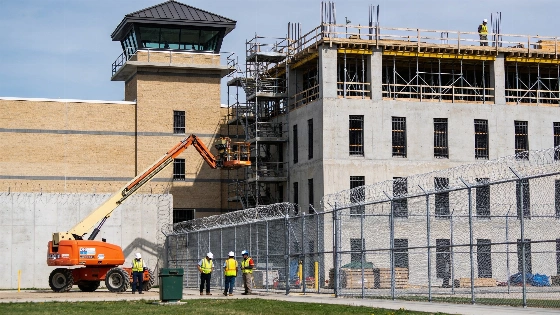
The Michigan Department of Corrections is moving forward with projects to add 870 high-security beds across five facilities, aiming to improve safety, inmate placement and accessibility as part of its Safe Prisons Initiative.
The Michigan Department of Corrections is expanding its high-security capacity, with plans to add 870 new beds across five prisons. This work is part of the Safe Prisons Initiative, a statewide effort focused on safety, inmate management, and updating facilities. The initiative is underway at several locations and is being tracked by the State of Michigan.
Along with increasing the number of high-security beds, the department is upgrading accessibility and improving how inmates with specialized needs are housed. Plans include moving people currently in a Protection Unit and updating 30 cells to meet Americans with Disabilities Act (ADA) standards. These changes will affect not just the prisons but also the surrounding communities, including those in Oakland County, where local governments and emergency services are involved in public safety planning.
Facility upgrades and new construction
The largest projects are new high-security units at the Oaks Correctional Facility and the St. Louis Correctional Facility. The department has secured $152 million for fiscal year 2027 to build one new unit at each site, adding more than 400 Level IV and Level V/Segregation beds. Once design and construction teams are chosen, these projects are expected to take about two and a half years, with oversight from state agencies and updates provided to the public through official channels like the City Council and county boards.
At Macomb Correctional Facility, a project to add 182 Level IV beds is scheduled to finish around September 18, 2026. The Oaks facility is also being converted to create a 192-bed Level IV unit and a 96-bed Level V unit, totaling 288 high-security beds, with completion targeted by the end of 2026. At Richard A. Handlon Correctional Facility, a Level II General Population Unit will be converted into a Protective Housing Unit, allowing inmates who need protective housing to be transferred from Oaks later this fall. Abonmarche is leading the design for the Handlon conversion, and construction bids are currently open, with public notices available through the State of Michigan's procurement portal.
Accessibility and specialized housing
Bellamy Creek Correctional Facility is upgrading 30 cells to ADA standards to better serve inmates with accessibility needs. Straub Pettitt Mann designed the project, and Moore Trosper Construction and RAS/Laux Construction are handling the build. The work is expected to finish by January 2027. Bellamy Creek will also receive additional inmates needing protective housing, transferred from Oaks. These upgrades follow recommendations from the Michigan Department of Corrections and involve ongoing work with local emergency services and health departments to meet accessibility and safety standards.
These changes are part of the department's broader safety goals, including better inmate classification and placement. The department is developing a data-driven classification system to manage populations and separate inmates by risk and need, working with outside data experts as construction moves forward. This approach matches recommendations from the Oakland County administration and other regional partners, who have stressed the importance of evidence-based corrections management in recent public hearings and policy sessions.
Safe Prisons Initiative and operational changes
The Safe Prisons Initiative, launched in March, focuses on five areas: inmate classification and bed space, contraband prevention and technology, inmate programming, training and staff support, and recruitment and retention. The current construction and renovation projects are aimed at providing more flexible and secure housing options, according to department officials and recent updates from the State of Michigan's corrections registry.
Operational changes under the initiative include technology upgrades to prevent contraband, expanded inmate programming, and targeted staff training. The department is collecting and analyzing data to spot trends and set safety priorities, with ongoing evaluation and communication with facility staff and partners. Local school boards, such as Farmington Public Schools, have also been notified of the initiative's progress as part of efforts to keep residents informed about public safety developments.
Michigan's approach recognizes that the needs of the prison population are always changing. By investing in new infrastructure and updating existing units, the Department of Corrections aims to respond more effectively to safety challenges and the varied needs of people in custody. The scale and detail of these projects reflect a shift toward more adaptive and accountable prison management, with a focus on both immediate improvements and long-term resilience.