Automated license plate readers operated by Flock Safety have become a flashpoint in Michigan's 2026 elections, with candidates from both parties urging new rules on data use and retention as the technology spreads across the state
Michigan's 2026 election season has been upended by a surge of public concern over automated license plate readers, with Flock Safety cameras now at the center of a statewide debate on privacy, surveillance, and government oversight. As these devices quietly multiply along Michigan's roads, candidates for governor and U.S. Senate are making the issue a campaign priority, promising new rules to rein in how law enforcement and government agencies collect and share data on millions of drivers.
What began as a law enforcement tool to track stolen vehicles and missing persons has rapidly escalated into a political flashpoint. The proliferation of Flock Safety cameras-now contracted with at least 125 local government agencies in Michigan-has triggered a wave of resident pushback and forced candidates to clarify where they stand on the balance between public safety and personal privacy.
Election-Year Spotlight on Surveillance
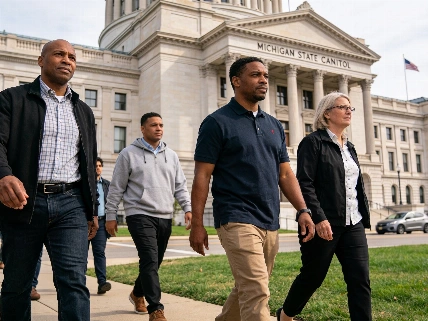
Democratic gubernatorial nominee Jocelyn Benson has called for clear statewide rules, arguing that residents deserve to know when their movements are being recorded and who can access that information. Benson says she hears from drivers who pass Flock cameras daily but have no idea how long their data is kept or whether it is shared with outside agencies. She has pledged to work with the Legislature to set strict limits on data retention, access, and sharing.
Her Republican opponent, John James, has also weighed in, stating that privacy rights are non-negotiable but must be balanced with the need to keep communities safe. James has promised to protect Michiganders' privacy while ensuring law enforcement can pursue criminals within constitutional boundaries.
In the U.S. Senate race, Democrat Abdul El-Sayed has made opposition to "mass proliferation" of Flock cameras a campaign theme, warning that Michigan is building a surveillance apparatus "behind closed doors and behind our backs." El-Sayed has accused Republican rival Mike Rogers of supporting unchecked surveillance, though Rogers' campaign points out he left Congress before Flock cameras were introduced. Rogers' team says he "vehemently opposes unchecked use of Flock cameras to track law-abiding citizens," insisting that security and liberty must be protected together.
How Flock Cameras Work and Why Residents Are Concerned
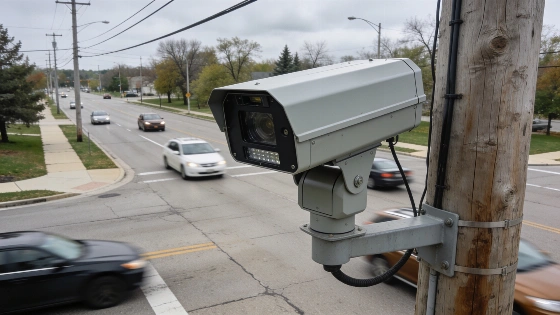
Flock Safety cameras are typically installed at major intersections or along busy roads, capturing images of every vehicle that passes. The system records license plate numbers, which can then be used by law enforcement to search for stolen cars, missing people, or suspects with outstanding warrants. Police agencies credit the technology with helping solve high-profile cases, but critics argue that the vast majority of drivers are swept up in 24/7 surveillance without cause.
Privacy advocates warn that the data collected by these cameras can be stored for weeks or months, potentially shared with agencies far beyond the original jurisdiction. Reports have surfaced of Flock camera data being used in immigration-related searches and investigations involving people seeking abortions, fueling fears about how far the information can travel. Flock Safety says it does not directly share data with federal agencies, but analysis by 404 Media found that local and state police have performed searches for federal partners, including Immigration and Customs Enforcement (ICE).
Lt. Gov. Garlin Gilchrist, now running for Secretary of State, has linked the Flock camera debate to broader concerns about data protection, vowing to defend residents' personal information from misuse by both federal and state actors. In response to mounting criticism, Flock Safety recently announced new safeguards, including a seven-day default for data retention (down from 30 days), mandatory case numbers for law enforcement searches, and automatic reviews of unusual search activity.
Legislative Proposals and Local Pushback
Michigan lawmakers are now considering bills in both the House and Senate that would impose a 14-day limit on data retention and restrict the use of license plate readers to specific law enforcement purposes, such as finding missing people, locating stolen vehicles, and conducting criminal investigations. The legislation would also require clear guidelines on who can access the data and when it must be deleted.
Sen. Jim Runestad, who sponsored the Senate bills, describes the current situation as "the wild, wild west," with little oversight or consistency across municipalities. He remains skeptical that legislative leaders will act before the end of the year, citing a lack of urgency among decision-makers. Law enforcement groups, including the Michigan Sheriffs' Association, say they are not opposed to statewide regulation but worry that strict retention limits could hamper investigations that take longer than two weeks.
Despite the controversy, many Michigan communities continue to approve new Flock camera contracts or renew existing ones, while others have rejected the technology outright. At least 16 states have adopted policies regulating license plate reader data, but Michigan's patchwork approach has left residents and officials demanding clearer rules.
What Residents Should Know
For now, Flock cameras remain a fixture on Michigan's roads, with their use and oversight varying widely from one community to the next. Residents concerned about privacy or data sharing should monitor local government agendas and proposed state legislation, as new rules could change how long their information is stored and who can access it. The debate over Flock cameras is likely to remain a defining issue in Michigan's 2026 elections, shaping not only public safety policy but also the broader conversation about digital privacy and government accountability.
As the state weighs new regulations, the stakes are clear: unchecked surveillance technology risks eroding public trust and personal freedom, while a lack of effective tools could hinder law enforcement's ability to protect communities. Michigan's candidates are now forced to move beyond slogans and deliver concrete solutions-because residents are demanding more than vague promises. For a look at how election integrity issues have shaped recent campaigns, see our reported earlier.
Michigan's experience with Flock cameras is a warning to any state where technology outpaces regulation. Without clear, enforceable rules, both privacy and public safety are left to chance-and neither should be a matter of luck.