Dolly Parton's recent passing has brought renewed attention to her decades of community-focused philanthropy, including major gifts to children's literacy, disaster relief, and healthcare in Tennessee and beyond.
Dolly Parton, the legendary country music artist and businesswoman, is being remembered not only for her music but for her extensive philanthropic work that touched communities across Tennessee and the world. Following her death at age 80, residents and organizations are reflecting on the practical impact of her giving, which ranged from disaster relief to children's literacy and healthcare support.
Parton's approach to philanthropy was rooted in her belief that helping others is a basic human responsibility. She often downplayed her own contributions, emphasizing that many others give just as much, if not more, without recognition. Yet, her actions have left a visible mark on countless families and institutions, especially in her home state of Tennessee.
Major Gifts Supported Literacy, Health, and Disaster Relief
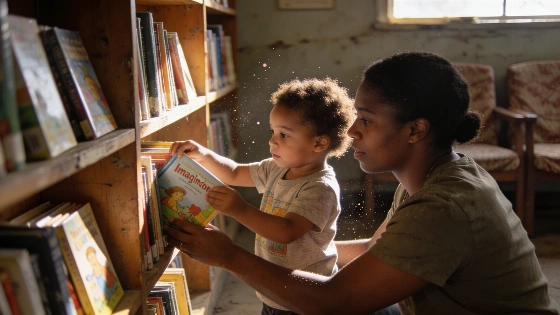
Among Parton's most recognized initiatives is the Imagination Library, which has provided more than 330 million free books to children in the United States, Canada, the United Kingdom, Ireland, and Australia since its launch. Inspired by her father's inability to read and write, Parton created the program to ensure children everywhere have access to books delivered directly to their homes, removing barriers like transportation and library access.
Her philanthropy extended to healthcare and disaster response. In 2024, after Hurricane Helene caused severe flooding in the American South, Parton donated $1 million of her own funds-matched by her Dollywood companies and partners-to support recovery efforts in Tennessee. She also contributed $1 million to Vanderbilt University Medical Center to help develop Moderna's COVID-19 vaccine, and made recent donations to the Dolly Parton Children's Hospital to improve pediatric care in eastern Tennessee.
Direct Support for Families and Local Communities
Parton's giving was often direct and unconditional. After wildfires devastated Sevier County, Tennessee in 2016, her My People Fund distributed $1,000 per month for six months to families who lost their homes, with no restrictions on how the money was used. This approach, studied by researchers at the University of Tennessee and the University of Pennsylvania, was notable for its trust in recipients' ability to make the best decisions for their families.
In addition to high-profile donations, Parton quietly supported local needs. She funded band uniforms for Tennessee high schools and used royalties from her hit song "I Will Always Love You" to purchase a Nashville strip mall, supporting a nearby Black neighborhood. These acts, often discovered only years later, reflected her commitment to addressing needs as she saw them, without seeking publicity.
Legacy in Education and Community Well-Being
Parton's Dollywood Foundation also provided college scholarships for students in her home county near the Great Smoky Mountains, aiming to break cycles of poverty through education. Ohio's first lady, Fran DeWine, highlighted the impact of the Imagination Library in her state, where over a million children have received nearly 28 million books.
Following her passing, Parton's family requested that donations be made to the Imagination Library in lieu of flowers, underscoring the importance of the program to her legacy. Parton herself once said the initiative "meant as much, if not more to me, than nearly anything that I've ever done."
Parton's philanthropic philosophy was characterized by simplicity and trust in people's goodness. Her practical, needs-based giving has become a model for others, demonstrating how direct support and belief in community can address complex challenges.
Parton's work was recognized by organizations such as the Library of Congress and the Carnegie Medal of Philanthropy, but her greatest legacy may be the millions of children and families whose lives were improved by her generosity.
Parton's approach to philanthropy-seeing a need and filling it when possible-continues to inspire community organizations and individuals across the country. Her example shows how targeted, practical giving can have a lasting effect on education, health, and community well-being.